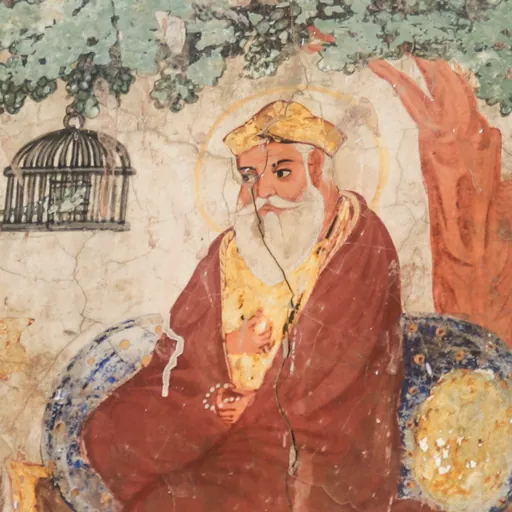
About Guru Nanak
Lived 1469 – 1539 (aged 70). Guru Nanak was a guru, religious leader, writer and poet.
Gurū Nānak (15 April 1469 – 22 September 1539; Gurmukhi: ਗੁਰੂ ਨਾਨਕ), also known as (Father Nanak), was an Indian spiritual teacher, mystic and poet, who is regarded as the founder of Sikhism and is the first of the ten Sikh Gurus.
Nanak is said to have travelled far and wide across Asia teaching people the message of Ik Onkar , who dwells in every one of his creations and constitutes the eternal Truth. With this concept, he would set up a unique spiritual, social, and political platform based on equality, fraternal love, goodness, and virtue.
Nanak's words are registered in the form of 974 poetic hymns, or shabda, in the holy religious scripture of Sikhism, the Guru Granth Sahib, with some of the major prayers being the Japji Sahib (; ji and sahib are suffixes signifying respect); the Asa di Var ('Ballad of Hope'); and the Sidh Gosht ('Discussion with the Siddhas'). It is part of Sikh religious belief that the spirit of Nanak's , divinity, and religious authority had descended upon each of the nine subsequent Gurus when the Guruship was devolved onto them. His birthday is celebrated as Guru Nanak Gurpurab, annually across India.
Biography
Birth The Gurdwara Janam Asthan in Nankana Sahib, Pakistan, commemorates the site where Nanak is believed to have been born. Nanak was born on 15 April 1469 at village (present-day Nankana Sahib, Punjab, Pakistan) in the Lahore province of the Delhi Sultanate, although according to one tradition, he was born in the Indian month of or November, known as Kattak in Punjabi. He was born into the Khatri Punjabi clan like all of the Sikh gurus. Specifically, Guru Nanak was a Bedi Khatri. According to Arvind-Pal Singh Mandair, it is more likely that Nanak was born in his mother's home village, known as Nanake, hence why he and his elder sister were named Nanak and Nanaki, respectively, although the Janamsakhis claim he was born in his father's village. Kapur Singh notes that Guru Nanak was born in the Bar region of Punjab, historically an alluvial barren tract of the Punjab.
There are many supernatural narratives surrounding the birth of Nanak, such as that he was greeted by various Hindu deities after birth. Another tale claims he had the laugh of a full-grown adult, which surprised the Muslim mid-wife Daultan. Furthermore, it is claimed that astrologers predicted the child's future greatness.
Kattak birthdate Most janamsakhis , or traditional biographies of Nanak, mention that he was born on the third day of the bright lunar fortnight, in the Baisakh month (April) of Samvat 1526. These include the Puratan janamsakhi (puratan meaning "traditional" or "ancient"), Miharban janamsakhi, Gyan-ratanavali by Bhai Mani Singh, and the Vilayat Vali janamsakhi. Gurbilas Patashahi 6, written 1718, also attributed to Bhai Mani Singh, contradicts Mani Singh's Janamsakhi as it instead says Guru Nanak was born on the full moon of Katak. The Sikh records state that Nanak died on the 10th day of the Asauj month of Samvat 1596 (22 September 1539 CE), at the age of 70 years, 5 months, and 7 days. This further suggests that he was born in the month of Vaisakh (April), not Kattak (November).
As late as 1815, during the reign of Ranjit Singh, the festival commemorating Nanak's birthday was held in April at the place of his birth, known by then as Nankana Sahib. However, the anniversary of Nanak's birth—the Gurpurab (gur + )—subsequently came to be celebrated on the full moon day of the Kattak month in November. The earliest record of such a celebration in Nankana Sahib is from 1868 CE.
There may be several reasons for the adoption of the Kattak birthdate by the Sikh community. For one, it may have been the date of Nanak's enlightenment or "spiritual birth" in 1496, as suggested by the Dabestan-e Mazaheb.
Some of the sources that support the Katak birthday incident include:
The Bala Janamasakhi supports the Kattak birth tradition. It is the only Janamsakhi that does. Bhai Bala is said to have obtained Nanak's horoscope from Nanak's uncle Lalu, according to which, Nanak was born on a date corresponding to 20 October 1469 CE. However, this janamsakhi was written by Handalis—a sect of Sikhs who followed a Sikh-convert known as Handal—attempting to depict the founder as superior to Nanak. According to a superstition prevailing in contemporary northern India, a child born in the Kattak month was believed to be weak and unlucky, hence why the work states that Nanak was born in that month.
Bhai Gurdas, having written on a full-moon-day of the Kattak month several decades after Nanak's death, mentions that Nanak had "obtained omniscience" on the same day, and it was now the author's turn to "get divine light."
According to eyewitness Sikh chronicles, known as Bhatt Vahis, Guru Nanak was born on the full moon of Katak.
The Gurbilas Patashahi 6, written in 1718 attributed to Bhai Mani Singh, says Guru Nanak was born on the full moon of Katak. also states that Guru Nanak was born on the full moon of Katak.
According to Max Arthur Macauliffe (1909), a Hindu festival held in the 19th century on Kartik Purnima in Amritsar attracted a large number of Sikhs. The Sikh community leader Giani Sant Singh did not like this, thus starting a festival at the Sikh shrine of the Golden Temple on the same day, presenting it as the birth anniversary celebration of Guru Nanak.
Macauliffe also notes that Vaisakh (March–April) already saw a number of important festivals—such as Holi, Rama Navami, and Vaisakhi—therefore people would be busy in agricultural activities after the harvest festival of Baisakhi. Therefore, holding Nanak's birth anniversary celebrations immediately after Vaisakhi would have resulted in thin attendance, and therefore, smaller donations for the Sikh shrines. On the other hand, by the Kattak full moon day, the major Hindu festival of Diwali was already over, and the peasants—who had surplus cash from crop sales—were able to donate generously.
Family and early life The Birth of Guru Nanak, by the artist Sardul Singh, son of Kapur Singh. Amritsar, circa 1910. Narratives surrounding the birth and early life of Nanak show similarities to those told about Buddha, Jesus, and Krishna, although Nanak's birth was a natural one and not to a virgin. A common theme is Nanak's father wishing for his son to live an ordinary life marked by financial and social success, not understanding that the deeply contemplative young Nanak was more interested in spiritual affairs, which causes conflict between them. Meanwhile, Nanak's mother Tripta differs in her approach and recognizes early on the uniqueness of her son. Two persons are claimed in Sikh lore as recognizing the spiritual qualities of Nanak early on in his life, namely his elder sister Nanaki and the local Muslim landlord, Rai Bullar.
Nanak's parents, father Kalyan Chand Das Bedi (commonly shortened to Mehta Kalu) and mother Mata Tripta, were both Hindus of the Khatri caste who worked as merchants. His father, in particular, was the local patwari (accountant or revenue overseer Other miracles tied to this period involve claims against Nanak that he was giving away food for free from the granaries but when the stock was checked, nothing out of place was found.
Spiritual rebirth
According to Sikh belief, a pivotal spiritual event in the form of a revelation happened to Nanak at the age of 33, which is said to have sparked his religious career. According to Kapur Singh, this event occurred in circa 1496 when Nanak was 27 years old, an earlier date and age. The Global Institute of Sikh Studies places the start of the Sikh religion to c. 1520 with Guru Nanak establishment of Kartarpur. The Muslims and Hindus each gathered the flowers found and either cremated or buried them as per their customs.
After Nanak's passing, the early Sikh community's headquarters was shifted from Kartarpur to the village of Khadur by his successor, Guru Angad, as Guru Nanak's sons claimed their father's property at Kartarpur.
Odysseys (Udasis)
During the first quarter of the 16th century, Nanak went on long ('journeys') for spiritual pursuits. A verse authored by him states that he visited several places in "nau-khand" ('the nine regions of the earth'), presumably the major Hindu and Muslim pilgrimage centres.
Some modern accounts state that he visited Tibet, most of South Asia, and Arabia, starting in 1496 at age 27, when he left his family for a thirty-year period. These claims include Nanak's visit to Mount Sumeru of Indian mythology, as well as Mecca, Baghdad, Achal Batala, and Multan, where he would debate religious ideas with opposing groups. These stories became widely popular in the 19th and 20th century, and exist in many versions.
In 1508, Nanak visited the Sylhet region in Bengal. The janamsakhis suggest that Nanak visited the Ram Janmabhoomi temple in Ayodhya in 1510–11 CE.
The Baghdad inscription remains the basis of writing by Indian scholars that Guru Nanak journeyed in the Middle East, with some claiming he visited Jerusalem, Mecca, Vatican, Azerbaijan, and Sudan.
Disputes The hagiographic details are a subject of dispute, with modern scholarship questioning the details and authenticity of many claims. For example, Callewaert and Snell (1994) state that early Sikh texts do not contain such stories. From when the travel stories first appear in hagiographic accounts of Guru Nanak, centuries after his death, they continue to become more sophisticated as time goes on, with the late phase Puratan version describing four missionary journeys, which differ from the Miharban version.thumb The abandoned Gurudwara Chowa Sahib, located near the Rohtas Fort in Pakistan, commemorates the site where Guru Nanak is popularly believed to have created a water-spring during one of his udasis. Some of the stories about Guru Nanak's extensive travels first appear in the 19th-century Puratan janamsakhi, though even this version does not mention Nanak's travel to Baghdad. Such embellishments and insertion of new stories, according to Callewaert and Snell (1993), closely parallel claims of miracles by Islamic pirs found in Sufi tadhkirahs of the same era, giving reason to believe that these legends may have been written in a competition.
Another source of dispute has been the Baghdad stone, bearing an inscription in a Turkish script. Some interpret the inscription as saying Baba Nanak Fakir was there in 1511–1512; others read it as saying 1521–1522 (and that he lived in the Middle East for 11 years away from his family). Others, particularly Western scholars, argue that the stone inscription is from the 19th century and the stone is not a reliable evidence that Nanak visited Baghdad in the early 16th century. Moreover, beyond the stone, no evidence or mention of his journey in the Middle East has been found in any other Middle Eastern textual or epigraphical records. Claims have been asserted of additional inscriptions, but no one has been able to locate and verify them.
Novel claims about his travels, as well as claims such as his body vanishing after his death, are also found in later versions and these are similar to the miracle stories in Sufi literature about their pirs. Other direct and indirect borrowings in the Sikh janamsakhis relating to legends around his journeys are from Hindu epics and puranas, and Buddhist Jataka stories.
Historical accounts There is a lack of factual documentation on Guru Nanak's life, with little that can be ascertained. It is believed that Guru Nanak visited the math in 1516. Guru Nanak is traditionally locally known as Nanak Rishi in Nepal.
Teachings
Nanak's teachings can be found in the Sikh scripture Guru Granth Sahib, as a collection of verses recorded in Gurmukhi.
There are three competing theories on Nanak's teachings. The first, according to Cole and Sambhi (1995, 1997), based on the hagiographical Janamsakhis, states that Nanak's teachings and Sikhism were revelations from God, and not a social protest movement nor an attempt to reconcile Hinduism and Islam in the 15th century.
The second theory states that Nanak was a Guru, not a prophet. According to Singha (2009): Sikhism does not subscribe to the theory of incarnation or the concept of prophet hood. But it has a pivotal concept of Guru. He is not an incarnation of God, not even a prophet. He is an illumined soul. The third theory is that Guru Nanak is the incarnation of God. This has been supported by many Sikhs including Bhai Gurdas, Bhai Vir Singh, Santhok Singh and is supported by the Guru Granth Sahib. Bhai Gurdas says: ਗੁਰ ਪਰਮੇਸਰੁ ਇਕੁ ਹੈ ਸਚਾ ਸਾਹੁ ਜਗਤੁ ਵਣਜਾਰਾ।
The Guru and God are one; He is the true master and the whole world craves for Him. Additionally, in the Guru Granth Sahib, it is stated: ਨਾਨਕ ਸੇਵਾ ਕਰਹੁ ਹਰਿ ਗੁਰ ਸਫਲ ਦਰਸਨ ਕੀ ਫਿਰਿ ਲੇਖਾ ਮੰਗੈ ਨ ਕੋਈ ॥੨॥
O Nanak, serve the Guru, the Lord Incarnate; the Blessed Vision of His Darshan is profitable, and in the end, you shall not be called to account.
Guru Ram Das says: ਗੁਰ ਗੋਵਿੰਦੁ ਗੋੁਵਿੰਦੁ ਗੁਰੂ ਹੈ ਨਾਨਕ ਭੇਦੁ ਨ ਭਾਈ ॥੪॥੧॥੮॥
The Guru is God, and God is the Guru, O Nanak; there is no difference between the two, O Siblings of Destiny.
The hagiographical Janamsakhis were not written by Nanak, but by later followers without regard for historical accuracy, containing numerous legends and myths created to show respect for Nanak. In Sikhism, the term revelation, as Cole and Sambhi clarify, is not limited to the teachings of Nanak. Rather, they include all Sikh Gurus, as well as the words of men and women from Nanak's past, present, and future, who possess divine knowledge intuitively through meditation. The Sikh revelations include the words of non-Sikh bhagats (Hindu & Muslim devotees), some who lived and died before the birth of Nanak, and whose teachings are part of the Sikh scriptures.
The Adi Granth and successive Sikh Gurus repeatedly emphasised, suggests Mandair (2013), that Sikhism is "not about hearing voices from God, but it is about changing the nature of the human mind, and anyone can achieve direct experience and spiritual perfection at any time." Nanak emphasised that all human beings can have direct access to God without rituals or priests.
The concept of man as elaborated by Nanak, states Mandair (2009), refines and negates the "monotheistic concept of self/God," where "monotheism becomes almost redundant in the movement and crossings of love." The goal of man, taught the Sikh Gurus, is to end all dualities of "self and other, I and not-I," attaining the "attendant balance of separation-fusion, self-other, action-inaction, attachment-detachment, in the course of daily life."
Nanak, and other Sikh Gurus emphasised bhakti ('love', 'devotion', or 'worship'), and taught that the spiritual life and secular householder life are intertwined. In the Sikh perspective, the everyday world is part of an infinite reality, where increased spiritual awareness leads to increased and vibrant participation in the everyday world. Nanak described living an "active, creative, and practical life" of "truthfulness, fidelity, self-control and purity" as being higher than the metaphysical truth.
Through popular tradition, Nanak's teaching is understood to be practised in three ways:
Vand Shhako : Share with others, help those who are in need, so you may eat together; Kirat Karo ('work honestly'): Earn an honest living, without exploitation or fraud; and Naam Japo : Meditate on God's name, so to feel His presence and control the five thieves of the human personality. Guru Nanak taught about the equality of mankind, despite gender, caste, and religious differences. During his era, the Hindus were divided into Vaishnavas, Shaivas, Nathas, and other groupings, whilst the Muslims had Sunnis, Shias, and Sufis, there were also Jains and Buddhists; Nanak saw all these identity-markers as irrelevant to God, as Nanak saw God as a unifying force rather than a divisive one. The caste divisions of varna, classifying humans into either Brahmins, Kshatriyas, Vaishyas, or Shudras, was also rejected by Nanak. Nanak also taught that women were not impure or inferior to men. Spiritual liberation, or mukti, is achieved by personal conduct and name-recitation, not social background. He also criticized the prevailing political regimes of the time for their greed and cruelty. He also stressed upon the importance of forgiveness. Furthermore, he did not believe family was alien to religion; instead he incorporated both social and religious spheres of life so that his followers could live a spiritual life whilst taking care of their worldly duties. Guru Nanak was one of the first major authors of the Punjabi language but more precisely wrote in a composite vernacular known as Sant Bhasha. Guru Nanak likely adopted the vernacular so his works could be more accessible to a larger audience located in the Hindi zone, with Nanak's version of it bearing influences from Punjabi (specifically the central zone with both western and eastern Punjabi influences) and older Apabhraṁśa. Nanak was a poet and called himself as such (sairu or shair). One of the earliest verses authored by Nanak was when he was a child at the school of the village-teacher Gopal, where he authored a poem with the start of all its component stanzas based on each of the thirty-five letters of the native script on his patti, a traditional learning tablet, with this composition later being known as the Patti Likhi ("written on the tablet"), being set later on to Raag Asa in the Guru Granth Sahib. Nanak wrote using similes, analogies, and metaphors to explain philosophical concepts. He positions himself as being a slave of the divine in his works. Much of his works, such as in the Japji, are inquisitive in-nature, pondering upon the nature and purpose of the Universe or life itself yet not accepting any prevailing theories or claiming to know the answer, leaving the audience in a state of deep reflection and wonder. The framing of Nanak's religion being "syncretic" has also been criticized by James R. Lewis, due to how ambiguous it is and how the term has been selectively used to describe Sikhism in academia despite evidence of syncretism being widespread across religious traditions.
Many modern historians give weight to his teachings' linkage with the pre-existing bhakti, sant, and wali of Hindu/Islamic tradition. Scholars state that in its origins, Nanak and Sikhism were influenced by the nirguni ('formless God') tradition of the Bhakti movement in medieval India. However, some historians do not see evidence of Sikhism as simply an extension of the Bhakti movement. Sikhism, for instance, disagreed with some views of Bhakti saints Kabir and Ravidas.
The roots of the Sikh tradition are perhaps in the sant-tradition of India whose ideology grew to become the Bhakti tradition. Fenech (2014) suggests that: Indic mythology permeates the Sikh sacred canon, the Guru Granth Sahib and the secondary canon, the Dasam Granth and adds delicate nuance and substance to the sacred symbolic universe of the Sikhs of today and of their past ancestors.Roopinder Singh argues that Nanak himself influenced the Bhakti movement. Prior to Nanak, most of the Bhakti writings emphasize the sargun (God with form) conceptualization of divinity, however due to the influence of Nanak's teachings, later Bhakti authors focused more heavily on nirguna (God without form). Furthermore, Nanak differed from the earlier bhagats as he founded his own community at Kartarpur and established congregations, known as sangats, to spread his teachings. Talwandi Rai Bhoe (now known as Nankana Sahib), where Nanak spent his early-years, had been a deserted and abandoned habitation until Diwan Kaura Mal sponsored the construction of holy-tanks (sarovars) and memorial gurdwaras there in 1750, which had generous land holdings given to them by Kaura Mal, which formed the estate of Nankana Sahib until partition of Punjab in 1947. The Dadupanthis (such as Raghodas) hold Nanak in high regard, including him in their exhaustive list of sants and bhagats, produced in 1660, 1717, or 1720. Nanak's works are included in the compositions by the sect, along with those by Dadu and some Naths and Shaivas.
In Tibetan Buddhism and Bon Trilochan Singh claims that, for centuries, Tibetans have been making pilgrimages to the Golden Temple shrine in Amritsar to pay homage to Guru Nanak's memory. However, Tibetans seem to have confused Nanak with the visit of Padmasambhava centuries earlier, and have superimposed details of Padmasambhava onto Nanak out of reverence (believing the essence of both figures is one and the same) or mistaken chronology. According to Tibetan scholar Tarthang Tulku, many Tibetans believe Guru Nanak was an incarnation of Padmasambhava. Both Buddhist and Bon Tibetans made pilgrimages to the Golden Temple in Amritsar, however they revered the site for different reasons.
Between 1930 and 1935, the Tibetan spiritual leader, Khyungtrül Rinpoche (Khyung-sprul Rinpoche), travelled to India for a second time, visiting the Golden Temple in Amritsar during this visit. They believe Guru Nanak sought to educate Muslims about the "real teachings" of Islam.
Ismailism While there is no consensus on the issue of Guru Nanak's faith prior to the advent of Sikhism, one largely overlooked theory proposed by Dominique Sila-Khan in her works, Crossing the Threshold: Understanding Religious Identities in South Asia (2004) and Conversions and Shifting Identities (1997), argues that Guru Nanak was neither Hindu nor Sufi Muslim in the 'mainstream' sense, but rather, a Nizari Ismaili Muslim prior to Sikhism’s creation.
In popular culture A Punjabi movie was released in 2015 named Nanak Shah Fakir, which is based on the life of Nanak, directed by Sartaj Singh Pannu. Allegory: A Tapestry of Guru Nanak's Travels is a 2021–22 docuseries about Nanak's travels in nine different countries.
Gallery
Don’t just read it —
keep it.
Full-length biographies made to live with: read them, listen on the way to work, watch them tonight.
- E-book
- Audio
- Video
Instant download · yours to keep · every purchase keeps this site free
Important facts
People in Guru Nanak's life
Named in this biography and alive at the same time
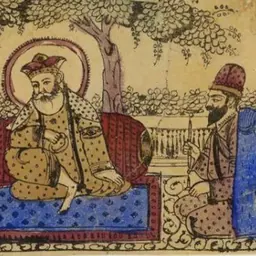
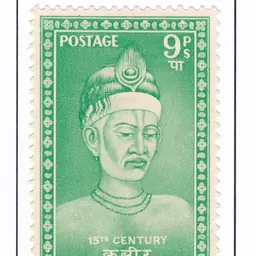

Related people
Same field, nearest in time

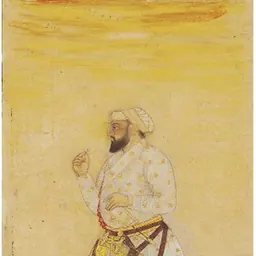
Contemporaries
People whose lives overlapped Guru Nanak's




Frequently asked questions
Who was Guru Nanak?
First Sikh Guru and founder of Sikhism
When was Guru Nanak born?
Guru Nanak was born on 15 April 1469 in Nankana Sahib.
When did Guru Nanak die?
Guru Nanak died on 22 September 1539 in Kartarpur.
What was Guru Nanak's occupation?
Guru Nanak was a guru, religious leader, writer and poet.
Sources & further reading
Cite this page
APA: Biography.guide. (2026). Guru Nanak. https://biography.guide/guru-nanak/
MLA: "Guru Nanak." Biography.guide, https://biography.guide/guru-nanak/.
Chicago: "Guru Nanak." Biography.guide. https://biography.guide/guru-nanak/.
Data last updated: 2026-09-23 · Spot an error? Report a correction.
Portrait: Wikimedia Commons · author & licence
Page generated 2026-09-27 05:05 UTC