
About Guru Amar Das
Lived 1479 – 1574 (aged 95). Guru Amar Das was a guru, religious leader and writer.
Early life
Family background and birth Amar Das was born to mother Bakht Kaur (also known as Sullakhani, Lakhmi Devi, or Rup Kaur) and father Tej Bhan Bhalla on 5 May 1479 in Basarke village in what is now called Amritsar district of Punjab (India). His grandfather was Hari Das.
Some sources that affirm the 1479 year of birth for the guru are: Ganda Singh's Makhaz-i-Twarikh-i-Sikhan, Karam Singh's Gurpurab Nirnay, Kahn Singh Nabha's Mahan Kosh, Max Arthur MaCauliffe's The Sikh Religion, and Giani Gian Singh's Panth Prakash and Twarikh Guru Khalsa. He was reputed to have gone on some twenty annual pilgrimages into the Himalayas, to Haridwar on river Ganges.
Teachings
Guru Amar Das taught with his own life the meaning of Guru Service, also known in Punjabi religious parlance as Guru Sewa. (also spelt Sevā). Amar Das emphasized both spiritual pursuits as well as an ethical daily life. He encouraged his followers to wake up before dawn, do their ablutions and then meditate in silent seclusion. He encouraged the Kshatriya people to fight in order to protect people and for the sake of justice, stating this is Dharma. He promoted inter-caste marriages, going against the traditional Punjabi social orthodoxy at the time by doing-so. He also promoted the remarriage of widows. and the famed langar tradition of Sikhism where anyone, without discrimination of any kind, could get a free meal in a communal seating. Another organization analogous of the Manji was the Piri, which involved an appointed preaching official and missionary for Sikh assemblies and congregations whom were all women and instructed to spread Sikhism amongst womankind (especially women belonging to Muslim backgrounds). According to W. Owen Cole, establishment of the manji and piri systems may have been motivated by the large amounts of new converts coming into the Sikh faith, especially in the Punjab. The women appointed for leading the Piri system of disseminating Sikhism to women were Bhani (his younger daughter), Bibi Dani (his elder daughter), and Bibi Pal, all of whom were intellectual types.
Banning of Sati Guru Amar Das was a strong opponent of sati, the practice of widowed wives being immolated on the funeral pyre of their deceased husband during the latter's cremation.
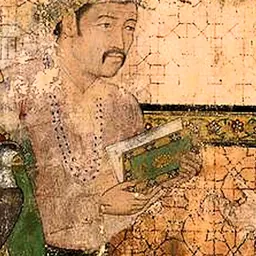
He further states: One of the queens of the raja refused to part ways with veiling herself, in which the Guru responded: "if thou art not pleased with the Guru's face why halt thou come hither." After the conclusion of the Langar, Akbar sat in the congregation with the rest of the sangat and asked the Guru a question. The Sikh hagiographies called janam-sakhis mention that Guru Amar Das persuaded Akbar to repeal the tax on Hindu pilgrims going to Haridwar. Prominent Sikh figure Bhai Mani Singh (1718), mentions prior to the meeting Akbar pleaded the Guru for a blessing in annexing the difficult to capture Chittorgarh, which the Guru gave and after the meeting he gave 84 villages in the name of his prominent Sikh Guru Ram Das after the Guru himself refused.
Rituals in Sikhism: wedding, festivals, funeral Amar Das composed the rapturous hymn called Anand and made it a part of the ritual of Sikh marriage called "Anand Karaj", which literally means "blissful event".
Amar Das believed that a successful marriage was one in which the souls of the husband and wife became one metaphorically: It is a section of the Anand Sahib composition of Guru Amar Das, printed on pages 917 to 922 of the Adi Granth and set to the "Ramkali" raga.
Guru Amar Das is also credited in the Sikh tradition to have encouraged building of temples and places where Sikhs could gather together on festivals such as Maghi, Diwali and Vaisakhi. He required his disciples to gather together for prayers and communal celebrations in autumn for Diwali and in spring for Vaisakhi, both post harvest ancient festivals of India.
Founding of Goindwal and construction of the Baoli Sahib Guru Amar Das was responsible for establishing a new centre of Sikh authority at Goindwal and erecting a stepwell known as Baoli Sahib at the location. Guru Amar Das selected the site in Amritsar village for a special temple, that Guru Ram Das began building, Guru Arjan completed and inaugurated, and the Sikh Maharaja Ranjit Singh gilded. This temple has evolved into the contemporary "Harimandir Sahib", or the temple of Hari (God), also known as the Golden Temple.
Festivals Scholars such as Pashaura Singh, Louis E. Fenech and William McLeod state that Guru Amar Das was influential in introducing "distinctive features, pilgrimages, festivals, temples and rituals" that ever since his time have been an integral part of Sikhism.
Choosing a successor
Amar Das had four people in mind that would succeed him as the next Guru:
Ramu, his son-in-law Jetha, his son-in-law Mohan, his elder son Mohri, his younger son
He devised four tests for them all to undertake to decide who will inherit the guruship.
Death Shortly before his death, it is recorded in Ramkali Sadu (composed by his great-grandson, Baba Sundar), that he called upon all of his familial relatives to acknowledge the new Guru, Ram Das, and personally placed the sandal paste on Bhai Jetha's forehead to anoint him as his successor. He died in 1574, in Goindwal Sahib, and like other Sikh Gurus he was cremated, with the "flowers" (remaining bones and ash after the cremation) immersed into (flowing waters).
Literature A large amount of written works is attributed to Guru Amar Das. His poetic works closely mirror those of Guru Nanak, a conservative approach which may have been due to the old-age of Amar Das when he became the guru. Furthermore, the Sikh textual tradition advanced heavily during his guruship tenure, with an example being the compiling of the Goindwal Pothis. Amar Das provides commentary on selections of the Bhagat Bani that had by this stage already been included in the Goindwal Pothis. His most principal work was the Anand Sahib, which focuses on the relationship between the guru, his disciples (Sikhs), and bani.
In popular culture Guru Amardas is a 1979 documentary film, directed by Prem Prakash and produced by the Government of India's Films Division, covering his life and teachings.
Gallery
Don’t just read it —
keep it.
Full-length biographies made to live with: read them, listen on the way to work, watch them tonight.
- E-book
- Audio
- Video
Instant download · yours to keep · every purchase keeps this site free
Important facts
People in Guru Amar Das's life
Named in this biography and alive at the same time

Related people
Same field, nearest in time
Contemporaries
People whose lives overlapped Guru Amar Das's






Frequently asked questions
Who was Guru Amar Das?
guru of Sikhism
When was Guru Amar Das born?
Guru Amar Das was born on 5 May 1479 in Amritsar.
When did Guru Amar Das die?
Guru Amar Das died on 1 September 1574 in Goindwal Sahib.
What was Guru Amar Das's occupation?
Guru Amar Das was a guru, religious leader and writer.
Sources & further reading
Cite this page
APA: Biography.guide. (2026). Guru Amar Das. https://biography.guide/guru-amar-das/
MLA: "Guru Amar Das." Biography.guide, https://biography.guide/guru-amar-das/.
Chicago: "Guru Amar Das." Biography.guide. https://biography.guide/guru-amar-das/.
Data last updated: 2026-09-20 · Spot an error? Report a correction.
Page generated 2026-09-27 05:29 UTC