
About Günter Sieber
Lived 1930 – 2006 (aged 76). Günter Sieber was a German politician.
Günter Sieber (11 March 1930 – 26 November 2006) was an East German politician, diplomat and party functionary of the Socialist Unity Party (SED).
Starting off as an official in the State Planning Commission, during his forty-year-long career in East Germany, Sieber served as Trade and Supply Minister, ambassador to the Polish People's Republic and as the head of the International Relations Department of the Central Committee of the SED, where he, among other things, coordinated East Germany's response to martial law in Poland and expanded the SED's involvement in Africa. During the Peaceful Revolution, he was also briefly part of the Politburo of the Central Committee of the SED as a candidate member, and as the last Secretary of the Central Committee responsible for foreign affairs.
Life and career Early life Günter Sieber was born in 1930 in Ilmenau to a working-class family. After attending Volksschule, he completed apprenticeship as a forestry worker from 1944 to 1947. Immediately after World War II, he joined the newly founded Free German Trade Union Federation (FDGB), soon taking on local functionary roles. from 1949 to 1950. Concurrently, from 1949, he served as a Referent, a low to mid-level ministerial position in East Germany, During his diplomatic tenure, in May 1976 (IX. Party Congress), he was elected to the Central Committee of the SED as a candidate member. he was appointed head of the International Relations Department of the Central Committee, succeeding ,
Sieber later became a full member of the Central Committee of the SED in April 1981 (X. Party Congress), serving until its collective resignation in December 1989. He additionally became a member of the Volkskammer in 1981, then in southern Bezirk Magdeburg.
The International Relations Department was responsible for preparing Politburo decisions that concerned foreign policy issues and to control their implementation.
According to Manfred Uschner, personal assistant to Hermann Axen, the Central Committee Secretary responsible for the International Relations Department, Sieber's sturdiness and experience meant that he had an easier time working with the often choleric Axen compared to his more sensitive predecessor Winkelmann. Uschner also notes Sieber's sarcastic and self-ironic tendencies and praises his efforts to keep alive the comparatively open atmosphere of the department the late department head Paul Markowski was known for cultivating.
Response to martial law in Poland On 12 December 1981, shortly before midnight, martial law was declared in Poland to crackdown on the growing opposition movement, especially the Solidarność trade union. When Sieber was informed by the East German embassy in Warsaw, he first called defence minister Heinz Hoffmann and Stasi head Erich Mielke, but both of them thought it was a hoax, expecting to have been informed beforehand. He was additionally elected as a Secretary of the Central Committee, responsible for his own former International Relations Department and the International Politics and Economics Department, succeeding retiring Hermann Axen. He remained a member of the Volkskammer until its first free and fair elections in 1990, going into early retirement afterwards.
Death He died on 26 November 2006 at age 76 in Strausberg, the former seat of much of the East German military establishment.
Don’t just read it —
keep it.
Full-length biographies made to live with: read them, listen on the way to work, watch them tonight.
- E-book
- Audio
- Video
Instant download · yours to keep · every purchase keeps this site free
Important facts
People in Günter Sieber's life
Named in this biography and alive at the same time
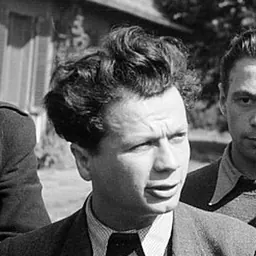
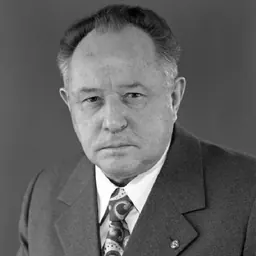



Related people
Same field, nearest in time






Contemporaries
People whose lives overlapped Günter Sieber's
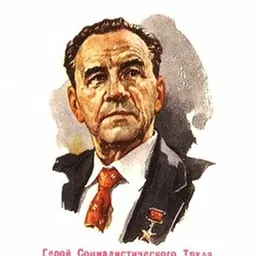
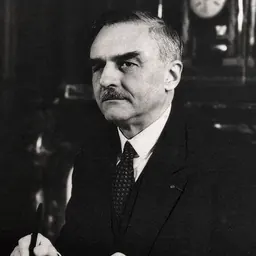

Frequently asked questions
Who was Günter Sieber?
German politician (1930-2006)
When was Günter Sieber born?
Günter Sieber was born on 11 March 1930 in Ilmenau.
When did Günter Sieber die?
Günter Sieber died on 26 November 2006.
What was Günter Sieber's occupation?
Günter Sieber was a politician.
What nationality was Günter Sieber?
Günter Sieber was German.
Sources & further reading
Cite this page
APA: Biography.guide. (2026). Günter Sieber. https://biography.guide/gunter-sieber/
MLA: "Günter Sieber." Biography.guide, https://biography.guide/gunter-sieber/.
Chicago: "Günter Sieber." Biography.guide. https://biography.guide/gunter-sieber/.
Data last updated: 2026-09-20 · Spot an error? Report a correction.
Page generated 2026-09-27 05:24 UTC