
About Günter Lüling
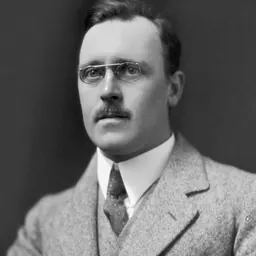
Lived 1928 – 2014 (aged 85). Günter Lüling was a German linguist, orientalist and protestant theologian.
Günter Lüling (25 October 1928 – 10 September 2014) was a German Protestant theologian, philological scholar (Dr. in Arabistics and Islamics) and pioneer in the study of early Quranic studies and Islamic origins. From 1962 to 1965 he was the Director of the German Goethe-Institut in Aleppo, Syria.
Thesis A student of Albert Schweitzer and Martin Werner (1887–1964), he attempted to demonstrate the textual link between pre-Islamic Christian hymnody in the Middle East and the composition of the Qur'an. He theorized that the early believers of what later became Orthodox Islam were one of the last communities sticking to a — what Lüling believed to be the true — non-Trinitarian Christian creed, for whom Jesus and the Holy Spirit were not divine. Their theological positions were adopted by later generations and evolved to become an ethno-centric religion of Arabs — Islam (i.e. "religion of Abraham and the tribes"). He also proposed that the Meccan and Central Arabian adversaries of Muhammad, the "mushrikun", (the "associators" or those who "associate" other gods to God), were not polytheist pagans but Trinitarian Christians — the associates being Jesus and the Holy Spirit. In early post-prophetic times mushrikun was reinterpreted from its original meaning to become "idolators" or "pagans".
An example of what Lüling believes to be the underlying Christian hymn of the Quran is Quran 96 (Al-ʻAlaq), which Lüling believes was originally addressed to Christians not Muhammad. With his approach of research Lüling was an early representative of the "Saarbrücken School" which is part of the Revisionist School of Islamic Studies.
Dispute According to Alan Dundes, in 1970 Luling submitted a doctoral dissertation which suggested that the Quran "contained evidence of traces of poetic strophic" (i.e. verse-repeating or chorus form.. a song structure in which all verses or stanzas of the text are sung to the same music, as opposed to "through-composed" where new music written for every stanza) texts. Dundes writes that Lüling's view was "not in accord with orthodox Islamic tradition", and by 1972, "he was officially dismissed" from the University of Erlangen, where he had submitted his thesis. A lawsuit filed to overturn the dismissal carried on for six years but "did not succeed in reversing the university's action".
Don’t just read it —
keep it.
Full-length biographies made to live with: read them, listen on the way to work, watch them tonight.
- E-book
- Audio
- Video
Instant download · yours to keep · every purchase keeps this site free
Important facts
People in Günter Lüling's life
Named in this biography and alive at the same time


Related people
Same field, nearest in time





Contemporaries
People whose lives overlapped Günter Lüling's

Frequently asked questions
Who was Günter Lüling?
German theologian (1928-2014)
When was Günter Lüling born?
Günter Lüling was born on 25 October 1928 in Varna.
When did Günter Lüling die?
Günter Lüling died on 10 September 2014 in Erlangen.
What was Günter Lüling's occupation?
Günter Lüling was a linguist, orientalist and protestant theologian.
What nationality was Günter Lüling?
Günter Lüling was German.
Sources & further reading
Cite this page
APA: Biography.guide. (2026). Günter Lüling. https://biography.guide/gunter-luling/
MLA: "Günter Lüling." Biography.guide, https://biography.guide/gunter-luling/.
Chicago: "Günter Lüling." Biography.guide. https://biography.guide/gunter-luling/.
Data last updated: 2026-09-20 · Spot an error? Report a correction.
Page generated 2026-09-27 05:25 UTC