
About Gunnar Dybwad
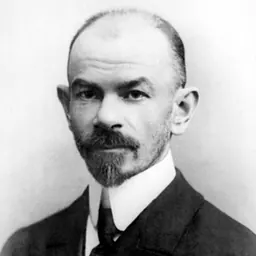
Lived 1909 – 2001 (aged 91–92). Gunnar Dybwad was an American academic, civil and political rights and professor.
Gunnar Dybwad (1909–2001) was an American professor and advocate for the rights of people with disabilities, particularly developmental disabilities. He is best known for his support for the social model of disability, reframing disability accommodations as a matter of civil rights, not medical treatment. He moved to the United Kingdom, then to the United States where he settled in Wellesley, Massachusetts with his wife, Rosemary, and their two children.
Dybwad died (age 92) of natural causes at the Wingate Rehabilitation Center in Needham, Massachusetts. where he earned a Doctorate in Law in 1934.
He also served as director of several organizations: Child Welfare Program, Michigan (Director, 1943–1951), Child Study Association of America (executive director, 1951–1957)
From 1964 to 1967, Dybwad and his wife directed the "mental retardation project" of the International Union of Child Welfare, Geneva, Switzerland.
In 1967, Dybwad became the founding director of the Starr Center for Mental Retardation at the Heller School for Policy and Management, Brandeis University.
In 1973, Dybwad was a founding member of the American Bar Association's (ABA) commission on the Mentally Disabled. Other members included Chesterfield Smith, Jerome J. Shestack, David L. Bazelon, Charles R. Halpern, Jonas Robitcher, Saleem A. Shah, McNeill Smith, Helen Wright, and Alan A. Stone.
He served as president of Inclusion International from 1978 to 1982. The organization, which he and his wife co-founded, assisted parent and self-advocacy groups. and with the development of young professionals in the fields.
Dybwad retired from Brandeis in 1974 due to mandatory age limitations.
Normalization and Integration Dybwad believed that people with developmental and intellectual disabilities best responded to integration into the community. Maximal integration meant providing these people with opportunities to live in "ordinary family settings," and have access to "typical community services." Although, he was against "custodial care", he understood the need for a range of programs and residential facilities to meet the requirements of a broad array individuals. At the 1959 Convention of the National Association for Retarded Children, he called for "research in problems of management, of residential care, including physical plant and equipment."
In 1979, he co-authored an article called "Unnecessary Coercion: An End to Involuntary Civil Commitment of Retarded Persons" in which he argued for the abolition of the often forced and involuntary placement of people with intellectual disabilities into state facilities.
"Professor Dybwad was one of the first to articulate the issues facing people with disabilities as civil rights issues and not only as medical and social issues. He was a champion of the rights of people with disabilities to have full access to a normal life that everyone wants to enjoy"|Marty Krauss, director of the Starr Center" He played a major role in encouraging the 1972 Pennsylvania Association for Retarded Children (PARC) to file disability rights litigation with the federal court.
Dybwad, himself, received the following:
Kennedy Foundation International Award (1986) The Adaptive Environments Center Lifetime Achievement Award in Universal Design (First Recipient, 1994) Honorary Doctorate, Temple University
Selected articles
Parent Education: Courage. And the Parent Educator. (with Marion L. Faegre) Reviewed Work(s): Personality in the Making—The Fact-Finding Report of the Mid-century White House Conference on Children and Youth by Helen Leland Witner and Ruth Kotinsky Unnecessary Coercion: An End to Involuntary Civil Commitment of Retarded Persons.
Books "Action Implications, USA Today", chapter in Changing Patterns, editors Kugel and Wolfensberer (1969) Challenges in Mental Retardation (Columbia University Press, 1964) Responding to the Challenge: Current Issues and International Developments in Developmental Disabilities, with Hank A. Bersani (Brookline, 1999)
Don’t just read it —
keep it.
Full-length biographies made to live with: read them, listen on the way to work, watch them tonight.
- E-book
- Audio
- Video
Instant download · yours to keep · every purchase keeps this site free
Important facts
Family & relationships
People in Gunnar Dybwad's life
Named in this biography and alive at the same time



Related people
Same field, nearest in time



Contemporaries
People whose lives overlapped Gunnar Dybwad's




Frequently asked questions
Who was Gunnar Dybwad?
American professor, disability rights advocate
When was Gunnar Dybwad born?
Gunnar Dybwad was born in 1909 in Leipzig.
When did Gunnar Dybwad die?
Gunnar Dybwad died on 13 September 2001 in Needham.
What was Gunnar Dybwad's occupation?
Gunnar Dybwad was an academic, civil and political rights and professor.
What nationality was Gunnar Dybwad?
Gunnar Dybwad was American.
Sources & further reading
Cite this page
APA: Biography.guide. (2026). Gunnar Dybwad. https://biography.guide/gunnar-dybwad-academic/
MLA: "Gunnar Dybwad." Biography.guide, https://biography.guide/gunnar-dybwad-academic/.
Chicago: "Gunnar Dybwad." Biography.guide. https://biography.guide/gunnar-dybwad-academic/.
Data last updated: 2026-09-25 · Spot an error? Report a correction.
Page generated 2026-09-27 05:10 UTC