
About Gul Hassan Khan
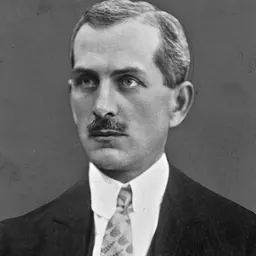
Lived 1921 – 1999 (aged 78). Gul Hassan Khan was a Pakistani and Indian military personnel.
Gul Hassan Khan (9 June 1921 – 10 October 1999) also known as George, (Gul Hassan was secretly referred to as 'George by his colleagues.)
Gul Hassan survived both the 1930 earthquake in Balochistan and the devastating 1935 Quetta earthquake. In 1939, he joined the Prince of Wales Royal Indian Military College (PWRIMC) and was described as an "usually quite Pathan" and the smartest cadet. In March 1940, he appeared for the competitive entrance examination into the Indian Military Academy (IMA) at Dehra Dun but failed, not because of his academics, but because he was late to his interview which was worth 500 marks on the exam.
In January 1941, he took the exam again and received admission into the IMA, where he would become known as an "excellent" Hockey player and gained fame as a boxer.
Personal life Gul Hassan was fluent in Urdu, Pashto, Punjabi, English, and Persian. He was married to a Greek woman and had one son, Sher Hassan Khan, born in 1982.
(Retd) Colonel Abdul Qayyum recalled that Gul Hassan was "short on strategic vision," "but he was a field commander par excellence - by our standards, at any rate. He almost equaled Patton in linguistic matters, but he was our version of Robert E. Lee in the field. Gul Hassan was warm, sincere, forthright, without a trace of cant or deceit, wholly committed to his command, bold and generous of spirit."
He attended an Intelligence course in March 1943 at Karachi where his commandant was Lieutenant Colonel J Campbell.
World War II Gul Hassan was stationed in Assam with Assam Rifles and participated in the Burma Campaign 1944–45. In his memoirs, Hassan recalled the stench of the dead bodies of Japanese soldiers and that he witnessed the British Indian Army burn bodies of the Japanese.
Near the end of the war, he was appointed as the aide-de-camp to General Viscount Slim who commanded the 14th Army in Burma.
Pakistan Army
After the Partition of British India in August 1947, Captain Gul Hassan opted for Pakistan and served as the aide-de-camp (ADC) to Muhammad Ali Jinnah.
In 1950, Gul Hassan attended the Staff College, Quetta. In September 1951, he was posted to the Military Training Directorate at the General Headquarters under director Brigadier Jerrad.
He served as the Directing Staff at Staff College, Quetta from 30 June 1957 to 16 June 1959. For his service in the war, Hassan was awarded the Sitara-e-Pakistan by President Ayub Khan. He was later promoted to major general and appointed General Officer Commanding of the 1st Armoured Division headquartered in Multan. In September 1968, he was appointed as Colonel Commandant of the Pakistan Army Corps of Engineers.
On 20 December 1968, Major General Gul Hassan was appointed as Chief of General Staff. He was promoted to Lieutenant General while serving in this post in 1971. He was the Director of Exercise for an event aimed at assessing the technical skills and professional capabilities of various participating Pakistan Army units. Air Marshal Abdur Rahim Khan and President Yahya Khan arrived to observe the maneuvers on 30 January 1971 near Multan.
Role in saving Zia-ul-Haq's career
According to A.O. Mitha, it was Gul Hassan's lobbying at the GHQ which saved then Brigadier Zia-ul-Haq, the chief of Pakistan's military mission, from being dismissed from service. Brigadier Zia-ul-Haq, who was deployed to Jordan in 1971, was recommended to be court-martialed by Major General Nawazish to President Yahya Khan for disobeying GHQ orders by commanding a Jordanian armoured division against the Palestinians, as part of "Operation Black September" in which thousands were killed. It was Gul Hassan who interceded for Zia ultimately leading to Yahya Khan letting Zia off the hook.
According to several sources, Gul Hassan was unaware of Operation Searchlight and had a strong dislike for General A. A. K. Niazi. In a conversation with President Yahya Khan, Gul Hassan was informed about Niazi's promotion and his own. Yahya Khan asked, "When did you see General Abdul Hamid Khan [the Chief of Staff] last?" Gul Hassan replied, "I just came from his office."
Yahya continued, "Didn't he tell you that you have been promoted?" Gul Hassan, puzzled, responded, "No, Sir. Where am I going?"
Despite warnings, Abdul Hamid failed to convey critical assessments to Yahya, who remained detached from the situation, "foolishly" declining a request for an urgent briefing by Gul Hassan. The army faced a dire disadvantage against India and rebels, with Yahya's leadership lacking direction. After the war, Yahya blamed the loss of East Pakistan on "the treachery of Indians", while Gul Hassan attributed the loss to Pakistan's "own blunders."
Role in Yahya Khan's removal On 17 December 1971, Brigadier F.B. Ali wrote his resignation letter accepting his own responsibility for the loss of East Pakistan and expected that President Yahya Khan and his advisors would follow suit and also resign. But the next day Ali had heard that Yahya was planning to create a new Constitution which infuriated Ali. Brigadier Ali determined that the loss of one war was enough and that it was imperative to get rid of the military junta of Yahya Khan. He picked up Brigadier Iqbal Mehdi Shah, Colonel Aleem Afridi, Colonel Agha Javed Iqbal, Lt Col Khursheed, and other officers and told them that they owed it to Pakistan to get rid of the discredited junta and hand over power to the elected civilian representatives.
All officers present, agreed. However, there was a problem as Maj Gen Bashir "Ranghar", Major General R.D. Shamim, and Major General "Bachoo" Karim were in Gujranwala and had the authority to counter F.B. Ali's orders.
On 19 December 1971, F.B. Ali arrested the three generals and seized command of Major General "Bachoo" Karim's 6th Armoured Division. Ali then sent Colonels Aleem Afridi and Agha Javed Iqbal to deliver a letter demanding Yahya Khan's resignation by 8 PM that night for being responsible for the loss of East Pakistan. The two Colonels took the letter to Chief of General Staff Gul Hassan, who initially felt saddened by the defeat in the war and told them that he planned to leave the army. However, upon learning about the contents of the letter from the two Colonels, Gul Hassan's mood brightened, and he went to Air Marshal Abdur Rahim Khan. Gul Hassan told Colonel Aleem Afridi and Colonel Agha Javed Iqbal to sit in Major Javed Nasir's office.
Despite there being no other mention of Gul Hassan's role in the Bengali genocide, Bengali Dr. A.H. Jaffor Ullah believes Gul Hassan did play a role, though not as the main actor. While Dr. Jaffor Ullah acknowledges that Gul Hassan was not the one who directly executed orders as Lt. Gen. Tikka Khan was the trigger man, Dr. Jaffor Ullah argues that Hassan provided intellectual support and leadership, contributing to the genocide's occurrence.
Commander-in-Chief (1971-1972)
President Zulfikar Ali Bhutto, Lt. General Gul Hassan, and Air Marshal Abdur Rahim Khan, meet with Premier Zhou Enlai in Peking, 1972
After Zulfikar Ali Bhutto arrived in Pakistan from Rome on the jet that Abdur Rahim Khan sent for him, Bhutto called Gul Hassan to take over the post of Commander-in-Chief of the Pakistan Army, which Gul Hassan refused citing the fact that the army had been demoralised from the defeat. "I have asked General Gul Hassan to be acting Commander-in-Chief. He is a professional soldier. I do not think he has dabbled in politics and I think he has the respect and support of the Armed Forces... but he will retain the rank of lieutenant general. We are not going to make unnecessary promotions. We are a poor country. We are not going to unnecessarily fatten people."
The next day, Gul Hassan called President Bhutto and asked why he had claimed that it was his decision to keep Gul Hassan as a Lt Gen, as if Hassan had not chosen to remain in the rank as one of his conditions for accepting the post. Bhutto responded by saying the Commander-in-Chief did not grasp politics well and missed the point. Despite Gul Hassan's request to keep politics out of their dealings, Bhutto persisted. Days later, Bhutto asked if Gul Hassan had watched the Dhaka surrender film, inviting him to view it. Gul Hassan refused, feeling that Bhutto, now the Supreme Commander of the Armed Forces, was aggravating wounds instead of healing them. Gul Hassan later discovered Bhutto had brought the film from abroad and aired it on national television repeatedly until public outcry halted it.
Bhutto later wanted to join the Commander-in-Chief on a troop tour, but Gul Hassan refused. He feared that Bhutto, as a skilled public speaker, would twist the situation to suggest Gul Hassan lacked courage. Gul Hassan believed Bhutto would win politically either way, making him appear weak or overshadow Gul Hassan's authority.
Bhutto invited the two chiefs to a meeting and initiated the discussion by saying, "Gentlemen, the country is going through one crisis after another and with the latest one being the strike by the police and for which no cooperation has been forthcoming from the army and the air force when asked for, I regret that a stage has come when we can no longer carry on like this. Therefore I am not prepared to run the government in this sort of an environment." As soon as Bhutto finished, Gul Hassan, stood up and confronted Bhutto, and said: "Well that's all right Mr President but let me also make it clear that this kind of non-cooperation will continue if the demands placed on the services and especially on the army is not lawful. And as far as I am personally concerned I want to make it quite clear that I am ready to quit right now."
After Gul Hassan's statement, Bhutto "wore a mischievous smile" and promptly handed over two file covers to Gul Hassan and Abdur Rahim Khan. Inside were resignation letters prepared for them to sign. Gul Hassan, threw the file back at Bhutto, who then attempted to shake his hand.
Diplomatic career Gul Hassan was appointed as Pakistan's ambassador to Austria by President Zulfikar Ali Bhutto on 26 May 1972. Bhutto designated Gul Hassan as Ambassador of Pakistan to Greece in April 1975.
On 15 April 1977, in a letter of resignation, Gul Hassan condemned the leadership of Prime Minister Zulfikar Ali Bhutto and called him a traitor for his role in the loss of East Pakistan. Hassan further accused him of failing the people of Pakistan, causing chaos and violence in the country, exploiting the nation for personal gain, and rigging the 1977 Pakistani general election. Subsequently, the Government of Pakistan alongside the Federal Investigation Agency (FIA) filed an FIR against Gul Hassan for "hatred or contempt and inciting disaffection towards the Government."
Later life and death Afterwards, Gul Hassan started a carpet business
In a 1997 interview with Rediff, Gul Hassan responded to a question regarding Benazir Bhutto's assertion that her hawkish stance on India caused her to lose the election, stating: "Benazir talks rubbish. She is highly immature and so was her father. One American journalist, who was writing a book on Bhutto, came and asked me, "Everybody says that Bhutto was intelligent. Do you find him intelligent?" I said, "If he was intelligent, he would have been alive today." Who says Benazir was harsh on India?"
Gul Hassan Khan died on 10 October 1999 and was buried in Pabbi in Nowshera District (Main town of Chirrat Cant, Chowki Mumriaz, Taroo Jaba, Akber Pura). Prior to his death, Gul Hassan had a small amount of money in his bank account and instructed that his burial cloth be brought with it.
Published work
Interviews
Awards and decorations
Parachutist BadgeSitara-e-Pakistan (Star of Pakistan)
(SPk)Sitara-e-Quaid-e-Azam (SQA)Tamgha-e-Diffa (Defence Medal)
1. 1965 War Clasp
2. 1971 War ClaspTamgha-e-Jang 1965 War (War Medal 1965)Tamgha-e-Jang 1971 War (War Medal 1971)Pakistan Tamgha (Pakistan Medal)
1947Tamgha-e-Qayam-e-Jamhuria (Republic Commemoration Medal)
(1953)
Foreign decorations Foreign AwardsBurma StarWar Medal 1939–1945Queen Elizabeth II Coronation Medal
Don’t just read it —
keep it.
Full-length biographies made to live with: read them, listen on the way to work, watch them tonight.
- E-book
- Audio
- Video
Instant download · yours to keep · every purchase keeps this site free
Important facts
People in Gul Hassan Khan's life
Named in this biography and alive at the same time





Related people
Same field, nearest in time

Contemporaries
People whose lives overlapped Gul Hassan Khan's

Frequently asked questions
Who was Gul Hassan Khan?
Pakistani lieutenant general and diplomat (1921–1999)
When was Gul Hassan Khan born?
Gul Hassan Khan was born on 9 June 1921 in Rawalpindi.
When did Gul Hassan Khan die?
Gul Hassan Khan died on 10 October 1999 in Nowshera.
What was Gul Hassan Khan's occupation?
Gul Hassan Khan was a military personnel.
What nationality was Gul Hassan Khan?
Gul Hassan Khan was Pakistani and Indian.
Sources & further reading
Cite this page
APA: Biography.guide. (2026). Gul Hassan Khan. https://biography.guide/gul-hassan-khan/
MLA: "Gul Hassan Khan." Biography.guide, https://biography.guide/gul-hassan-khan/.
Chicago: "Gul Hassan Khan." Biography.guide. https://biography.guide/gul-hassan-khan/.
Data last updated: 2026-09-20 · Spot an error? Report a correction.
Page generated 2026-09-27 05:22 UTC