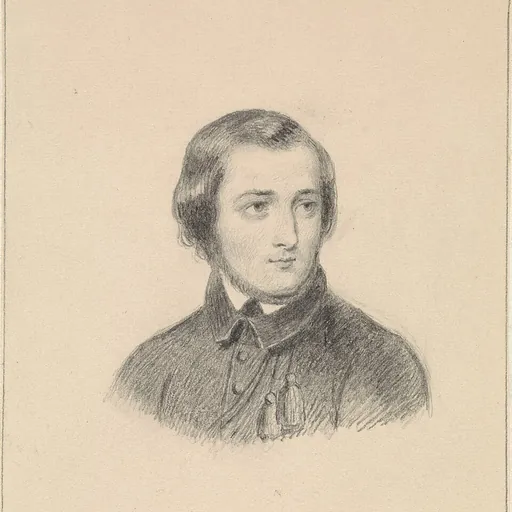
About Guillaume Geefs
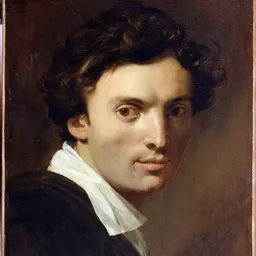
Lived 1805 – 1883 (aged 77). Guillaume Geefs was a Belgian and French sculptor, politician and visual artist.
Guillaume Geefs (10 September 1805 – 19 January 1883 ), also Willem Geefs, was a Belgian sculptor. Although known primarily for his monumental works and public portraits of statesmen and nationalist figures, he also explored mythological subject matter, often with an erotic theme.
Life Guillaume Geefs was born in Antwerp, Belgium, the eldest of six brothers in a family of sculptors, the best-known of whom are Joseph Geefs (1808–1885, winner of the Prix de Rome in 1836) and Jean Geefs (1825–1860, and winner of the prize in 1846). Guillaume first studied at the Royal Academy of Fine Arts Antwerp under the late–Flemish Baroque sculptor Jan Frans van Geel and his son, Jan Lodewijk van Geel, who was also a sculptor. He completed his training under Jean-Etienne Ramey at the École des Beaux-Arts in Paris and began exhibiting his work in 1828.
In 1829, Geefs traveled to Italy. When he returned to Antwerp, he began teaching at the art academy. During the 1830s, he executed the colossal work Victims of the Revolution at Brussels, as well as numerous statues and busts. In 1836, he married Isabelle Marie Françoise Corr, a Brussels-born painter of Irish descent known professionally as Fanny Geefs. In the mid-19th century, the sculptor Guillaume-Joseph Charlier was an assistant to him and his brother Joseph.
The Geefs family played a leading role in the craze for public sculpture that followed Belgian independence in the 1830s, producing several propagandistic monuments that emphasized a "historical continuity of the southern Low Countries in the new independent state".
Honours 1875 : Officer in the Order of Leopold. 1881 : Grand Officer in the Order of Leopold. Knight of the Order of the Immaculate Conception of Vila Viçosa. He was prolific in producing tombs, pulpits, statues, busts, and sculpture groups.
Works The works of Guillaume Geefs include: Epitaphe of count Jacques Coghen, Belgian Minister of Finance (1831–1832), in Laeken Cemetery Epitaphe of and Marie-Joseph d'Ognyes; in the in Brussels Frédéric de Mérode (1833/1837), tomb monument, "noted for its naturalness and lack of idealization" General Belliard (1838), on the Rue Baron Horta in Brussels; more than life-size Monument to the Martyrs of the 1830 Revolution (1836–38), an allegorical monument commemorating the victims of the Belgian Revolution, on the Place des Martyrs/Martelaarsplein in Brussels Leopold I, considered one of the most important works of public art in Belgium in the 19th century; a stamp issued in 1981 commemorates this statue; it may be viewed online Treurende Adonis (1839), white marble of Adonis in mourning A small sculpture of a young sleeping angel, privately held and not authenticated (but signed by the artist), found in 1993 in an abandoned house in Brussels Grétry (1842), bronze statue of the composer, in front of the opera house in Liège Le génie du mal, a Lucifer in white marble for the Cathedral of St. Paul in Liège Charlemagne (1843), statue in the Basilica of Saint Servatius in Maastricht Cenotaph of Saint Hubert of Liège, Basilica of Saint-Hubert (1847) The Roman Gladiator, located opposite the M. H. de Young Memorial Museum in San Francisco, to mark the ground-breaking for the 1894 Mid-Winter Exposition Le lion amoreux or The Amorous Lion (1851), marble, in the Royal Museums of Fine Arts of Belgium Gardel Memorial (1864), a 25-foot pyramid memorial in Mount Vernon Cemetery in Philadelphia, with statues depicting Africa, Asia, Europe, Hope and Faith A statue of Isabelle Brunelle (1872) in the garden of the almshouse that she founded in Namur.
Assessment In his lifetime, Geefs' work was considered by some to be marred by "frivolous and inessential" details and "poverty of thought", together with a perceived frigidity of expression in his modelling. He is now regarded as the dominant Belgian sculptor of his time.
Don’t just read it —
keep it.
Full-length biographies made to live with: read them, listen on the way to work, watch them tonight.
- E-book
- Audio
- Video
Instant download · yours to keep · every purchase keeps this site free
Important facts
Family & relationships
People in Guillaume Geefs's life
Named in this biography and alive at the same time

Related people
Same field, nearest in time



Contemporaries
People whose lives overlapped Guillaume Geefs's






Frequently asked questions
Who was Guillaume Geefs?
Belgian sculptor (1805–1883)
When was Guillaume Geefs born?
Guillaume Geefs was born on 10 September 1805 in Borgerhout, Antwerp.
When did Guillaume Geefs die?
Guillaume Geefs died on 19 January 1883 in Belgium, Schaerbeek.
What was Guillaume Geefs's occupation?
Guillaume Geefs was a sculptor, politician and visual artist.
What nationality was Guillaume Geefs?
Guillaume Geefs was Belgian and French.
Sources & further reading
Cite this page
APA: Biography.guide. (2026). Guillaume Geefs. https://biography.guide/guillaume-geefs/
MLA: "Guillaume Geefs." Biography.guide, https://biography.guide/guillaume-geefs/.
Chicago: "Guillaume Geefs." Biography.guide. https://biography.guide/guillaume-geefs/.
Data last updated: 2026-09-23 · Spot an error? Report a correction.
Portrait: Wikimedia Commons · author & licence
Page generated 2026-09-27 05:06 UTC