
About Guilhermina Suggia
Lived 1885 – 1950 (aged 65). Guilhermina Suggia was a Portuguese cellist.
Guilhermina Augusta Xavier de Medim Suggia Carteado Mena, known as Guilhermina Suggia (27 June 1885 – 30 July 1950) was a Portuguese cellist. She studied in Paris with Pablo Casals, and built up an international reputation. She spent many years living in the United Kingdom, where she was particularly celebrated. She retired in 1939, but emerged from retirement to give concerts in Britain. Her last was in 1949, the year before her death.
Suggia bequeathed her instrument to be sold to fund the Suggia Gift, an important British scholarship for young cellists.
Biography
Suggia was born in Porto to a family of Portuguese and Italian descent. Her father was a competent musician and taught her musical theory and cello. Such was her progress that by the age of 12 she was appointed principal cellist of the local orchestra, the Orpheon Portuense. In 1904, under the patronage of Queen Maria Amélia of Portugal, she went to study at Leipzig under Julius Klengel. Although Klengel was a professor at the Leipzig Conservatoire, Suggia did not enroll there but rather took private lessons from him.
Within a year Suggia was asked to appear as a soloist with the Leipzig Gewandhaus Orchestra under its conductor, Arthur Nikisch. From 1906 to 1912 she lived and worked in Paris with the cellist Pablo Casals. After they separated, Suggia retained her admiration for Casals, describing him as pre-eminent among living cellists. In 1914 she formed a trio with the violinist Jelly d'Arányi and the pianist Fanny Davies. Her "Montagnana" cello rests in Conservatório de Música do Porto, her home town in Portugal.
Edward Hudson, the founder of the British magazine Country Life is said to have been infatuated by Guilhermina. He was briefly engaged to her and bought her the aforementioned Montagnana cello, which she is shown playing in the portrait by Augustus John referred to below.
In 1927, Suggia married Jose Mena, an X-ray specialist. During World War II, Suggia and her husband returned to Portugal, where she lived in retirement. She gave her last concerts at the Edinburgh Festival in 1949 and in Bournemouth later the same year. Russell criticised her as a teacher because she attempted to make students imitate her precise technique. A compilation CD was released in 2004 with performances of Haydn, Max Bruch and Lalo (Dutton CDBP9748).
Legacy Suggia bequeathed her Stradivarius cello to the Royal Academy of Music in London, to be sold to fund a scholarship for young cellists. Robert Cohen (1967–1971), Hafliði Hallgrímsson, Steven Isserlis, Raphael Wallfisch and Julian Lloyd Webber. In 2010 it was announced that the 2011 Suggia Gift would be run in association with the 2011 International Guilhermina Suggia Festival, held in her native city.
The large auditorium at Casa da Música in Porto is named Sala Suggia in her honour.
TAP Portugal, the national airline, named one of its aeroplanes (an Airbus A319) after her.
Probably the most famous image of Suggia is the oil portrait by the Welsh artist Augustus John, whose daughter Amaryllis Fleming later became a well-known cellist herself. This picture was commissioned initially by Edward Hudson (see above) and begun in 1920 but not finished till 1923. It was shown at the Carnegie Institute in Pittsburgh in 1924, bought by an American but later returned to England and presented to the Tate Gallery. The painting measures 186 X 165 cm. The Manchester Guardian wrote of this work that it "will serve to remind future generations that here was a musician who matched the nobility of her art with that of her presence on the concert platform." and a photographic portrait by Bertram Park is in the National Portrait Gallery in London.
Don’t just read it —
keep it.
Full-length biographies made to live with: read them, listen on the way to work, watch them tonight.
- E-book
- Audio
- Video
Instant download · yours to keep · every purchase keeps this site free
Important facts
People in Guilhermina Suggia's life
Named in this biography and alive at the same time
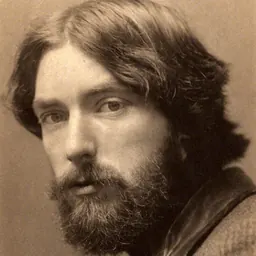



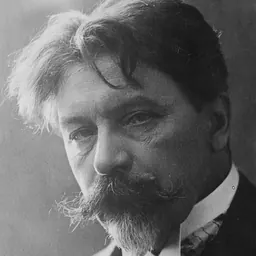

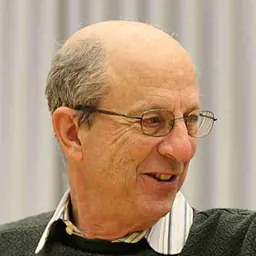
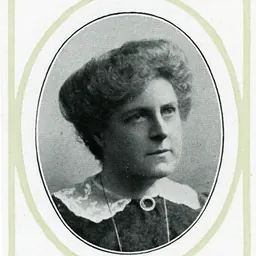
Related people
Same field, nearest in time




Contemporaries
People whose lives overlapped Guilhermina Suggia's

Frequently asked questions
Who was Guilhermina Suggia?
Portuguese musician
When was Guilhermina Suggia born?
Guilhermina Suggia was born on 27 June 1885 in Porto.
When did Guilhermina Suggia die?
Guilhermina Suggia died on 30 July 1950 in Porto.
What was Guilhermina Suggia's occupation?
Guilhermina Suggia was a cellist.
What nationality was Guilhermina Suggia?
Guilhermina Suggia was Portuguese.
Sources & further reading
· Wikipedia: Guilhermina Suggia
Cite this page
APA: Biography.guide. (2026). Guilhermina Suggia. https://biography.guide/guilhermina-suggia/
MLA: "Guilhermina Suggia." Biography.guide, https://biography.guide/guilhermina-suggia/.
Chicago: "Guilhermina Suggia." Biography.guide. https://biography.guide/guilhermina-suggia/.
Data last updated: 2026-09-20 · Spot an error? Report a correction.
Page generated 2026-09-27 05:22 UTC