
About Guido Molinari
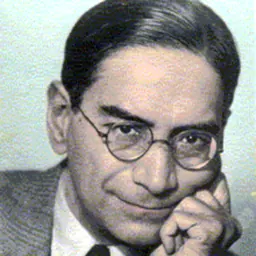
Lived 1933 – 2004 (aged 70). Guido Molinari was a Canadian painter, poet, art critic, art theorist, university teacher and writer.
Guido Molinari L.L. D. (12 October 1933 – 21 February 2004) was a Canadian artist, known nationally and internationally for his serial abstract paintings and their dynamic interplay of colours and focus on modular shapes. His Stripe series is especially celebrated. Molinari himself described their effect - and the effect of all his paintings - as creating a new kind of fictional space "because it happens in the mind and yet also involves the totality of perception".
Biography Molinari was born in Montreal, Quebec into a family originally from the Abruzzo region in Italy. He was the son of Charles Molinari (1879–1948), a musician with the Orchestre des concerts symphoniques de Montréal and first president of the Quebec Musicians' Association; and of Evelyne Dini (1889–1966), the daughter of a sculptor, so his childhood was culturally rich. He began painting at age 13 and later enrolled at the School of the Art Association of Montreal, studying with Marian Dale Scott and Gordon Webber (1948–1951). A year later, he contracted tuberculosis. While he was convalescing, he studied existentialism, reading authors such as Sartre, Camus, Piaget and Nietzsche. He did not complete his formal training in art but found his own path. He then returned to Montreal where he held his first solo exhibition at L'Échourie, founded the Galerie L'Actuelle with Fernande Saint-Martin, his future wife (also in 1955) and was one of the founding members of The Non-Figurative Artists' Association of Montreal in 1956. Between 1963 and 1969, he created hard edge paintings consisting of colour in vertical bands of equal width placed on a flat picture plane called the Stripe series. The National Gallery of Canada, acquired a canvas from the series.
Molinari was selected by Lawrence Alloway for the Guggenheim International Award 1964 exhibition. His paintings were seen in New York, Honolulu, Berlin, Ottawa and Buenos Aires. They were also seen in The Deceived Eye in Fort Worth, Texas; and in a fourth show, a New York solo exhibition at East Hampton Gallery. His work was described by reviewers in glowing terms as "Pop spelled 'Pow!'— in these handsome paintings the message comes across visually". and in 1971, he began to bisect each stripe, creating a new format of triangles. In the late 1970s, he created the Quantificateur series and, in the years before his death, the Checkerboard paintings (he called them the Continuum series).
Molinari taught for 27 years at Sir George Williams University and Concordia University, retiring in 1997.
An avid art collector, his extensive private collection included the work of Mondrian and the manuscript pages of Mondrian's original defition of Neo-Plasticism (1926), Matisse, John Cage, Jasper Johns, and Quebec artists Denis Juneau, John Lyman, and Ozias Leduc. His obituary in the National Post quoted the then director of the Art Gallery of Ontario, Matthew Teitelbaum, as saying he owned Barnett Newman, Richard Serra, Francis Bacon, Piet Mondrian and Ellsworth Kelly.
In 1997, he established the 'Molinari Quartet' through the Molinari Foundation, a group that has been active now for twenty-five plus years.
In 2004, Guido Molinari died of pneumonia after having bone cancer, which had migrated from his lungs.
Selected public exhibitions From 1953, Molinari exhibited his work, primarily in America and Europe. His first solo museum survey was organised by the MacKenzie Art Gallery in Regina in 1964 and toured to the Vancouver Art Gallery. at the National Gallery of Canada (retrospective curated and catalogue by Pierre Théberge, 1976); and the Musée d'art contemporain de Montréal (retrospective, 1995). and the Kunstmuseum Reutlingen concrete.
Honours and awards Molinari won a Guggenheim Fellowship in 1967, the David Bright Prize at the 34th Venice Biennale (1968), was made an Officer of the Order of Canada in 1971, received the Victor Martyn Lynch-Staunton Award (1973) and won the Prix Paul-Émile-Borduas in 1980. In a sale of 15 June 2022 at the Cowley Abbott Auction, Toronto, Molinari's Série noir/blanc, acrylic on canvas, signed and dated "11/67" on the reverse, 81 x 68 ins ( 205.7 x 172.7 cms ), realized a price of $264,000.00.
Documentaries Guido Molinari: The Colour of Memory
Don’t just read it —
keep it.
Full-length biographies made to live with: read them, listen on the way to work, watch them tonight.
- E-book
- Audio
- Video
Instant download · yours to keep · every purchase keeps this site free
Important facts
Family & relationships
People in Guido Molinari's life
Named in this biography and alive at the same time





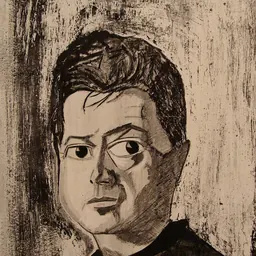

Related people
Same field, nearest in time

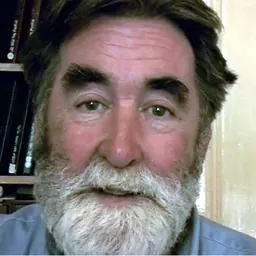

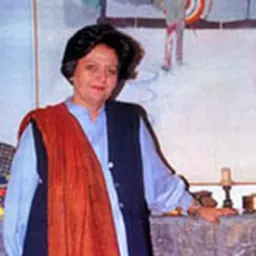


Contemporaries
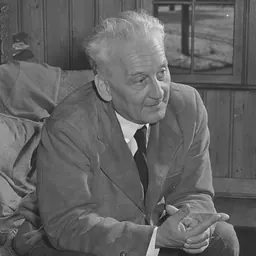
People whose lives overlapped Guido Molinari's



Frequently asked questions
Who was Guido Molinari?
Canadian artist (1933-2004)
When was Guido Molinari born?
Guido Molinari was born on 12 October 1933 in Montreal.
When did Guido Molinari die?
Guido Molinari died on 21 February 2004 in Montreal.
What was Guido Molinari's occupation?
Guido Molinari was a painter, poet, art critic, art theorist, university teacher and writer.
What nationality was Guido Molinari?
Guido Molinari was Canadian.
Sources & further reading
Cite this page
APA: Biography.guide. (2026). Guido Molinari. https://biography.guide/guido-molinari/
MLA: "Guido Molinari." Biography.guide, https://biography.guide/guido-molinari/.
Chicago: "Guido Molinari." Biography.guide. https://biography.guide/guido-molinari/.
Data last updated: 2026-09-20 · Spot an error? Report a correction.
Page generated 2026-09-27 05:13 UTC