
About Guido Marx
Lived 1871 – 1949 (aged 77–78). Guido Marx was an academic.
Guido Hugo Marx (29 March 1871 – 10 September 1949) was an American mechanical engineer who was active in progressive politics, the technocracy movement, and civil liberties. He contributed to helping feed and house hundreds of the 1906 San Francisco earthquake survivors and led the Stanford Academic Council through changes in academic freedom, culminating in founding both the American Association of University Professors and the California chapter of the American Civil Liberties Union.
Biography Guido Hugo Marx was born on 29 March 1871 in Toledo, Ohio. His parents were Joseph Eugene Marx and Johanna Eleanora Marx (ne Pulster); he was their seventh child, in addition to five sisters and an older brother. His father was the editor of a German language newspaper, Die Toledo Express, and his uncle, Guido Marx, was mayor of Toledo in 1875 and 1876. When Marx was one year old his father died of pneumonia leaving his family in difficult financial circumstances, and his mother sent his older brother, Charles David, to wealthy relatives in Germany.
He graduated from the Toledo Manual Training High School at 16 and began work at the Sill Stove Works, where he learned bookkeeping as well as product design, construction, packaging, and repair. In 1889, with financial support from a sister, he attended Cornell University, earning the degree of mechanical engineer in 1893. He worked in industry for two years before joining the Stanford faculty in 1895, at the instigation of Albert W. Smith, his former professor at Cornell who, in collaboration with Guido's brother Charles, was developing Stanford's new School of Engineering. In addition to authoring a book on Machine Design with Albert Smith, his professional activities included research in the fields of gearing and bearing lubrication, advocating vocational guidance for Stanford students, co-founding the American Association of University Professors, and holding office in the American Federation of Teachers. Marx became Professor of Machine Design in 1908.
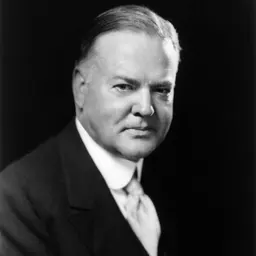
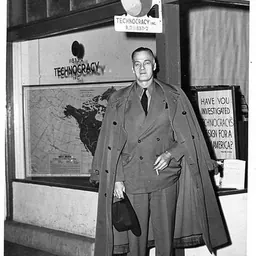
In the early 1900s, Marx undertook a detailed study of faculty salaries, publishing "What Should College Professors be Paid?" in the Atlantic Monthly in 1905. In 1910 he wrote a series of articles entitled "The Problem of the Assistant Professor". where he highlighted the poor salary of non-tenured staff. This influenced newly appointed trustee Herbert Hoover to examine faculty salary levels at Stanford, ultimately resulting in improvements. He served on the Planning Commission and the School Board In Palo Alto and played a key role in the construction of Palo Alto's first municipal power plant. In 1919 Thorstein Veblen invited him to teach a course at the New School for Social Research on the social responsibilities of the engineer. Marx wrote: "It had always been my profound conviction, that the engineer is peculiarly charged with the duty of conserving the natural resources of the world-to utilize them with the greatest immediate and enduring economy and efficiency, for the use and benefit of all of the people." Marx felt that Morris Cooke would be better choice but visited the New School, meeting Howard Scott, whom he found unimpressive. After organizing an unsuccessful meeting with leaders of the American Society of Mechanical Engineers (ASME), Marx became disillusioned with the project and returned to California.
Marx was also active in the American Civil Liberties Union (ACLU), especially around issues of labor organization and the repeal of the Criminal Syndicalism Law, and in 1926 he co-founded and was the first chairman of the California chapter of the ACLU.
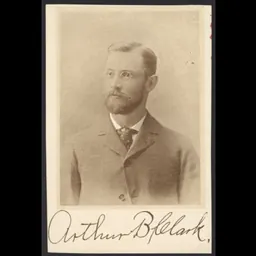
Marx retired in 1936, although he returned to Stanford to provide technical training to soldiers during World War II. Following their marriage they built a house in Palo Alto which was designed with Arthur Bridgman Clark, professor of art and architecture at Stanford. They later built a cottage in Carmel and a "shack" at Fallen Leaf Lake, where Marx enjoyed rock climbing.
Don’t just read it —
keep it.
Full-length biographies made to live with: read them, listen on the way to work, watch them tonight.
- E-book
- Audio
- Video
Instant download · yours to keep · every purchase keeps this site free
Important facts
People in Guido Marx's life
Named in this biography and alive at the same time


Related people
Same field, nearest in time



Contemporaries
People whose lives overlapped Guido Marx's



Frequently asked questions
Who was Guido Marx?
American mechanical engineer and politician
When was Guido Marx born?
Guido Marx was born in 1871.
When did Guido Marx die?
Guido Marx died in 1949.
What was Guido Marx's occupation?
Guido Marx was an academic.
Sources & further reading
Cite this page
APA: Biography.guide. (2026). Guido Marx. https://biography.guide/guido-marx/
MLA: "Guido Marx." Biography.guide, https://biography.guide/guido-marx/.
Chicago: "Guido Marx." Biography.guide. https://biography.guide/guido-marx/.
Data last updated: 2026-09-20 · Spot an error? Report a correction.
Page generated 2026-09-27 05:22 UTC