
About Gualtiero Jacopetti
Lived 1919 – 2011 (aged 91). Gualtiero Jacopetti was an Italian film director, journalist, screenwriter and film editor.
Gualtiero Jacopetti (; 4 September 1919 – 17 August 2011) was an Italian documentary film director. With Paolo Cavara and Franco Prosperi, he is considered the originator of mondo films, also called "shockumentaries".
Early life Gualtiero Jacopetti was born in Barga, in Northern Tuscany, in 1919. During World War II, he served in the Italian Resistance to fascist dictator Benito Mussolini. After the war, on the advice of his friend and mentor Indro Montanelli, he began to work as a journalist. He co-founded the influential liberal newsweekly Cronache (considered to be a direct predecessor to L'Espresso The theme song "More" by Italian composer Riz Ortolani was nominated for the Academy Award for Best Original Song in 1963, the year of its premier in the United States.
The success of Mondo Cane inspired an entire genre of documentaries featuring lurid or shocking subjects, which came to be known as mondo film. Jacopetti and Prosperi (who would become film-making partners for the remainder of Jacopetti's directorial career) went on to make several more entries into this genre, including Women of the World (with Paolo Cavara), Mondo Cane 2, Africa Addio and the faux-documentary Goodbye Uncle Tom. In the 2003 documentary The Godfathers of Mondo, Jacopetti describes the style they used to make these films: "Slip in, ask, never pay, never reenact." Jacopetti and Prosperi attempted a fictional film, 1975's Mondo candido (a modern version of Candide by French philosopher Voltaire). Jacopetti went on to write (but not direct) one further documentary, 1981's Fangio: Una vita a 300 all'ora (which follows the career of Formula One driver Juan Manuel Fangio) before returning to print media for the remainder of his career.
Criticism Despite their early success with Mondo Cane, controversy followed Jacopetti and Prosperi's careers. The New York Times reviewer Pauline Kael dismissed Mondo Cane, claiming that its advocates were "too restless and apathetic to pay attention to motivations and complications, cause and effect". Ebert's review was not based on the original film but on an edited version for US audiences. This version was edited and translated without the approval of Jacopetti. Indeed, the differences are such that Jacopetti has called this film a "betrayal" of the original idea. Notable differences are thus present between the Italian and English-language versions in terms of the text of the film. Many advocates of the film feel that it has unfairly maligned the original intentions of the filmmakers.
Jacopetti claimed his intent was to create films that "...would play on the big screen whose subject was reality". with the exception of Mondo Cane 2 which they acknowledge does contain some staged or recreated footage.
Filmography As director Mondo Cane (A Dog's World), 1962 Women of the World, 1963 Mondo Cane 2, 1963 Africa Addio (Africa Blood and Guts or Farewell Africa), 1966 Goodbye Uncle Tom, 1971 Mondo candido (White World), 1975 Operazione ricchezza (Operation Wealth), 1983 Un'idea della pace (An Idea of Peace), 1985
As screenwriter Europa di notte (Europe by Night) directed by Alessandro Blasetti, 1959 Il mondo di notte (World by Night) directed by Luigi Vanzi, 1959 The Joy of Living directed by René Clément, 1961 Fangio: Una vita a 300 all'ora (Fangio: A Life at 300 an Hour) directed by Hugh Hudson, 1981
Don’t just read it —
keep it.
Full-length biographies made to live with: read them, listen on the way to work, watch them tonight.
- E-book
- Audio
- Video
Instant download · yours to keep · every purchase keeps this site free
Important facts
People in Gualtiero Jacopetti's life
Named in this biography and alive at the same time



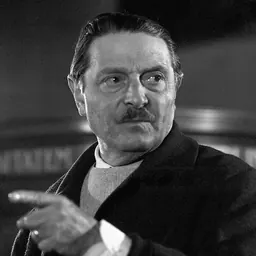
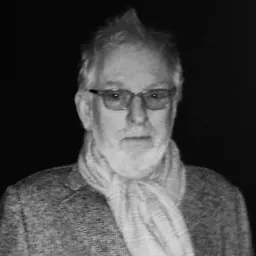
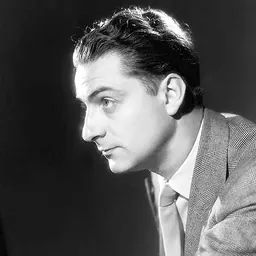
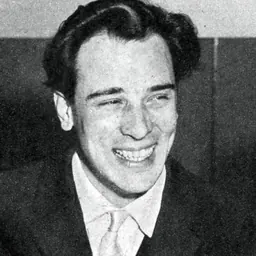
Related people
Same field, nearest in time




Contemporaries
People whose lives overlapped Gualtiero Jacopetti's

Frequently asked questions
Who was Gualtiero Jacopetti?
Italian film director (1919–2011)
When was Gualtiero Jacopetti born?
Gualtiero Jacopetti was born on 4 September 1919 in Barga.
When did Gualtiero Jacopetti die?
Gualtiero Jacopetti died on 17 August 2011 in Rome.
What was Gualtiero Jacopetti's occupation?
Gualtiero Jacopetti was a film director, journalist, screenwriter and film editor.
What nationality was Gualtiero Jacopetti?
Gualtiero Jacopetti was Italian.
Sources & further reading
· Wikipedia: Gualtiero Jacopetti
· DBpedia: Gualtiero Jacopetti
Cite this page
APA: Biography.guide. (2026). Gualtiero Jacopetti. https://biography.guide/gualtiero-jacopetti/
MLA: "Gualtiero Jacopetti." Biography.guide, https://biography.guide/gualtiero-jacopetti/.
Chicago: "Gualtiero Jacopetti." Biography.guide. https://biography.guide/gualtiero-jacopetti/.
Data last updated: 2026-09-22 · Spot an error? Report a correction.
Page generated 2026-09-27 05:24 UTC