
Grzegorz Piotrowski
Polish journalist
About Grzegorz Piotrowski
Born 1951. Grzegorz Piotrowski is a Polish journalist, mathematician, officer of the Milicja Obywatelska and spy.
Grzegorz Sławomir Piotrowski (born 3 May 1951 in Łódź) is a former captain of Security Service who was responsible for the kidnapping and murder of Jerzy Popiełuszko and was sentenced to 25 years in prison until he was released roughly a decade later, but was demoted to a lower rank.
Biography
Early life and family Born to Władysław and Irena (née Chojnacka),, Grzegorz was raised in an intellectual family. His father Władysław Piotrowski (born Władysław Ryszard Pietruszka in 1918) had attended a secondary education and changed his surname to Piotrowski in 1946, then married Irena. He then worked at the cottage and applied in Łódź and the process plant in Łódź. Piotrowski was raised by his mother, Iwona Piotrowski, and his parents were divorced in 1955, two years after Grzegorz birth. His mother Irena (1923–1973) was a chemical engineer, was married three times, taught at vocational school in Łódź, and was active in the Polish United Workers' Party (PZPR) and in Polish Teachers' Union. His mother Irena died at the age of 50 due to her illness while Piotrowski was praying for her recovery as he was close to the Church.
Piotrowski then graduated from one of his general education liceum, primary and secondary, school in Łódź.
Piotrowski has (or had) an older brother who is five years his senior.
Economic secondary school in University of Łódź After passing his exams in high school, he applied to the Faculty of Electrical Engineering to study industrial electric engineering at the University of Łódź, na kierunek elektrotechnika przemysłu, but he was not accepted to take a job at the Elta factory named after the Peasant Battalions, a Polish partisan organization during World War II. However, one year later, he reapplied to the University of Łódź as a Mathematics, Physics, and Chemistry student, then he completed military training. In addition to complete military training, Piotrowski played basketball during his recreation and held swimming and sailing licenses.
In 1973, before graduating from the University of Łódź, he found a job at the then Economic High School No. 1 on Astronautów Street in Łódź as a mathematics teacher. His mother Irena died that same year. In September 1973, he completed his master's degree at the University of Łódź with a specialization in general mathematics, with a good grade based on the master's thesis entitled “Polynomials over any ring,” which was graded as good by the supervisor and satisfactory plus by the reviewer and a mathematician. In 1974, he was sent to the Reserve Officers' School at the General Józef Bem Higher School of Rocket Forces and Artillery in Toruń, and after graduating, he completed his so-called command training as an officer, platoon commander in the 5th Supply Battalion in Gubin.
In December 1974, he was promoted to second lieutenant and qualified for the military reserve. His commander in Gubin stated in his opinion: "A soldier with little discipline, ambition, and conscientiousness. He left his place of service without permission before the end of his shift, did not take care of the equipment entrusted to him, and caused a car accident." In December 1974, after completing the SOR, he returned to his teaching position at High School No. 1 in Łódź, where he worked for several months, i.e., until September 1975. From March to November 1975, he attended the Second Television Course in Computer Science (third degree), organized by the Research and Development Center for Computer Science in Warszaw.
Service in security forces On 16 September 1975, he began working in Department IV of the Citizens' Militia in Łódź, dealing with the fight against the Catholic Church in the then Łódź Voivodeship. Piotrowski was persuaded to work for the security services by his father-in-law, Jan Pietrzak, who was an employee of the Municipal Headquarters of the Citizens' Militia in Łódź between 1948 and 1972.In 1977, Piotrowski joined Polish United Workers' Party, In August 1979, he submitted an application to the provincial commander of the Citizens' Militia in Łódź for permission to begin studying at the Evening University of Marxism–Leninism. The application was approved.. From 1981 to 1984, he worked in Department IV of the Ministry of Internal Affairs (photo from 2017). On 1 April 1981, he was transferred to Department IV of the Ministry of Internal Affairs in Warsaw, to the position of deputy head of Division I. His promotion was initiated by the then director of Department IV, Konrad Straszewski. Piotrowski was involved in combating the Catholic Church and religious associations in Poland. According to the preserved documentation of trips made by the Fourth Department of the Ministry of Internal Affairs, Piotrowski repeatedly participated in meetings with the KGB's department for diversion and ideological struggle between 1971 and 1982. At the turn of 1982 and 1983, while serving as head of Division VI of Department IV of the Ministry of Internal Affairs.|group=uwaga aimed at Pope John Paul II. The provocation failed because, under the influence of alcohol, Piotrowski, driving a company Fiat Mirafiori, caused an accident by hitting a concrete pole in front of the Holiday Inn hotel in the center of Kraków.
In January 1983, together with three other Security Service officers, he kidnapped Janusz Krupski and burned him with a corrosive liquid. .|group=uwaga, where on the Ostróda - Olsztynek highway, he intended to throw a stone at the windshield of the priest's car, but the priest's driver, Waldemar Chrostowski. Piotrowski served his sentence in several prisons (including Mokotóv Prison, ). In the 1990s, the court refused to give him parole due to his family's poor financial situation, allowed him to leave prison early (during this period, he helped his wife run a travel agency and, under a changed name, gave private lessons in mathematics ), but after a few months, in 1995 (after the Supreme Court upheld the extraordinary appeal of the minister of justice, Włodzimierz Cimoszewicz .On November 6, 1984, she was dismissed from her job at the Passport Department of the Ministry of Internal Affairs who determined that on October 19, 1984, apart from Piotrowski's group, another group was operating, with Internal Military Service (six officers of the Bydgoszcz Internal Security Agency).|group=uwaga.
On the night of October 25, 1984, Father Popiełuszko's body was thrown from a dam into the Vistula Lagoon in Włocławek, and was first unofficially recovered on October 26, 1984. Officially, the priest's body was recovered on October 30, 1984, and transported to the morgue of the Medical University of Białystok. According to Witkowski, renewed testimony from WSW soldiers could prove crucial to the investigation. However, the interrogation did not take place. In November 1991, he was removed from the case. His successor closed the investigation and referred the indictment against the generals to court. Ciastoń and Płatek, were ultimately acquitted. In 2000, Witkowski once again headed a group consisting of prosecutors and police officers.
Status as of 2024/2025 The status of the case in October 2024 was as follows: the investigation into the kidnapping and murder of Father Jerzy Popiełuszko was conducted by prosecutor Mieczysław Góra from the Branch Commission for the Prosecution of Crimes against the Polish Nation in Institute of National Remembrance (In 2025, prosecutor Mieczysław Góra was a prosecutor for the Branch Commission for the Prosecution of Crimes against the Polish Nation in Gdańsk ). Prosecutor Góra pointed out that, based on the evidence gathered, the circumstances surrounding Father Popiełuszko's death were as established during the investigation in 1984. In June 2025, Mieczysław Góra, prosecutor of the Branch Commission for the Prosecution of Crimes against the Polish Nation in Gdańsk, questioned the former head of the Management Board I (WSW/WSI) Colonel Aleksander Lichocki, retired.
Don’t just read it —
keep it.
Full-length biographies made to live with: read them, listen on the way to work, watch them tonight.
- E-book
- Audio
- Video
Instant download · yours to keep · every purchase keeps this site free
Important facts
People in Grzegorz Piotrowski's life
Named in this biography and alive at the same time


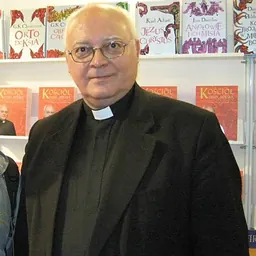
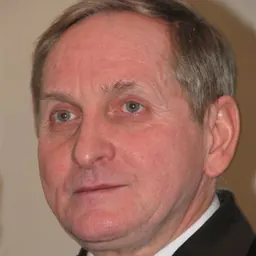
Related people
Same field, nearest in time
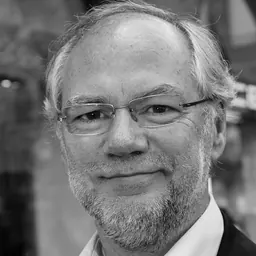


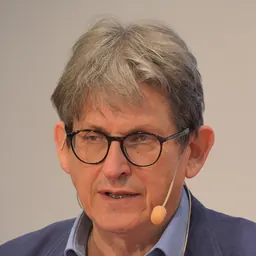

Contemporaries
People whose lives overlapped Grzegorz Piotrowski's


Frequently asked questions
Who is Grzegorz Piotrowski?
Polish journalist
When was Grzegorz Piotrowski born?
Grzegorz Piotrowski was born on 23 May 1951 in Łódź.
What is Grzegorz Piotrowski's occupation?
Grzegorz Piotrowski is a journalist, mathematician, officer of the Milicja Obywatelska and spy.
What nationality is Grzegorz Piotrowski?
Grzegorz Piotrowski is Polish.
Sources & further reading
· Wikipedia: Grzegorz Piotrowski
· DBpedia: Grzegorz Piotrowski
Cite this page
APA: Biography.guide. (2026). Grzegorz Piotrowski. https://biography.guide/grzegorz-piotrowski/
MLA: "Grzegorz Piotrowski." Biography.guide, https://biography.guide/grzegorz-piotrowski/.
Chicago: "Grzegorz Piotrowski." Biography.guide. https://biography.guide/grzegorz-piotrowski/.
Data last updated: 2026-09-20 · Spot an error? Report a correction.
Page generated 2026-09-27 05:28 UTC