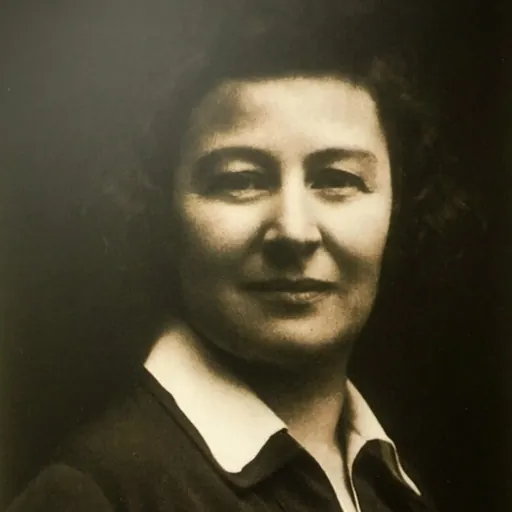
Grunya Sukhareva
Ukrainian-Russian psychiatrist and university teacher
About Grunya Sukhareva
Lived 1891 – 1981 (aged 89). Grunya Sukhareva was a Russian psychiatrist and university teacher, known for Autism.
Grunya Yefimovna Sukhareva (, , alternative transliteration Suchareva) (11 November 1891 – 26 April 1981) was a Soviet child psychiatrist and the first psychiatrist to identify and pathologize autism.
Biography Grunya Yefimovna Sukhareva was born to parents Khaim Faitelevich and Rakhila Iosifovna Sukhareva on November 11th, 1891 in Kyiv, Russian Empire. She served as Head of the Defectology Department at the Institute of Mental Health of Children and Adolescents from 1919 until her departure in 1921.
In 1928, Sukhareva worked as an associate professor at Moscow's first Medical Institute.
Contribution to the study of autism One of Sukhareva's primary areas of study throughout her career was autism in children. She is credited by scholars as making observations that closely mirror ASD as described by the DSM-5 and ICD-11. Sula Wolff translated it in 1996 for the English-speaking world. This seminal work consisted of clinical accounts of the syndrome in 6 young boys, wherein Sukhareva detailed behaviors that she identified as representative of "schizoid psychopathy". Given the relatively little research that has been conducted in autistic women and girls, and the ICD-11 notes they remain under-diagnosed with ASD, Sukhareva is considered a pioneer in the field of psychiatry for her contributions in this regard as well. Sukhareva frequently cited her professor, and head of the psychoneurological department at Moscow, Mikhail Osipovich Gurevich, as her primary mentor in her publications. Scholars suggest the two worked closely together throughout her career. Sukhareva's work expanded upon the definition throughout her career while making great strides in differentiating between ASD and schizophrenia nearly 30 years prior to the establishment of separate classifications for these diagnoses with the publication of the DSM-III in 1980. In as much as Sukhareva's autism research was translated and published in German-language journals within a year of its domestic publication in Russian, there existed no serious barrier to access of these materials by Asperger and Kanner. Kanner cited Sukhareva's 1932 publication Über den Verlauf der Schizophrenien im Kindesalter
Psychiatry Sukhareva believed that for personality disorders to appear in children and teenagers, a significant social factor was required. Some of the factors she discussed for personality disorders were a poor family environment and societal structure. She was a pioneer in using the method of suggestion, and fought for children's rights, stating that difficult children should not be sent to prisons, but to medical institutions. She also studied PTSD from war injuries sustained by children.
Award By order of the Moscow Department of Health, the Moscow Scientific and Practical Center for Mental Health of Children and Adolescents was named after Sukhareva, with the prefix G. E. Sukhareva appended to the front. The center is the leading specialized medical institution for the treatment of suicidal states in children and adolescents under 18 years of age.
Sukhareva's patients In 1926 then 1927, Sukhareva described six boys and five girls as having what is now considered autism. These anonymous patients, some of the first to be identified as having the disorder, were described as follows: A 12-year-old who had taught himself to read at age five. He was physically awkward and preferred talking to adults instead of children. He was very interested in philosophy. A gifted violinist who struggled socially. A child with exceptional memory of numbers but with face blindness. A child who had imaginary friends that lived in a fireplace.
Selected works Sukhareva GE, Analysis of children's fantasies as a method of studying the emotional life of a child. Kyiv 1921. Sukhareva GE, Schizoid psychopathy in childhood. In the book: Questions of pedology and child psychoneurology, issue 2. M 1925; 157–187. Ssucharewa GE, Die schizoiden Psychopathien im Kindesalter. Monatsschrift für Psychiatrie und Neurologie 60: 235–261, 1926. Sukhareva GE, To the problem of the structure and dynamics of children's constitutional psychopathies (schizoid forms). Journal of Neuropathology and Psychiatry, 1930; 6 Sukhareva GE, Features of the structure of the defect in various forms of the course of schizophrenia (on children's and adolescent material). Neuropathology, psychiatry, mental hygiene, 1935; IV: II: 57–62. Sukhareva GE, Schizophrenia clinic in children and adolescents. Part I. Kharkov: Gosmedizdat of the USSR 1937; 107. Sukhareva GE, Clinic of epilepsy in children and adolescents. Problems of theoretical and practical medicine. M 1938; 234–261. Sukhareva GE, Psychogenic types of wartime reactions. Neuropathology and psychiatry, 1943; 12: 2: 3-10 Sukhareva GE, Clinical lectures on children's psychiatry. T. 1. M: Medgiz 1955; 459. Sukhareva GE, Clinical lectures on children's psychiatry. T. II, Part 2. M: Medicine, 1959; 406. Sukhareva GE, Lapides M. I. About the work of the psycho-neurological cabinet for children and teenagers at the psycho-neurological dispensary and children's clinic. M 1959. Sukhareva GE, Yusevich L. S. Psychogenic pathological reactions (neuroses). In the book: A multivolume guide to pediatrics, t. 8. M 1965. Sukhareva GE, Clinical lectures on children's psychiatry. T. 3. M: Medicine 1965; 270 Sukhareva GE, The role of the age factor in the clinic of children's psychoses. Journal of Neuropathology and Psychiatry 1970; 70: 10: 1514–1520. Sukhareva GE, Lectures on children's psychiatry (Selected Chapters). M: Medicine 1974; 320. Sukhareva GE, translated by Rebecchi K, Autistic Children, Amazon: 2022
Don’t just read it —
keep it.
Full-length biographies made to live with: read them, listen on the way to work, watch them tonight.
- E-book
- Audio
- Video
Instant download · yours to keep · every purchase keeps this site free
Important facts
People in Grunya Sukhareva's life
Named in this biography and alive at the same time

Related people
Same field, nearest in time


Contemporaries
People whose lives overlapped Grunya Sukhareva's


Frequently asked questions
Who was Grunya Sukhareva?
Ukrainian-Russian psychiatrist and university teacher (1891-1981)
When was Grunya Sukhareva born?
Grunya Sukhareva was born on 11 November 1891 in Kyiv.
When did Grunya Sukhareva die?
Grunya Sukhareva died on 26 April 1981 in Moscow.
What was Grunya Sukhareva's occupation?
Grunya Sukhareva was a psychiatrist and university teacher.
What was Grunya Sukhareva known for?
Grunya Sukhareva was known for Autism.
What nationality was Grunya Sukhareva?
Grunya Sukhareva was Russian.
Sources & further reading
Cite this page
APA: Biography.guide. (2026). Grunya Sukhareva. https://biography.guide/grunya-sukhareva/
MLA: "Grunya Sukhareva." Biography.guide, https://biography.guide/grunya-sukhareva/.
Chicago: "Grunya Sukhareva." Biography.guide. https://biography.guide/grunya-sukhareva/.
Data last updated: 2026-09-23 · Spot an error? Report a correction.
Portrait: Wikimedia Commons · author & licence
Page generated 2026-09-27 05:08 UTC