
Grover Krantz
American biological anthropologist
About Grover Krantz
Lived 1931 – 2002 (aged 70). Grover Krantz was an American anthropologist, paleontologist, university teacher and paleoanthropologist, known for Bigfoot, Human evolution and Kennewick Man.
Grover Sanders Krantz (November 5, 1931 – February 14, 2002) was an American anthropologist and cryptozoologist; he was one of the few scientists who have not only researched Bigfoot, but also expressed a belief in the animal's existence. Throughout his professional career, Krantz authored more than 60 academic articles and 10 books on human evolution, and conducted field research in Europe, China, and Java.
Outside of Krantz's formal studies in evolutionary anthropology and primatology, his cryptozoological research on Bigfoot drew heavy criticism from his colleagues due to being considered fringe science, costing him research grants and promotions, and delaying his tenure at the university.
Krantz was tenacious in his work, however, and was often drawn to other controversial subjects, such as the Kennewick Man remains, arguing for their preservation and study.
Early life and education On , Krantz was born in Salt Lake City to Carl Victor Emmanuel Krantz and Esther Maria (née Sanders) Krantz. His parents were devout Mormons, and while Krantz tried to follow the basic Christian philosophy of behavior and morality, he was not active in the religion. Krantz was raised in Rockford, Illinois until the age of 10, in 1942, when his family relocated back to Utah. Krantz also wrote an influential paper on the emergence of humans in prehistoric Europe and the development of Indo-European languages, and was the first researcher to explain the function of the mastoid process. In 1996, Krantz was drawn into the Kennewick Man controversy, arguing both in academia and in court that direct lineage to extant human populations could not be demonstrated. In an interview appearing in The New Yorker, Krantz stated his view that "this skeleton cannot be racially or culturally associated with any existing American Indian group" and: "The Native Repatriation Act has no more applicability to this skeleton than it would if an early Chinese expedition had left one of its members there". In 2001, Krantz attempted to submit the last paper he wrote before his death, entitled "Neanderthal Continuity in View of Some Overlooked Data", but it was rejected by the peer-reviewed journal Current Anthropology, with then-editor Benjamin Orlove stating that it did not make enough reference to the most current research. led him to believe that this was an actual creature. He theorized that sightings were due to small pockets of surviving gigantopithecines, with the progenitor population having migrated across the Bering land bridge, which was later used by humans to enter North America. Gigantopithecus lived alongside humans but is thought to have gone extinct 100,000 years ago in eastern Asia, while the Bering land bridge existed between 135,000 to 70,000 years BP.
In January 1985, Krantz tried to formally name Bigfoot by presenting a paper at the meeting of the International Society of Cryptozoology held in Sussex, England, assigning it the binomen Gigantopithecus blacki, although this was not permitted by the International Commission on Zoological Nomenclature because G. blacki was an existing taxon and because the creature was lacking a holotype. Krantz argued that his plaster casts were suitable holotypes, later suggesting G. canadensis as a name, with the caveat that were Sasquatch found to be a member of the Homininae clade, the genus name could be Gigantanthropus in place of Gigantopithecus. was largely ignored.
Shortly before his death, Krantz also examined the Skookum cast. He did not publicly endorse its authenticity, saying in an interview with Outside magazine: "I don't know what it is. I'm baffled. Elk. Sasquatch. That's the choice."
Personal life and death Grover Krantz had one brother, Victor Krantz, who worked as a photographer at the Smithsonian Institution. On March 3, 1987, Krantz debated Duane Gish on creationism and evolution at Washington State University; the well-publicized three-hour debate was attended by more than 1000 people. thumb Skeletons of Grover Krantz and his dog, Clyde, at the Smithsonian Museum. The posing was done at Krantz's request. On Valentine's Day, , Krantz died in his Port Angeles, Washington home from pancreatic cancer after an eight-month battle with the disease. and Yahoo – as was his last request. After his death, an editor at NPR named Laura Krantz saw the obituary in the Washington Post and realized that Grover was a relative of hers; he was her grandfather's cousin. She spent a year documenting his life's work on her podcast, Wild Thing, and later wrote a children's book, The Search for Sasquatch.
Don’t just read it —
keep it.
Full-length biographies made to live with: read them, listen on the way to work, watch them tonight.
- E-book
- Audio
- Video
Instant download · yours to keep · every purchase keeps this site free
Important facts
People in Grover Krantz's life
Named in this biography and alive at the same time
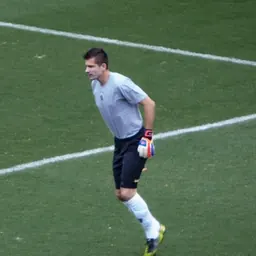



Related people
Same field, nearest in time





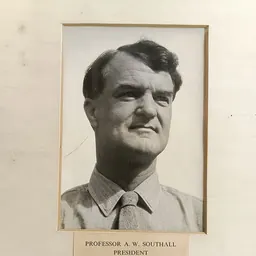
Contemporaries
People whose lives overlapped Grover Krantz's
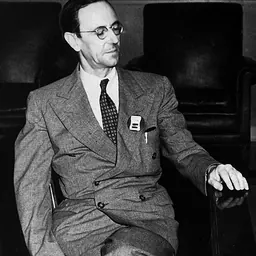
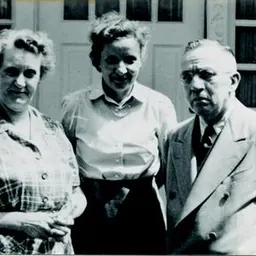
Frequently asked questions
Who was Grover Krantz?
American biological anthropologist (1931–2002)
When was Grover Krantz born?
Grover Krantz was born on 5 November 1931 in Salt Lake City.
When did Grover Krantz die?
Grover Krantz died on 14 February 2002 in Port Angeles.
What was Grover Krantz's occupation?
Grover Krantz was an anthropologist, paleontologist, university teacher and paleoanthropologist.
What was Grover Krantz known for?
Grover Krantz was known for Bigfoot, Human evolution and Kennewick Man.
What nationality was Grover Krantz?
Grover Krantz was American.
Sources & further reading
Cite this page
APA: Biography.guide. (2026). Grover Krantz. https://biography.guide/grover-krantz/
MLA: "Grover Krantz." Biography.guide, https://biography.guide/grover-krantz/.
Chicago: "Grover Krantz." Biography.guide. https://biography.guide/grover-krantz/.
Data last updated: 2026-09-20 · Spot an error? Report a correction.
Page generated 2026-09-27 05:19 UTC