
About Grover Furr
Born 1944. Grover Furr is an American academic, writer and historian.
Grover Carr Furr III (born April 3, 1944) is an American professor of Medieval English literature at Montclair State University and writer on the Stalin-era Soviet Union. He is best known for his historically revisionist views on the subject. that the Katyn massacre was committed by the Nazi Schutzstaffel and not the Soviet NKVD,
Career Grover Furr graduated from McGill University, with a BA in English and received his Ph.D. degree from Princeton University. He has been on the faculty at Montclair State University in New Jersey, specializing in Medieval English literature.
Views Holodomor
In a CounterPunch article published in March 2017, Furr argues that "here was a very serious famine in the USSR, including (but not limited to) the Ukrainian SSR, in 1932–33. But there has never been any evidence of a 'Holodomor' or 'deliberate famine,' and there is none today. The 'Holodomor' fiction was invented by Ukrainian Nazi collaborators who found havens in Western Europe, Canada, and the USA after the war."
Moscow Trials Contrary to the widely accepted view that the Moscow Trials were a series of show trials held at the instigation of Joseph Stalin between 1936 and 1938 against Trotskyists and members of Right Opposition of the Communist Party of the Soviet Union, Furr believes that all defendants in the Moscow Trials were at least guilty of what they were charged, as argued in a 2017 article for Journal of Labor and Society, a quarterly journal published by Brill.
Molotov–Ribbentrop Pact In 2012, Furr stated that the Molotov–Ribbentrop Pact was signed by the Soviet Union to preserve an independent Poland rather than planning a partition of Poland, as was in fact stipulated in the secret protocol of the Molotov–Ribbentrop Pact between Nazi Germany and the Soviet Union. Furr argues that Britain and France also signed the Munich Agreement, a nonaggression pact with Germany that partitioned another state and that Poland too took part in the partition of Czechoslovakia, making the Soviet Union not unique in its signing of a non-aggression pact with Germany. Furr criticises the Polish government in exile, arguing that it should have remained somewhere in Poland "at least long enough to surrender" or could have fled to Britain or France rather than in neutral Romania. In Furr's words, " 'rump' Poland might finally have agreed to make a mutual defense pact that included the USSR. That would have restarted 'collective security', the anti-Nazi alliance between the Western Allies and the USSR that the Soviets sought but UK and French leaders rejected." According to Furr, this would have "greatly weakened Hitler; probably eliminating much of the Jewish Holocaust; certainly preventing the conquest of France, Belgium, and the rest of Europe; [and] certainly prevented many millions of deaths of Soviet citizens".
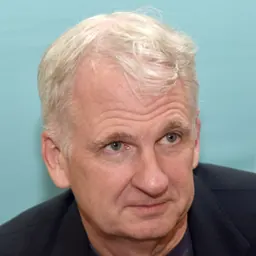
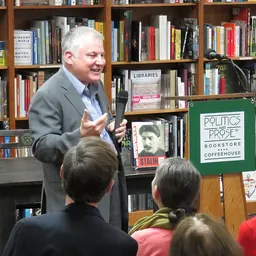
Katyn Massacre Contrary to the historical consensus and as stated by both the Soviet Union (in 1991) and the Russian Federation (in 2004), Furr denies Soviet complicity in the Katyn massacre, arguing in a 2013 article in the Marxist journal Socialism and Democracy that the Katyn massacre was committed by the Nazi Schutzstaffel rather than by the Soviet NKVD. In 2010, Furr said that he believed the widely accepted view until the discoveries in the mass graves at Volodymyr-Volynskyi, which he says prove his thesis. According to Furr, some Poles that were implicated in Polish war crimes against Soviet POWs during 1919–1921, were likely killed by the Soviets while Nazis shot the others later. Furr cites a 1985 interview of Lazar Kaganovich in which he stated that the Soviets shot 3,200 Poles – all of whom were guilty of capital crimes. Timothy Snyder, and Stephen Kotkin .
Reception Historians John Earl Haynes and Harvey Klehr stated that Furr "lauded the creation of Communist regimes" in Europe and Asia because "billions of workers all over the world are exploited, murdered, tortured, oppressed by capitalism." In response to Furr's critical review, historian Gerald Meyer of Hostos Community College wrote that "Furr defends the Soviet state's expulsion of the Volga Germans, Tartars, Chechens, and other ethnic minorities from their homelands", "objects to my contention that collectivization of agriculture resulted in widespread resistance and famine", and "spends most of his energy attempting to refute the truism that Stalin was aware of and approved of huge numbers of political executions."
Cathy Young, describing Furr in an article for The Daily Beast as "a 'revisionist' on a career-long quest to exonerate Stalin", said that Furr's work, along with that of Douglas Tottle, was being used as part of a larger propaganda campaign by the Russian government to muddy the waters and obfuscate the history of Soviet crimes.
Historian Jarosław Szarek, president of the Polish Institute of National Remembrance, condemned Furr's work as denying Soviet war crimes, comparing it to "the scandalous manifestations of Holocaust denial."
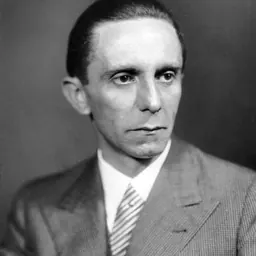
During a public debate at a university campus in 2012, Furr was quoted as saying: "I have yet to find one crime — yet to find one crime — that Stalin committed. ... I know they all say he killed 20, 30, 40 million people — it is bullshit. ... Goebbels said that the Big Lie is successful and this is the Big Lie: that the Communists — that Stalin killed millions of people and that socialism is no good." Both The American Conservative and the Washington Examiner wrote that Furr referred to Nazi propaganda because a mediator of the discussion suggested that Furr was using tactics invented by Joseph Goebbels.
According to British journalist John O'Sullivan writing for National Review, Furr is "a 'historian' who denies that Stalin committed any crimes at all. [...] On reading this, my first reaction was that Grover Furr must be a fictional character or teasing Internet hoax. Revisionist historians nostalgic for 'really existing socialism' have long sought to minimize the number of Stalin's victims and the scale of Soviet crimes. But the extravagance of Furr's claims — every accusation against Stalin false! — made it hard to take them seriously. They amount less to revisionism than to outright denial of historical reality." Conservative writer David Horowitz included Furr in his book The Professors: The 101 Most Dangerous Academics in America, stating that Furr uses his university courses to "vent his political passions on his helpless students", citing Furr's denunciation of "Western imperialists" that was published in the Montclair State University student newspaper.
Don’t just read it —
keep it.
Full-length biographies made to live with: read them, listen on the way to work, watch them tonight.
- E-book
- Audio
- Video
Instant download · yours to keep · every purchase keeps this site free
Important facts
People in Grover Furr's life
Named in this biography and alive at the same time



Related people
Same field, nearest in time




Contemporaries
People whose lives overlapped Grover Furr's



Frequently asked questions
Who is Grover Furr?
academic
When was Grover Furr born?
Grover Furr was born on 3 April 1944 in Washington, D.C..
What is Grover Furr's occupation?
Grover Furr is an academic, writer and historian.
What nationality is Grover Furr?
Grover Furr is American.
Sources & further reading
Cite this page
APA: Biography.guide. (2026). Grover Furr. https://biography.guide/grover-furr/
MLA: "Grover Furr." Biography.guide, https://biography.guide/grover-furr/.
Chicago: "Grover Furr." Biography.guide. https://biography.guide/grover-furr/.
Data last updated: 2026-09-20 · Spot an error? Report a correction.
Page generated 2026-09-27 05:16 UTC