
About Grey Ruthven, 2nd Earl of Gowrie
Lived 1939 – 2021 (aged 81). Grey Ruthven, 2nd Earl of Gowrie was a British and Irish writer, politician and aristocrat.
Alexander Patrick Greysteil Hore-Ruthven, 2nd Earl of Gowrie, the elder son of Major the Hon. Patrick Hore-Ruthven and Pamela Margaret Fletcher. His father was the only surviving son of Alexander Hore-Ruthven, later the 1st Earl of Gowrie in its new creation, and his wife Zara.
His parents were both active in Cairo during the Second World War, his father, "Pat" to the family, His family moved for a time to a tower at Windsor Castle, at Dunlewey, a village at the edge of the Poisoned Glen in Gweedore, County Donegal.
After Eton, Gowrie attended Balliol College, Oxford, and while there he succeeded Paul Foot as editor of The Isis Magazine. it was later sold for £13,800.
Academic and art dealer Gowrie worked for the Times Literary Supplement for a short time, and taught, meeting his future wife while working in a girls' school. After marriage, he moved to the US, working as a visiting lecturer at the State University of New York (SUNY) at Buffalo from 1963 to 1964, then tutoring at Harvard University from 1965 to 1968, while also working with poet Robert Lowell. He dealt in Old Masters, Picassos, and David Hockney at an early stage, and on one occasion sold a Jackson Pollock to the National Gallery of Art in Washington, D.C., for $2 million. He produced his first volume of poetry, A Postcard from Don Giovanni, in 1972; He joined the Conservative front bench under Ted Heath in 1972 as a Lord-in-waiting and Conservative whip in the House of Lords, posts he held until 1974. While the Conservatives were in opposition from 1974 to 1979, he was spokesperson on economic affairs. He is said to have "made little secret of his support for Irish unity" and he proposed joint British and Irish citizenship for Northern Irish people, the option of which was also enshrined in the Good Friday Agreement. He also commented that "Orange and Green both had an appetite for public spending undreamed of by Grantham or Finchley". He was credited with the scheme to nationalise many of the galleries and museums of the Liverpool areas, as National Museums and Galleries on Merseyside, when they were threatened with closure. He said that rumours that Thatcher favoured cuts to arts funding were false: "We had this deal that I was to complain royally and whinge about money, but she'd smuggle me some. And we didn't have great cuts; that's all a myth." He was sworn of the Privy Council and entered the Cabinet. He was Chancellor of the Duchy of Lancaster from 1984, with additional responsibility for personnel and management of the Civil Service. This claim that caused some negative public comment, as it was three times the average London wage of the time.
Following the division of the work of the Arts Council of Great Britain, it was announced in December 1993 that Gowrie would be the first chairperson of the new Arts Council of England The panel instead awarded the 1993 prize to Roddy Doyle's Paddy Clarke Ha Ha Ha.
Gowrie took up a role as a non-executive director of major betting firm Coral Ladbrokes and in 1995 he became non-executive chairman of property company Development Securities plc. He lectured on English and American literature at Harvard and University College, London.
Gowrie opened the first Bacon exhibition in the Soviet Union, in 1988 at the Central House of Artists in Moscow, for which he also wrote the catalogue introduction. He also made a number of television appearances, including in a 2017 documentary on the Anglo-Irish artist Francis Bacon, a programme on the Irish art collector Garech Browne, and a 2009 documentary on artist and British folk revivalist and blues pioneer Rory McEwen, the Poet Laureate. He also appeared in a programme on the Royal National Theatre, as well as multiple episodes of Question Time in the 1980s.
Gowrie was a patron of the Elton John AIDS Foundation. Together with Rowan Williams and Daniel Day-Lewis, he was also a patron of the Wilfred Owen Association, formed in 1989 to commemorate the life and work of the renowned First World War poet Wilfred Owen. He was a founding director of the British Fund for the National Gallery of Ireland (later the International Friends of the National Gallery of Ireland), from 1996 to 2000, rejoining in 2003, serving as co-chairman, and stepping down in 2011. In 2008, he accepted an invitation from CEO Farad Azima to chair the newly-formed Advisory Board of the Iran Heritage Foundation. He was also a member of the Advisory Council of the London Symphony Orchestra.
Writing Early writings Gowrie published one volume of poetry in his 20s, A Postcard from Don Giovanni, after a period working as an assistant to American poet Robert Lowell, and later contributed the chapter on 20th century painting to a book on British painting, The Genius of British Painting, published in 1975. In 1987 he published a biography and artistic profile of the artist Derek Hill, Derek Hill: An Appreciation.
Health and later writings In the summer of 1999, having been diagnosed with a serious heart condition, he received a heart transplant at Harefield Hospital and, after a long recovery, left hospital in 2000; his health remained frail thereafter. He became friends with his principal surgeon, Magdi Yacoub, and chaired the institute named for him. Following his release from hospital, he published his first book of poetry for decades, The Domino Hymn, which contains references to his illness — the title refers to the fact that he was a "domino patient", i.e. one who received a heart from a fellow patient undergoing a heart-and-lung transplant. He later also released Third Day with a mix of new and collected poetry. In 2003, he was elected a Fellow of the Royal Society of Literature.
Personal life Residences Gowrie inherited Castlemartin House and Estate at Kilcullen in County Kildare, Ireland, from his great-aunt, Sheelagh Blacker, in 1967, and later sold it to Tony O'Reilly. in what was formerly Montgomeryshire. and attended the regional literary festival.
Family Gowrie married Xandra (Alexandra) Bingley, daughter of Colonel Robert Bingley, on 1 November 1962. They had one son, Patrick Leo Brer Hore-Ruthven, born 4 February 1964. Generally known as Brer Ruthven, he became a database developer and musician. He was known to describe himself as "an Irishman with a Scots title, married to a German"
Friends Gowrie remained friends with Lowell, his poetic mentor, and was a pallbearer at his funeral. He was also closely associated with Edward Plunkett, the Anglo-Irish painter. He described Margaret Thatcher, Francis Bacon and Andrew Lloyd Webber as among his best friends. He had come to know Bacon later in life, but discovered that they had both partly grown up around the same small town, Kilcullen in County Kildare. He participated in a television documentary about another friend, Guinness heir Garech Browne. Auberon "Bron" Waugh pursued a decades-long public vendetta with Gowrie, over a romantic competition at Oxford which Gowrie had won; despite this, when Waugh died, Gowrie described him as "the greatest journalist of my generation".
Death Lord Gowrie died at his home in Llanfechain, Powys, Wales, on 24 September 2021, at the age of 81, from COVID-19 during the COVID-19 pandemic in Wales. His son succeeded to the peerages and the clan chieftainship.
Don’t just read it —
keep it.
Full-length biographies made to live with: read them, listen on the way to work, watch them tonight.
- E-book
- Audio
- Video
Instant download · yours to keep · every purchase keeps this site free
Important facts
more
Lord Gowrie, Gowrie, Grey Ruthven, Earl ofFamily & relationships
People in Grey Ruthven, 2nd Earl of Gowrie's life
Named in this biography and alive at the same time
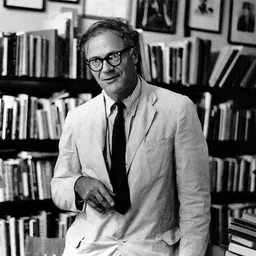
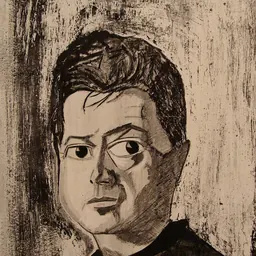

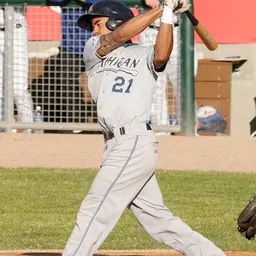
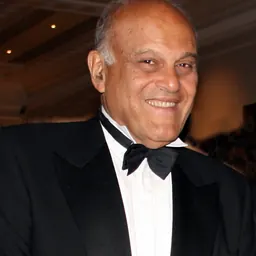


Related people
Same field, nearest in time

Contemporaries
People whose lives overlapped Grey Ruthven, 2nd Earl of Gowrie's




Frequently asked questions
Who was Grey Ruthven, 2nd Earl of Gowrie?
Earl of Gowrie (1939–2021)
When was Grey Ruthven, 2nd Earl of Gowrie born?
Grey Ruthven, 2nd Earl of Gowrie was born on 26 November 1939 in Dublin.
When did Grey Ruthven, 2nd Earl of Gowrie die?
Grey Ruthven, 2nd Earl of Gowrie died on 24 September 2021 in Llanfechain.
What was Grey Ruthven, 2nd Earl of Gowrie's occupation?
Grey Ruthven, 2nd Earl of Gowrie was a writer, politician and aristocrat.
What nationality was Grey Ruthven, 2nd Earl of Gowrie?
Grey Ruthven, 2nd Earl of Gowrie was British and Irish.
Sources & further reading
· Wikipedia: Grey Ruthven, 2nd Earl of Gowrie
Cite this page
APA: Biography.guide. (2026). Grey Ruthven, 2nd Earl of Gowrie. https://biography.guide/grey-ruthven-2nd-earl-of-gowrie/
MLA: "Grey Ruthven, 2nd Earl of Gowrie." Biography.guide, https://biography.guide/grey-ruthven-2nd-earl-of-gowrie/.
Chicago: "Grey Ruthven, 2nd Earl of Gowrie." Biography.guide. https://biography.guide/grey-ruthven-2nd-earl-of-gowrie/.
Data last updated: 2026-09-20 · Spot an error? Report a correction.
Page generated 2026-09-27 04:59 UTC