
About Gregorio López
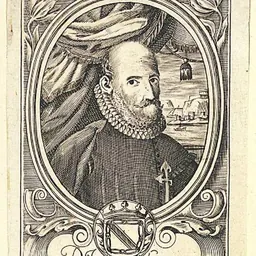
Lived 1542 – 1596 (aged 54). Gregorio López was a Spanish courtier, writer, philanthropist, latinist, naturalist and pietist.
Gregorio López (4 July 1542 – 20 July 1596), sometimes called the first hermit of the New World, was a Spanish hermit, mystical writer, lay ascetic, and herbalist who lived in New Spain. He became renowned in colonial Mexico for his austere solitary life, his reputation for sanctity, and his writings on medicine and biblical interpretation. He was the author of two works of very different character: the Tesoro de medicinas, a treatise on medicinal plants based partly on his own observations and his contact with Chichimeca peoples, and the Declaración del Apocalipsis.
His life became widely known through the biography written by Francisco Losa, his self-described "companion in solitude", first published in Mexico City in 1613. The work was translated, republished, and circulated throughout Catholic and Protestant Europe, becoming influential among mystical, Pietist, and early Methodist readers. Later writers frequently portrayed López as a modern counterpart to the Desert Fathers and as an exemplar of radical contemplative solitude.
Life
According to Losa, López was born in Madrid on 4 July 1542, then the feast day of Gregory Thaumaturgus, and was baptized in the parish church of San Gil, attached to the royal palace. later stated that he had been unable to locate López's baptismal record either in the parish archives or in the Franciscan convent of San Gil.
Losa claimed to know almost nothing about López's parents, since López never spoke of them. He believed that "López" was probably an assumed surname adopted to conceal his lineage. Some later writers speculated, without evidence, that he came from a noble family or was even connected to the Spanish royal house, though Losa himself believed his family was probably poor rather than aristocratic. There he encountered the Dominican friar Domingo de Salazar, later bishop of Manila, who urged him to settle in Mexico City and offered him a cell in the convent of Santo Domingo. Shantz notes that Tersteegen prepared his German version from Pierre Poiret's 1717 French edition and stated that he translated López's life "with the greatest possible faithfulness", intending to convey the author's meaning truly and emphatically. McGinn interprets these traditions as part of the wider development of early modern contemplative spirituality toward increasingly simplified and interior forms of prayer centred on resignation to the divine will.
During the anti-Quietist controversies of the late seventeenth century, López's writings were denounced alongside those of Teresa of Ávila, John of the Cross, Antonio de Rojas, and other authors associated with contemplative prayer.
López also entered nineteenth-century Anglo-American Protestant devotional literature. In 1841 John Eyre published a New York edition of Losa's biography, The Life of Gregory Lopez, a Hermit in America, presenting López as a corrective to an "age of dissipation" marked by vanity, luxury, and worldliness. Eyre stated that the work was not intended to encourage readers "to follow him to the desert, nor turn hermit", but rather to imitate his virtues "at home", including renunciation of vanity, plain speech, abstinence, fervent prayer, resignation to God's will, charity, and detachment from worldly ambition.
Modern scholarship has examined López from several perspectives, including colonial spirituality, eremitical traditions, hagiography, medicine, the history of mystical theology, and the construction of sanctity in the early modern Spanish empire. A further edition appeared in Madrid in 1727 with the addition of López's Tesoro de medicina.
Recent historians have interpreted López from a variety of perspectives, including colonial spirituality, eremitical traditions, the construction of sanctity, medicine in New Spain, and the history of mystical theology. Scholars such as Álvaro Huerga, Antonio Rubial García, Alain Milhou, and Luís Filipe Abrantes Nunes have also debated the relationship between López's spirituality and broader currents of illuminism, contemplative prayer, and early modern mystical reform.
Don’t just read it —
keep it.
Full-length biographies made to live with: read them, listen on the way to work, watch them tonight.
- E-book
- Audio
- Video
Instant download · yours to keep · every purchase keeps this site free
Important facts
People in Gregorio López's life
Named in this biography and alive at the same time


Related people
Same field, nearest in time



Contemporaries
People whose lives overlapped Gregorio López's
Frequently asked questions
Who was Gregorio López?
Spanish writer
When was Gregorio López born?
Gregorio López was born on 4 July 1542 in Madrid.
When did Gregorio López die?
Gregorio López died on 20 July 1596 in Santa Fe.
What was Gregorio López's occupation?
Gregorio López was a courtier, writer, philanthropist, latinist, naturalist and pietist.
What nationality was Gregorio López?
Gregorio López was Spanish.
Sources & further reading
· DBpedia: Gregorio López (hermit)
Cite this page
APA: Biography.guide. (2026). Gregorio López. https://biography.guide/gregorio-lopez-courtier/
MLA: "Gregorio López." Biography.guide, https://biography.guide/gregorio-lopez-courtier/.
Chicago: "Gregorio López." Biography.guide. https://biography.guide/gregorio-lopez-courtier/.
Data last updated: 2026-09-20 · Spot an error? Report a correction.
Page generated 2026-09-27 05:32 UTC