
About Gregg Araki
Born 1959. Gregg Araki is an American film director, screenwriter, film editor, cinematographer, film producer and director.
Gregg Araki (born December 17, 1959) is an American filmmaker. He is noted for his involvement with the New Queer Cinema movement. His Teenage Apocalypse film trilogy, consisting of Totally F***ed Up, The Doom Generation (1995) and Nowhere (1997), has been heralded as a cult classic. His film Kaboom (2010) was the inaugural winner of the Queer Palm at the Cannes Film Festival.
Early life and education Araki was born in Los Angeles on December 17, 1959, to Japanese American parents. He grew up in nearby Santa Barbara, California, and enrolled in college at the University of California, Santa Barbara. He graduated with a B.A. from UCSB in 1982. He later attended the University of Southern California's School of Cinematic Arts, where he graduated with a Master of Fine Arts in 1985.
Career Low-budget beginnings Araki made his directorial debut in 1987 with Three Bewildered People in the Night. With a budget of only $5,000 and using a stationary camera, he told the story of a romance between a video artist, her sweetheart, and her gay friend. Two years later, Araki followed up with The Long Weekend (O' Despair), another film with a $5,000 budget. He often had to shoot his early movies spontaneously and without proper permits.
Teenage Apocalypse trilogy Araki at the Deauville American Film Festival in September 2010Araki's next three movies—Totally F***ed Up (1993), The Doom Generation (1995), and Nowhere (1997)—were collectively dubbed the Teenage Apocalypse trilogy. A former student of his at UC Santa Barbara, Andrea Sperling, co-produced the films with him.
The trilogy saw Araki work increasingly with more notable actors and actresses including Rose McGowan, Margaret Cho, Parker Posey, Guillermo Díaz, Ryan Phillippe, Heather Graham, and Mena Suvari among others.
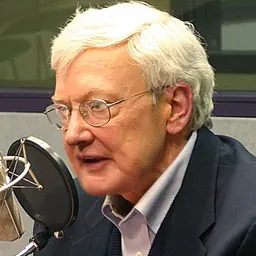
The trilogy received varying degrees of reviews, from a thumbs down and "zero stars" by Roger Ebert to "Literally the Best Thing Ever" by Rookie, and was eventually heralded as cult classics.
Subsequent efforts Araki's film Splendor (1999) was both an homage to screwball comedies of the 1940s and 1950s and a response to the controversy surrounding his ongoing relationship (despite Araki self-identifying as gay) with actress Kathleen Robertson.
Araki's next project was the ill-fated MTV production This Is How the World Ends, originally planned with a budget of $1.5 million. He viewed it as a chance to reach the masses through MTV's viewership and signed on to do the project despite the budget being cut to $700,000.
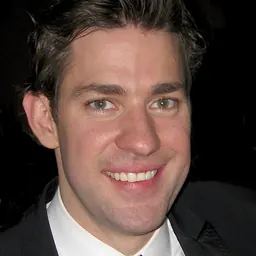
Araki's next feature was the stoner comedy Smiley Face (2007), featuring Anna Faris, Adam Brody, and John Krasinski, written by Dylan Haggerty. It marked a stark change from the dark, heavy drama of Mysterious Skin, a change purposely planned by Araki.
Kaboom marked Araki's tenth film and made its premiere at the 2010 Cannes Film Festival. It was awarded the first ever Queer Palm for its contribution to lesbian, gay, bisexual, and transgender issues.
Araki followed that film with White Bird in a Blizzard (2014), which was given limited release to mixed reviews. Araki returned to television with the 2019 series Now Apocalypse, co-executive produced by Gregory Jacobs and Steven Soderbergh on Starz.
Araki's next film, the comedy/thriller I Want Your Sex, stars Olivia Wilde, Cooper Hoffman, and Charli XCX. The screenplay was written by Araki and Karley Sciortino. The film premiered at the Sundance Film Festival on January 23, 2026, and was released theatrically in the United States on July 31, 2026.
Style One notable feature of Araki's work is the frequent presence of shoegaze music. This was first seen in the soundtrack of Totally Fucked Up, and was also substantially featured in the films Nowhere and Mysterious Skin. Both The Living End and Nowhere owe their titles to this shoegaze influence: The Living End after The Jesus and Mary Chain song of the same name, and Nowhere after Ride's album Nowhere.
Awards and honors In 2010, Kaboom was named the first-ever winner of the Cannes Film Festival Queer Palm. In 2013, Araki was recognized by the Museum of Arts and Design in New York City with the retrospective God Help Me: Gregg Araki.
Personal life Araki has previously self-identified as "a gay Asian American". However, he had a relationship with actress Kathleen Robertson from 1997 to 1999. In a 2014 interview, at which time he was in a relationship with a male partner, Araki said: "I don't really identify as anything", adding "I'd probably identify as gay at this point, but I have been with women."
Filmography Film Year Title Director Writer Producer Editor Cinematography 1987 Three Bewildered People in the Night 1989 1992 1993 Totally F***ed Up 1995 1997 Nowhere 1999 Splendor 2004 Mysterious Skin 2007 Smiley Face 2010 Kaboom 2014 White Bird in a Blizzard 2026 I Want Your Sex
Television
Don’t just read it —
keep it.
Full-length biographies made to live with: read them, listen on the way to work, watch them tonight.
- E-book
- Audio
- Video
Instant download · yours to keep · every purchase keeps this site free
Important facts
People in Gregg Araki's life
Named in this biography and alive at the same time






Related people
Same field, nearest in time


Contemporaries
People whose lives overlapped Gregg Araki's




Frequently asked questions
Who is Gregg Araki?
American film director
When was Gregg Araki born?
Gregg Araki was born on 17 December 1959 in Los Angeles.
What is Gregg Araki's occupation?
Gregg Araki is a film director, screenwriter, film editor, cinematographer, film producer and director.
What nationality is Gregg Araki?
Gregg Araki is American.
Sources & further reading
Cite this page
APA: Biography.guide. (2026). Gregg Araki. https://biography.guide/gregg-araki/
MLA: "Gregg Araki." Biography.guide, https://biography.guide/gregg-araki/.
Chicago: "Gregg Araki." Biography.guide. https://biography.guide/gregg-araki/.
Data last updated: 2026-09-20 · Spot an error? Report a correction.
Page generated 2026-09-27 05:29 UTC