
About Greg King
Lived 1969 – 2012 (aged 43). Greg King was a New Zealand lawyer, broadcaster, criminal defense lawyer and television presenter.
Gregory James King (17 September 1969 – 3 November 2012) was a New Zealand criminal defence lawyer and broadcaster. He was described as "one of this country's finest legal brains".
Early life and education Of Ngāti Tūwharetoa descent, King was born in Whanganui and grew up in Tūrangi, where his father was a prison officer. He was head prefect at Tongariro High School in 1987. The following year, he represented New Zealand as one of 32 pavilion hosts in the World Expo in Brisbane, Australia. He successfully appealed to the Privy Council in 2005 in representing the double murderer Bruce Howse; and his application to the Privy Council in 2008 and 2009 for leave to reopen the case of John Barlow, convicted of the murders of Gene and Eugene Thomas, was similarly successful. In 2009 King assisted Judith Ablett-Kerr in the defence of Clayton Weatherston for the murder of Sophie Elliott. In 2012, King successfully defended Ewen MacDonald on the charge of murdering his brother-in-law Scott Guy, in a long and arduous case that generated huge public interest and included televised court reports. It was King's much-reported passionate advocacy in this case that brought him to national attention across New Zealand and "made him a household name".
The New Zealand Law Society's summary of King's involvement in precedent-making cases includes the following: "He successfully argued in 2009 that Auckland liquor shop owner Virender Singh had exercised his rights to defend himself and his shop with a hockey stick against five teenagers. He was also counsel in the first and second ever successful criminal appeals to the Supreme Court. The first of these, R v Timoti 1 NZLR 323, 21 CRNZ 804, resulted in the overturning of a murder conviction from 1999, with the appeal focusing on the partial defence of provocation. Another Supreme Court success came in R v Wi 2 NZLR 11, 24 CRNZ 731, which reversed several lower court decisions and held that adducing evidence of a lack of previous convictions was still admissible under the Evidence Act 2006."
Death On the morning of 3 November 2012, King was found dead beside his car in Newlands, Wellington. He died by suicide, confirmed by the coroner's report released in October 2013. The coroner revealed that King left a suicide note in which he described himself as "exhausted, unwell, depressed and haunted by the dead from his numerous homicide cases." King said in the note that the trial he had been working on a week before his death "involved yet another terrible, unnecessary death and a lifestyle and community most New Zealanders would have no idea existed".
King's wife, Catherine Milnes-King, told the coroner that her husband was publicly slated after the trial of Ewen Macdonald, whom he successfully defended and who was acquitted of murdering Feilding farmer Scott Guy. She said that in the evening after delivering his closing address in the Macdonald case, her husband had a massive breakdown. The coroner revealed the suicide note explained: "he is haunted by the dead from his numerous homicide cases and hates himself for what he has done."
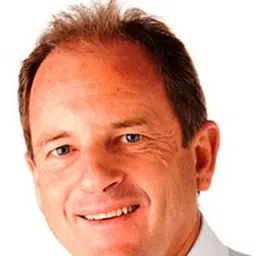
Law Society president Jonathan Temm said: "Throughout his career he represented clients who were often unpopular and he did that with real ability and determination." Former Labour Party leader David Shearer said: "Greg had one of this country's finest legal brains. There wouldn't be many New Zealanders who hadn't heard of him.
His funeral was attended by 800 mourners "from all walks of life."
Reputation King has been described as a "theatrical criminal lawyer". After his death, legal experts praised his legal acumen, "which famously included wild-eyed closing arguments". National Criminal Bar Association president Tony Bouchier said: "He was a rising star of our profession... he was tenacious, fearless and had all the attributes that any criminal barrister would want. We have really lost an ally." During his career, he befriended those he met, including perpetrators and victims. He had an amicable relationship with Garth McVicar from the Sensible Sentencing Trust, with whom he had totally opposing views about the justice system.
Personal life
King was married to fellow lawyer Catherine Milnes-King and was the father of two children. In 2011, the year before he died by suicide, he was diagnosed with diabetes.
Don’t just read it —
keep it.
Full-length biographies made to live with: read them, listen on the way to work, watch them tonight.
- E-book
- Audio
- Video
Instant download · yours to keep · every purchase keeps this site free
Important facts
People in Greg King's life
Named in this biography and alive at the same time





Related people
Same field, nearest in time


Contemporaries
People whose lives overlapped Greg King's




Frequently asked questions
Who was Greg King?
New Zealand lawyer (1969–2012)
When was Greg King born?
Greg King was born on 17 September 1969 in Whanganui.
When did Greg King die?
Greg King died on 3 November 2012 in Newlands.
What was Greg King's occupation?
Greg King was a lawyer, broadcaster, criminal defense lawyer and television presenter.
What nationality was Greg King?
Greg King was New Zealand.
Sources & further reading
Cite this page
APA: Biography.guide. (2026). Greg King. https://biography.guide/greg-king-lawyer/
MLA: "Greg King." Biography.guide, https://biography.guide/greg-king-lawyer/.
Chicago: "Greg King." Biography.guide. https://biography.guide/greg-king-lawyer/.
Data last updated: 2026-09-22 · Spot an error? Report a correction.
Page generated 2026-09-27 05:24 UTC