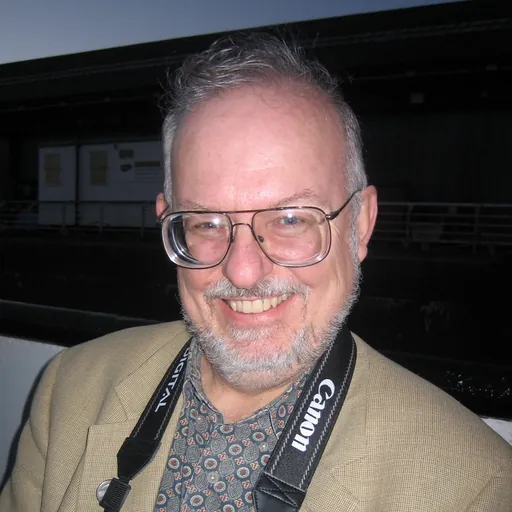
About Greg Bear
Lived 1951 – 2022 (aged 71). Greg Bear was an American novelist, writer, screenwriter, science fiction writer, prose writer and illustrator.
Gregory Dale Bear (August 20, 1951 – November 19, 2022) was an American science fiction writer. His work covered themes of conflict, consciousness, and accelerated evolution. The Forge of God and Anvil of Stars established his reputation. As time went on these works were rolled into lengthier trilogies and series. Along with Forge, popular series have included parallel universes in The Way and evolutionary themes in Darwin's Children.
He won numerous awards over the course of his career. His most awarded novel was Moving Mars, which won a Nebula Award. His last work was the 2021 novel The Unfinished Land. Greg Bear wrote over 50 books in total.
Early life and career
Greg Bear was born in San Diego, California. He attended San Diego State University (1968–1973), where he received a Bachelor of Arts degree. At the university, he was a teaching assistant to Elizabeth Chater in her course on science fiction writing.
Bear is often classified as a hard science fiction author because of the level of scientific detail in his work. Early in his career, he also published work as an artist, including illustrations for an early version of the reference book Star Trek Concordance and covers for periodicals Galaxy and F&SF.
Major works
Forge and Anvil
In his fiction, Bear often addresses major questions in contemporary science and culture and proposes solutions. The Forge of God offers an explanation for the Fermi paradox, supposing that the galaxy is filled with potentially predatory intelligences and that young civilizations that survive are those that do not attract their attention but stay quiet. Its sequel, Anvil of Stars, postulates a physics based on information exchange between particles capable of being altered at the "bit level."
Blood Music, Moving Mars, and Darwin's Children
One of Bear's favorite themes is reality as a function of observation. In Blood Music, reality becomes unstable as the number of observers (trillions of intelligent single-cell organisms) spirals higher and higher. In Moving Mars such knowledge is used to remove Mars from the Solar System and transfer it to an orbit around a distant star. Blood Music was first published as a short story (1983) and then expanded to a novel (1985) features nanotechnology.
In a short series comprising Darwin's Children and Darwin's Radio, Bear addresses the problem of overpopulation by considering a mutation event that allows for a new series of human beings. The question of cultural acceptance of something new and unavoidable is a prevalent theme. The books follow a family over a decade as they deal with the fallout from the virus event.
The Way and Queen of Angels
The Way novel series is composed of a trilogy and a prequel written from 1985 to 1999. Bear explores the idea of "constructors" visiting Earth through a mysterious artifact, the Thistledown. Bear uses Cold War politics as a backdrop. In later works, beginning with Queen of Angels and its sequel Slant, Bear gives a detailed description of a near-future nanotechnological society. This historical sequence continues with Heads—which may contain the first description of a so-called "quantum logic computer"—and with Moving Mars. The sequence also charts the historical development of self-awareness in artificial intelligence. In the series, Bear examines crime, guilt, and punishment in society. He frames these questions around an examination of consciousness and awareness, including the emergent self-awareness of highly advanced computers in communication with humans.
Other works
Queen and Slant continuing character, Jill, was inspired in part by Robert A. Heinlein's self-aware computer Mycroft HOLMES in The Moon Is a Harsh Mistress (1966). Bear, Gregory Benford, and David Brin wrote a trilogy of prequel novels to Isaac Asimov's Foundation trilogy. Bear wrote the middle book named Foundation and Chaos.
While most of Bear's work is science fiction, he wrote in other fiction genres. Examples include Songs of Earth and Power (fantasy) and Psychlone (horror). Bear described his Dead Lines, which straddles the line between science fiction and fantasy, as a "high-tech ghost story". He received many accolades, including five Nebula Awards and two Hugo Awards. Bear cited Ray Bradbury as the most influential writer in his life. He met Bradbury in 1967 and had a lifelong correspondence. As a teenager, Bear attended Bradbury lectures and events in Southern California.
Reception Amongst individual books, eReads lists Blood Music most highly and The Way as his greatest series. Bear also served on the Board of Advisors for the Museum of Science Fiction. He was one of the five co-founders of San Diego Comic-Con, an event popular amongst fans.
In addition, Bear was also a singular award winner of the 1984 Inkpot Award, the 2006 Robert A. Heinlein Award, the 2017 "Forry Award" for lifetime achievement & the Science Fiction and Fantasy Writers Association's 2022 Kate Wilhelm Solstice Award.
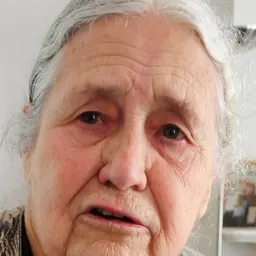
Bear has been praised both for his optimism and his realism. One reviewer of Blood Music said it would bring cheers to the scientists for having a nerd save the world but that "apocalypse is a true apocalypse not a wish." Doris Lessing, winner of the 2007 Nobel Prize in literature, wrote, "I also admire the classic sort of science fiction, like Blood Music, by Greg Bear. He's a great writer." The 2024 novel Halo: Epitaph, a continuation of Bear's Forerunner Saga, was dedicated to Bear's memory by author Kelly Gay.
Personal life and death
In 1975, Bear married Christina M. Nielson; they divorced in 1981. In 1983, he married Astrid Anderson, the daughter of the science fiction and fantasy authors Poul and Karen Anderson. They had two children, Chloe and Alexandra, and resided near Seattle, Washington. Bear died on November 19, 2022, at the age of 71, from multiple strokes, caused by clots that had been concealed in a false lumen of the anterior artery to the brain since a surgery in 2014. After he had been on life support for two days and was not expected to recover, per his advance healthcare directive, life support was withdrawn.
Awards and accolades
Anthologies and critical studies New Legends (1995, with Martin H. Greenberg) Multiverse: Exploring Poul Anderson's Worlds (2014, with Gardner Dozois) Nebula Awards Showcase 2015 (2015) War Dogs
Don’t just read it —
keep it.
Full-length biographies made to live with: read them, listen on the way to work, watch them tonight.
- E-book
- Audio
- Video
Instant download · yours to keep · every purchase keeps this site free
Important facts
People in Greg Bear's life
Named in this biography and alive at the same time


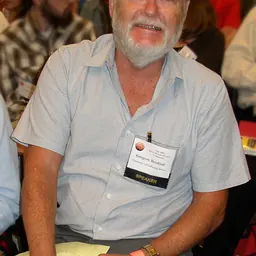
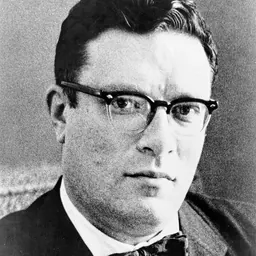

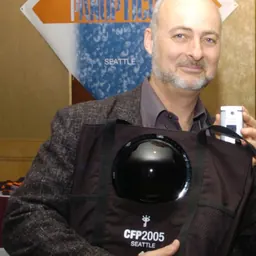

Related people
Same field, nearest in time



Contemporaries
People whose lives overlapped Greg Bear's

Frequently asked questions
Who was Greg Bear?
American writer best known for science fiction (1951–2022)
When was Greg Bear born?
Greg Bear was born on 20 August 1951 in San Diego.
When did Greg Bear die?
Greg Bear died on 19 November 2022.
What was Greg Bear's occupation?
Greg Bear was a novelist, writer, screenwriter, science fiction writer, prose writer and illustrator.
What nationality was Greg Bear?
Greg Bear was American.
Sources & further reading
Cite this page
APA: Biography.guide. (2026). Greg Bear. https://biography.guide/greg-bear/
MLA: "Greg Bear." Biography.guide, https://biography.guide/greg-bear/.
Chicago: "Greg Bear." Biography.guide. https://biography.guide/greg-bear/.
Data last updated: 2026-09-24 · Spot an error? Report a correction.
Portrait: Wikimedia Commons · author & licence
Page generated 2026-09-27 05:08 UTC