
About Granand
Lived 1885 – 1939 (aged 54). Granand was a writer, painter, theatre director and editing staff.
Erwin von Busse also known as Granand or Erwin von Busse-Granand (12 January 1885 – 10 April 1939) was a German writer, painter, theater director, art historian and art critic. His 1920 short story collection Das erotische Komödiengärtlein—literally "Erotic Comedy Garden"—featured stories exploring erotic male relationships, which lead to it being banned by courts in both Berlin and Leipzig; it was republished in German in 1993 and in an English translation in 2022 as Berlin Garden of Erotic Delights. As a stage director for several years he worked with some of the most prominent figures of his time and directed the 1919 world premiere of James Joyce's drama Exiles. He devoted himself to painting in his later years, living in exile in Brazil from 1928 onward.
Biography Early years Erwin Oskar Leopold von Busse was born on 12 January 1885 in Magdeburg. His parents were Lieutenant Hugo Maximilian von Busse (1855–1922) and his wife Marie Louise Elisabeth Helene née Weste (1861–1935). He had a brother Rudolf Maximilian von Busse (1886–1957). (Erwin was named for his paternal grandfather and his brother was named for their great-grandfather Rudolf Maximilian von Busse (1783–1864), better known as .) Beginning in 1898, he attended several military schools, ending with graduation in 1905 from the Prussian military academy in Gross-Lichterfelde. He spent the next two years performing his compulsory military service. This essay has been praised for its "extraordinary insight" into Delaunay, who was soon to prove a critical leader in discovering the principles of expressionist and abstract art. Analyzing a few critical Delaunay canvases, von Busse traced the artist's shift from respect for the physical subject, to fracturing the object into particles formed and colored as "the dynamic needs of the space" require, and finally to excluding all references to the external world so that shape and color become the form and subject of the painting. Delaunay, in von Busse's words, now explores "the problem of space dynamics" without reference to the external world as he searches for the rules of "subjective understanding and representation". By that year he had also taken up the position of director and dramaturge at the Deutsches Theater under Max Reinhardt, a dominant figure in the German-language theater. He directed several productions there between 1918–19. (Hasenclever took the role of Fürst Scheitel.)
Other plays he directed included Candida by George Bernard Shaw and Die Soldaten by Jakob Michael Reinhold Lenz. By 1925, he was no longer associated with a theater. Granand wrote that his garden "has crooked, convoluted, and uncontrolled paths" but "over it all the great, hot sun shines, the melancholy moon passes by, and the innocent stars twinkle." There were two editions: a private edition of 100 copies with six illustrations by Rudolph Pütz (1896–1986) (The illustrations in the private edition were hand colored by Pütz or Granand.) (This review gave no indication that a less expensive edition was forthcoming.) Though the Weimar Republic is now celebrated for its "radical remaking of sexual norms", and its 1919 constitution prohibited censorship in principle, it also permitted statutes to regulate films, printed matter, and public presentations. For example, the film Different from the Others, which argued for the decriminalization of homosexuality, was released in May 1919 and banned nationwide in October 1920. The banned 1920 edition was not reprinted until 1993. (One of the stories appeared in a gay Swiss magazine in 1938, and other selections have been printed in "various gay magazines".) With illustrations by Kainer, its stories were "literary imitations of selections from Washington Irving's Tales of the Alhambra" (1832). An attempt to ban this volume failed.
Using that name he immigrated to Brazil in 1928.
He became a Catholic in 1933 and in London on 10 April of that year married Simonette Mathilde Kowarick, a wealthy woman and native of Brazil. They had no children.
Works
Don’t just read it —
keep it.
Full-length biographies made to live with: read them, listen on the way to work, watch them tonight.
- E-book
- Audio
- Video
Instant download · yours to keep · every purchase keeps this site free
Important facts
People in Granand's life
Named in this biography and alive at the same time
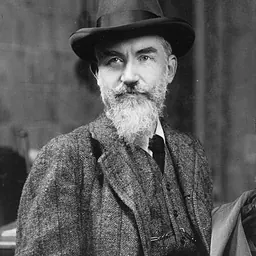
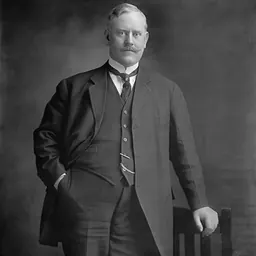
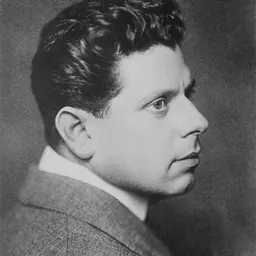
Related people
Same field, nearest in time
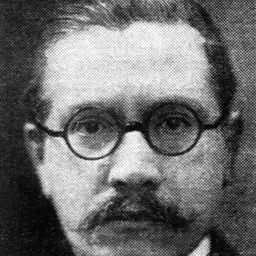



Contemporaries
People whose lives overlapped Granand's



Frequently asked questions
Who was Granand?
German writer and painter (1885-1939)
When was Granand born?
Granand was born on 12 January 1885 in Magdeburg.
When did Granand die?
Granand died on 10 April 1939 in São Paulo.
What was Granand's occupation?
Granand was a writer, painter, theatre director and editing staff.
What nationality was Granand?
Granand's recorded nationality: German Reich.
Sources & further reading
Cite this page
APA: Biography.guide. (2026). Granand. https://biography.guide/granand/
MLA: "Granand." Biography.guide, https://biography.guide/granand/.
Chicago: "Granand." Biography.guide. https://biography.guide/granand/.
Data last updated: 2026-09-20 · Spot an error? Report a correction.
Page generated 2026-09-27 05:04 UTC