
About Graham Webster
Lived 1913 – 2001 (aged 87). Graham Webster was a British classical archaeologist, classical scholar and archaeologist, known for Roman Britain.
Graham Alexander Webster OBE (31 May 1913 – 21 May 2001) was a British archaeologist, one of the pre-eminent figures of Roman-British archaeology in the late 20th century.
Life Webster was born at Stamford, Lincolnshire. He developed an interest in Roman Britain while still at school, but opted for a career as a civil engineer. During World War II he served with the Air Ministry, building airfields, and during this period became engaged in archaeological excavations, most notably in the cities of Canterbury and Lincoln. He joined Lincoln's City Engineer's department in 1945, and directed excavations on the Westgate School site which were to reveal the earliest evidence for the Roman Legionary defences of Lincoln. He was also to excavate the Roman pottery kilns at Swanpool and South Carlton. His growing reputation in the field led to his full-time appointment in 1948 as curator of the Grosvenor Museum, Chester. While employed there he wrote The Roman Army (1956), which would evolve eventually into his best-known book, The Roman Imperial Army, published in 1969 and in numerous later editions.
Webster also studied for an MA at Manchester University and helped organise an archaeological training school at Great Casterton in Rutland. In 1954 he was appointed archaeology tutor in the Extra-Mural Department of Birmingham University. He obtained his PhD from the same institution, with a thesis on Roman strategy in Britain under the governor Ostorius Scapula. He conducted a number of excavations, notably at Waddon Hill, Dorset and at Barnsley Park, Gloucestershire (1961–1979), the latter developing into an archaeological training school and where he met his second wife, Diana (married 1968). Webster's most celebrated excavation, however, was at the abandoned Roman city of Wroxeter near Shrewsbury (1955–1985), where he also initiated a training school.
In his later years, Webster was a prolific and successful writer, with a succession of books on various aspects of Roman Britain. He served as archaeological advisor to Batsford Books, where he oversaw the publication of a formidable list of archaeological works. He received the Order of the British Empire in 1982.
Webster is considered one of the pioneering giants of Romano-British excavation. At the time of his death in 2001 he was held in enormous affection by a generation of now established archaeologists, remembered as someone generous with both his time and his friendship.
Don’t just read it —
keep it.
Full-length biographies made to live with: read them, listen on the way to work, watch them tonight.
- E-book
- Audio
- Video
Instant download · yours to keep · every purchase keeps this site free
Important facts
People in Graham Webster's life
Named in this biography and alive at the same time


Related people
Same field, nearest in time



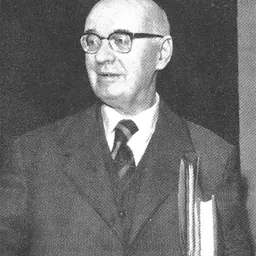
Contemporaries
People whose lives overlapped Graham Webster's


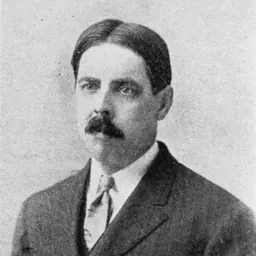

Frequently asked questions
Who was Graham Webster?
archaeologist (1913-2001)
When was Graham Webster born?
Graham Webster was born on 31 May 1913 in Stamford.
When did Graham Webster die?
Graham Webster died on 21 May 2001 in Sevenhampton.
What was Graham Webster's occupation?
Graham Webster was a classical archaeologist, classical scholar and archaeologist.
What was Graham Webster known for?
Graham Webster was known for Roman Britain.
What nationality was Graham Webster?
Graham Webster was British.
Sources & further reading
· DBpedia: Graham Webster (archaeologist)
Cite this page
APA: Biography.guide. (2026). Graham Webster. https://biography.guide/graham-webster/
MLA: "Graham Webster." Biography.guide, https://biography.guide/graham-webster/.
Chicago: "Graham Webster." Biography.guide. https://biography.guide/graham-webster/.
Data last updated: 2026-09-20 · Spot an error? Report a correction.
Page generated 2026-09-27 05:33 UTC