
About Graham Gilmour
Lived 1885 – 1912 (aged 26). Graham Gilmour was a British aircraft pilot.
Graham Gilmour (5 March 1885 – 17 February 1912) was a British pioneer aviator, known for his impromptu public displays of flying. He was killed on 17 February 1912 when his Martin-Handasyde monoplane suffered a structural failure and crashed in the Old Deer Park in Richmond, London.
Early life Gilmore was born at Blackheath in Kent on 5 March 1885, the son of David Gilmour of Shanghai and Margaret Jane (née Muirhead), and educated at Clifton College as an Engineer.
Aviation career Gilmour went to the Rheims aviation meeting in August 1909 and bought himself a Blériot aircraft; he next had to learn to fly it. school and later at the Blériot school, and was awarded French flying license No.75 on 19 May 1910.
His Blériot did not fare so well: it was delivered from Paris to Pau but was damaged on the railway journey. It was repaired by Blériot and test flown by Alfred Leblanc but the next day its hangar blew down, and it was not until 9 March 1910 that Gilmour sat in his own aircraft. At the end of 1910 he was supplied with a Bristol Boxkite by the Bristol Aeroplane Company which he fitted with a loaned E.N.V. engine to make an attempt at winning the Michelin Cup, but the attempt came to nothing owing to a cylinder head blowing off.
This was the beginning of an association with Bristol, with Gilmour at first working at their flying schools at Larkhill and Brooklands, and also gaining publicity by his exploits. On 1 April, flying a Boxkite, he was one of six pilots to overfly the Boat Race, circling above Hammersmith Bridge and thrilling the assembled crowd by several times turning his engine off and gliding (at the time considered a daring manoeuvre), until the competing crews passed under him: he then accompanied them to the finish at Mortlake. He afterwards ran out of petrol and had to land on the Chiswick Polytechnic cricket field. A passing motorist supplied him with some petrol, and after instruction from Gilmour a man from the crowd which had gathered started the engine, while others hung on to the aircraft until the engine was run up to speed.
On 6 May he took part in a well-publicised race from Brooklands to Shoreham, afterwards bombing the submarine depot in Portsmouth with oranges.
Gilmour was to have flown a Bristol in the Gordon Bennett Trophy competition at Eastchurch, but his racing aircraft was not ready for the start: instead Gilmour made some exhibition flights in a Bristol biplane. He was also prevented from competing in the 1912 Circuit of Britain race, in which he was to have flown a Bristol Type T. On 5 July Gilmour had made a flight over central London, and was reported to have circled the dome of St Paul's Cathedral before following the course of the Thames as far as Westminster Bridge, causing members of parliament to crowd the terrace of the Houses of Parliament to witness his flight. Two days later had made an appearance at the Henley Regatta, flying over the river at an altitude of between , before flying down and briefly skimming the water with the aircraft's wheels. On 18 July the Royal Aero Club suspended his pilot's license for a month for reckless flying. Although complaints had been made about his alleged circling of St Paul's the Aero Club committee believed Gilmour's assertion that he had held to the course of the river, but nevertheless banned him for the flight at Henley, despite Gilmour's defence:
Gilmour marked the ban by placing a black crêpe bound mourning wreath above his hangar. The suspension prevented Gilmour from taking part in competitions which were under the control of the Aero Club, but did not prevent him from flying: he is reported as having flown a Martin Handasyde on 23 July.
Another crowd-pleasing flight occurred when, after testing a re-built Bristol biplane at Filton, he gave the Bristol workers a display of "some very clever trick flying": He continued to fly for Bristol instructing and making trial flights and late in 1911 began making trial flights for Martin-Handasyde.
Although sometimes described as a reckless dare-devil by the popular press, this was not the opinion held of him by the aviation community, who thought him one of England's finest flyers: daring, but not one to indulge in dangerous tricks without appreciating the risk involved, and having a reputation for always carefully inspecting any aircraft before flying it.
In 1911 he was charged with manslaughter after he ran down a 10-year-old boy at Wylye, Wiltshire while he was driving a motor-car, Gilmour was overtaking a cart when the boy ran out into the road. At the trial in May 1911 at Salisbury Crown Court he was found not guilty of the charge.
Death Gilmour had set off from Brooklands at about 11 a.m. to make a trial cross-country flight in a Martin Handasyde monoplane. While flying over the Old Deer Park in Richmond at about the aircraft suffered a structural failure and crashed, killing Gilmour instantly. Eyewitnesses reported that the left wing of the aircraft had folded in mid-air, although an examination of the wreckage revealed that all the bracing wires were intact. The accident was possibly due to Gilmour encountering an air pocket: other aviators had encountered such conditions that day.
An inquest into the death was held at Richmond on 20 February 1912, the coroner and jury first inspected the wreck in the Old Deer Park and had the assistance of the manufacturer Martin & Handyside, an aeronautical engineer and Tom Sopwith who had flown the aircraft previously. Witnesses talked about the state of health of Gilmour and the condition of the machine, a letter from Gilmour with his wishes for funeral was presented to the inquiry. He was buried at St. Michael's Churchyard, Mickleham with his parents David (1842–1907) and Margaret (1849–1910).
Don’t just read it —
keep it.
Full-length biographies made to live with: read them, listen on the way to work, watch them tonight.
- E-book
- Audio
- Video
Instant download · yours to keep · every purchase keeps this site free
Important facts
People in Graham Gilmour's life
Named in this biography and alive at the same time
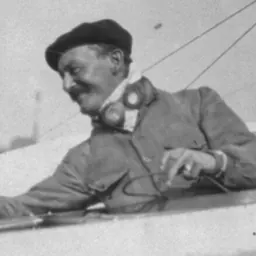
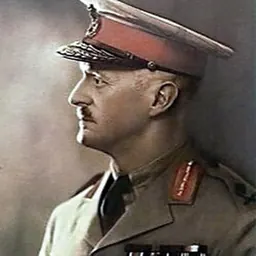

Related people
Same field, nearest in time


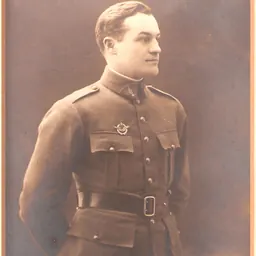

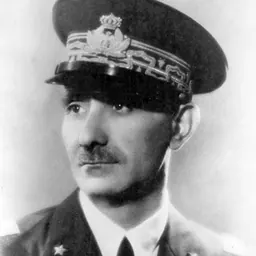
Contemporaries
People whose lives overlapped Graham Gilmour's



Frequently asked questions
Who was Graham Gilmour?
(1885-1912) British aviator
When was Graham Gilmour born?
Graham Gilmour was born on 5 March 1885 in Dartford.
When did Graham Gilmour die?
Graham Gilmour died on 17 February 1912 in Richmond.
What was Graham Gilmour's occupation?
Graham Gilmour was an aircraft pilot.
What nationality was Graham Gilmour?
Graham Gilmour was British.
Sources & further reading
Cite this page
APA: Biography.guide. (2026). Graham Gilmour. https://biography.guide/graham-gilmour/
MLA: "Graham Gilmour." Biography.guide, https://biography.guide/graham-gilmour/.
Chicago: "Graham Gilmour." Biography.guide. https://biography.guide/graham-gilmour/.
Data last updated: 2026-09-20 · Spot an error? Report a correction.
Page generated 2026-09-27 05:14 UTC