
Graham Blyth
English audio design engineer and organist
About Graham Blyth
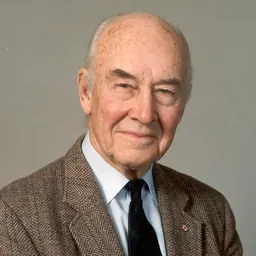
Lived 1948 – 2024 (aged 76). Graham Blyth was a British conductor, engineer, audio engineer, electrical engineer and organist.
Graham Blyth (22 March 1948 – 22 October 2024) was an English audio engineer, known for designing mixing consoles. He co-founded Soundcraft, a manufacturer which Blyth helped form into a world leader in sound reinforcement and recording mixers, establishing the "British sound". After succeeding in electrical engineering he became a professional organist, performing on pipe organs around the world. Blyth was a Fellow of both the Royal Society of Arts (RSA) and the Audio Engineering Society (AES). In 2012, he was awarded an honorary doctorate degree in science from the University of Hertfordshire.
Early life Blyth was born in Chessington 22 March 1948; his father was an architect and his mother a teacher and painter. Blyth spent evenings at Kelsey's Notting Hill flat helping him assemble a large mixing desk, one used by Emerson, Lake & Palmer at the "legendary" Isle of Wight Festival 1970. With this success, Kelsey left Compton to form with a business partner the professional audio equipment company Kelsey & Morris. After learning the basics of mixing console electronics, he joined Paul Dobson and Phil Dudderidge who had formed Rotary Speaker Developments (RSD), In September 1973, Dudderidge and Blyth formed Soundcraft Electronics, Ltd., based at Fender Soundhouse on Tottenham Court Road in London, "right in the middle of everything." In 1991, Soundcraft debuted the Europa mixing console, a large-format desk for concert halls and tours.
Blyth's leadership was significant in the design of a wide variety of Soundcraft mixers which established the British EQ sound, including the Series 1S and the 1624 which became the 2400 in 1982, one of Blyth's favourite projects. In 1988, Soundcraft was sold to Harman International Industries. Dudderidge left within the year, but Blyth stayed to serve Harman as product designer
At Soundcraft, Blyth led the design of the original Series 4 mixing console, the S8000, the MH4 and MH2, the Series Two, and the GB series (named for Blyth's initials, not "Great Britain"
As early as 1982, when the Compact Disc was introduced, Blyth researched the possibilities of creating a digital mixing console. He told Billboard magazine that Soundcraft would not be "leaping into digital in the way that Neve has done. I think they have gone too far, too quickly. ... We are looking at the digital control of analog functions as the first step in that direction." Picking up the pace in the 2000s, Blyth, together with Product Manager Andy Brown, created the Soundcraft Vi6, a digital mixer intended for sound reinforcement applications, released mid-2006. Regarding digital audio equipment, Blyth voiced the opinion that "companies that take great care over their analog stages, use the best internal digital format and write the best DSP code end up with the best sounding product."
Organist Blyth worked off-hours as a keyboardist in the early 1970s. While with Kelsey, he played pipe organ during a break in a Quintessence Christmas show at the Royal Albert Hall. Also a rock musician, he played electronic keyboards with Rinky Dink and the Crystal Set, a band signed to EMI Harvest Records in 1973. releasing an LP record (Cameo Roles) and a 45 rpm single ("Can't Get Used To Losing You"), but they did not sell well. Blyth revived his interest in keyboard performance, returning to school to pick up performance diplomas from the Royal College of Music, and his former alma mater, Trinity College of Music.
Blyth consulted for organ builders such as Saville Organ Company and helped tune organ installations. In the 2000s he picked up an interest in "classical" digital electronic organs, using the Musicom system. The 80-seat hall uses a LARES electro-acoustic enhancement system to supply pre-programmed room acoustics settings,
Don’t just read it —
keep it.
Full-length biographies made to live with: read them, listen on the way to work, watch them tonight.
- E-book
- Audio
- Video
Instant download · yours to keep · every purchase keeps this site free
Important facts
People in Graham Blyth's life
Named in this biography and alive at the same time
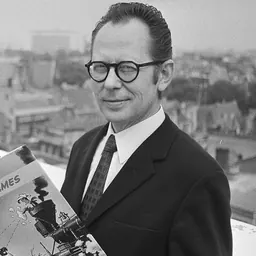



Related people
Same field, nearest in time
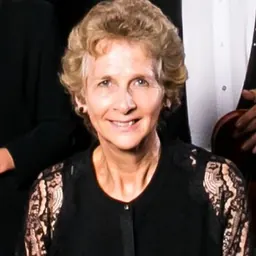



Contemporaries
People whose lives overlapped Graham Blyth's
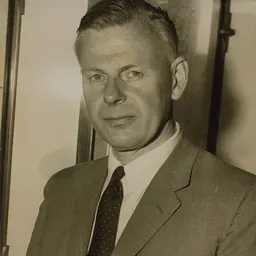
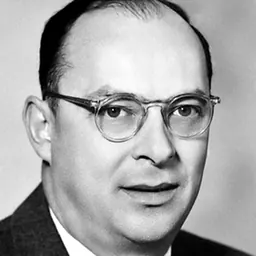

Frequently asked questions
Who was Graham Blyth?
English audio design engineer and organist
When was Graham Blyth born?
Graham Blyth was born on 22 March 1948 in Chessington.
When did Graham Blyth die?
Graham Blyth died on 22 October 2024.
What was Graham Blyth's occupation?
Graham Blyth was a conductor, engineer, audio engineer, electrical engineer and organist.
What nationality was Graham Blyth?
Graham Blyth was British.
Sources & further reading
Cite this page
APA: Biography.guide. (2026). Graham Blyth. https://biography.guide/graham-blyth/
MLA: "Graham Blyth." Biography.guide, https://biography.guide/graham-blyth/.
Chicago: "Graham Blyth." Biography.guide. https://biography.guide/graham-blyth/.
Data last updated: 2026-09-20 · Spot an error? Report a correction.
Page generated 2026-09-27 05:09 UTC