
About Grace Pailthorpe
Lived 1883 – 1971 (aged 87). Grace Pailthorpe was a British painter, surgeon and psychoanalyst.
Grace Winifred Pailthorpe (29 July 1883 – 19 July 1971) was a British surrealist painter, surgeon, and psychology researcher.
Early life and World War I Pailthorpe was born in St Leonards-on-Sea in Sussex in 1883. She was the third child and the only daughter among the ten children born to Edward Wright Pailthorpe, a stockbroker, and Anne Lavinia Pailthorpe née Green, a seamstress, who were both members of the Plymouth Brethren, a strict and puritanical religious sect. The Plymouth Brethren were a separatist sect and the children were all home-schooled to limit their exposure to wider society. During World War I she served, with some distinction, as a surgeon at military hospitals in London, Paris and Liverpool. She also worked as a medical officer for a gold mining company in Australia. The Association was the first in the world for the scientific treatment of delinquency and counted among its Vice Presidents Carl Jung, H. G. Wells and Sigmund Freud. In 1932 she published two papers on her Holloway Prison research and in 1934 resumed taking private patients for psychoanalysis. Pailthorpe contributed to the International Surrealist Exhibition held in London during 1936 and also contributed to other Surrealist exhibitions and publications, such as the London Bulletin. Her paintings and drawings were greatly praised by, among others, André Breton. In 1938 Pailthorpe published The Scientific Aspect of Surrealism which was not well received by other British Surrealist artists. In this, and later works, she put forward the theory that surrealism and psychoanalysis were both means to personal liberation and the development of artistic creativity and freedom of expression. She and Mednikoff undertook analysis of each other's art to determine the associations behind each image. Regarding this as an alternative to conventional analysis, they would swop the roles of patient and analyst between themselves every fortnight. Although Pailthorpe presented the results of these unorthodox studies in lectures to colleagues, the studies were not published during her lifetime. After a series of disagreements about organisation and exhibition spaces, Pailthorpe and Mednikoff were "formally" expelled from the British Surrealist group in 1940.
In July 1940, Pailthorpe and Mendnikoff left Britain for New York City before spending time in California. From September 1942 to April 1943 Pailthorpe worked at the Essondale Mental Health hospital in British Columbia and in 1944 she and Mednikoff had a joint exhibition at the Vancouver Art Gallery. This exhibition which contained over eighty works was hugely influential in the development of surrealist art in western Canada. Alongside the exhibition Pailthorpe gave a number of talks on surrealism, one of which was broadcast by the Canadian Broadcasting Corporation. The couple returned to England in March 1946 and from 1948 until 1952 Pailthorpe was a Consultant Psychiatrist at the Portman Clinic, with Mednikoff as her assistant. She also ran a School of Art Therapy from 1950 until 1958 when she moved to Sussex.
Death and legacy Pailthorpe died in July 1971. In 1986, Leeds City Art Gallery included Pailthorpe in the major exhibition Angels of Anarchy - Surrealism in Britain in the Thirties and also in their 1992 exhibition Women Artists of the British Surrealist Movement, 1930-1990. A joint retrospective with Mednikoff, Sluice Gates of the Mind was held at the same gallery in 1998. In 2021 exhibition, Fertile Spoon, at the Bosse and Baum gallery showed works by Pailthorpe alongside works by the contemporary artist Mary Stephenson.
In her 2022 novel, Salonika Burning, The Australian writer Gail Jones fictionalises Grace Pailthorpe (as 'Grace'), and her experiences in Macedonia, along with Australian writer Miles Franklin, British painter Stanley Spencer, and Australian adventurer Olive King.
Australian artist and academic Baden Pailthorpe (b. 1984 -) is a third cousin of Grace Pailthorpe. Both have exhibited at the Centre Pompidou, Paris: Grace Pailthorpe in Surréalisme (2024); Baden Pailthorpe in Hors Pistes (2014).
Don’t just read it —
keep it.
Full-length biographies made to live with: read them, listen on the way to work, watch them tonight.
- E-book
- Audio
- Video
Instant download · yours to keep · every purchase keeps this site free
Important facts
Family & relationships
People in Grace Pailthorpe's life
Named in this biography and alive at the same time

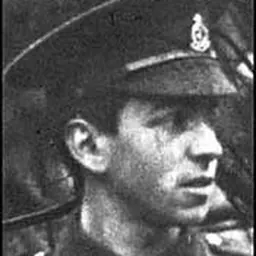


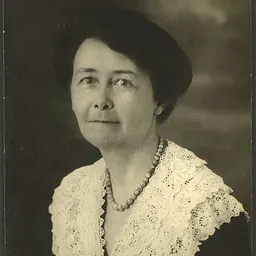

Related people
Same field, nearest in time
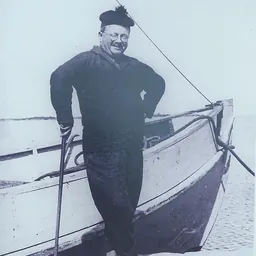
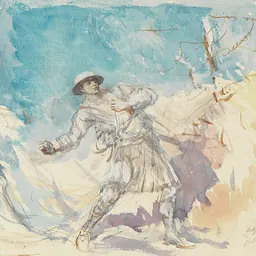
Contemporaries
People whose lives overlapped Grace Pailthorpe's


Frequently asked questions
Who was Grace Pailthorpe?
British painter (1883-1971)
When was Grace Pailthorpe born?
Grace Pailthorpe was born on 29 July 1883 in St Leonards.
When did Grace Pailthorpe die?
Grace Pailthorpe died on 19 July 1971 in St Leonards-on-Sea, Sussex.
What was Grace Pailthorpe's occupation?
Grace Pailthorpe was a painter, surgeon and psychoanalyst.
What nationality was Grace Pailthorpe?
Grace Pailthorpe was British.
Sources & further reading
Cite this page
APA: Biography.guide. (2026). Grace Pailthorpe. https://biography.guide/grace-pailthorpe/
MLA: "Grace Pailthorpe." Biography.guide, https://biography.guide/grace-pailthorpe/.
Chicago: "Grace Pailthorpe." Biography.guide. https://biography.guide/grace-pailthorpe/.
Data last updated: 2026-09-20 · Spot an error? Report a correction.
Page generated 2026-09-27 05:05 UTC