
About Govind Swarup
Lived 1929 – 2020 (aged 91). Govind Swarup was an Indian astronomer and researcher, known for R&D and Radioastronomy.
Govind Swarup (March 23, 1929 – September 7, 2020) was a pioneer in radio astronomy. In addition to research contributions in multiple areas of astronomy and astrophysics, he was a driving force behind the building of "ingenious, innovative and powerful observational facilities for front-line research in radio astronomy". Swarup was the founding director of the National Centre for Radio Astrophysics (NCRA) at the Tata Institute of Fundamental Research (TIFR). Under his leadership, a strong group in radio astrophysics was built at Tata Institute of Fundamental Research that is comparable to the best in the world.
Swarup spent several years at the National Physical Laboratory in Delhi with K. S. Krishnan (1950–53),
When the array parts were seriously delayed, Swarup went to the United States.
Swarup was later awarded a number of honorary degrees: Doctor of Engineering, University of Roorkee in 1987 and Doctor of Science, Banaras Hindu University in 1996. He was also given an honorary Doctor of Science by Pandit Ravishankar Shukla University, Raipur in 2010.
Career Returning from Stanford to India in March 1963, Swarup joined TIFR as a reader at the request of Dr. Homi Bhabha. In 1965, he became associate professor, professor in 1970, and professor of eminence in 1989. He became project director of the GMRT in 1987, centre director of the National Centre for Radio Astrophysics (NCRA) of TIFR in 1993 and retired from TIFR in 1994.
Stanford At Stanford Swarup continued to make studies of radio emissions from the Quiet Sun and developed a gyro-radiation model of solar emissions of microwave radiation. He explained the emission mechanism of sunspots in terms of gyroresonance processes.
In 1959, Swarup developed a technique for the round-trip transmission of phase measurements that enabled the phase equalization of all 32 antennas in an array to be carried out in minutes rather than weeks.
In 1962 Swarup used the Stanford compound-grating interferometer to examine Cygnus A. Previous researchers had shown that the radio galaxy contained two distinct radio lobes. In 1963 Swarup reported the presence of a continuous "bridge" of radio emissions between the two lobes, the first instance of a steep spectrum bridge. Such bridges are used to estimate the age of a radio galaxy.
Kalyan Radio Telescope Returning to India on April 2, 1963, Swarup began to assemble a group at the Tata Institute of Fundamental Research near Mumbai. With the antennae from Potts Hill, they constructed the Kalyan Radio Telescope, the first radio telescope array in India, which was completed in 1965. The site was located at the southern end of the abandoned Kalyan Airstrip.
Ooty Radio Telescope (ORT) Swarup's next major installation was the Ooty Radio Telescope (ORT) at Ooty in South India. It became operational in 1970, first observing a lunar occultation event on February 18, 1970. After fifty years, ORT continues to be used to observe solar winds, coronal mass ejections, and pulsars. During the 1980s, he studied the polarization of radio cores of galaxies and quasars. GMRT is highly versatile. It is the world's largest radio telescope for the detection of frequencies in the range of 130–1430 MHz
One of the concerns behind the development of the GMRT was the question of dark matter and the nature of the universe. A sensitive radio telescope at an appropriate frequency (327 MHz) was needed to test predictions about whether the universe contained hot dark matter (HDM) or cold dark matter (CDM).
Swarup has used the GMRT to observe the emission and absorption of atomic hydrogen from objects in the early Universe, examine the cosmic cold spot, and study radio emissions from Venus. Executive Committee, Inter Union Commission for Frequency Allocation (IUCAF till 1995); IAU Working Group for Future Large Scale Facilities (1994–2000); chairman, Indian National Committee for International Union of Radio Science (URSI) (1986–88 & 1995–97); Post-detection Sub-Committee of SETI of International Astronautical Federation (chairman, 1994–98); chairman, URSI Committee for Developing Countries (1996–2002); URSI Standing Committee for Future General Assemblies (1999–2002). Editorial Boards, Indian Journal of Radio & Space Physics (1990–2000), National Academy of Sciences, India; (1997–2000). 1986 Biren Roy Trust Medal, Indian Physical Society, Calcutta; 1987 Dr. Vainu Bappu Memorial Award, Indian National Science Academy; 1987 Tskolovosky Medal, Federation of Cosmonautics, USSR; 1987 Meghnad Saha Medal, National Academy of Sciences, India; 1988 TWAS Prize in Physics; 1990 John Howard Dellinger Gold Medal, International Union of Radio Sciences; 1990 R.D. Birla Award in Physics, Indian Physics Association; 1991 FIE Foundation Award for Eminence in Science & Technology, Ichhalkaranji, India; 1993 Gujar Mal Modi Science Award, Modi Foundation, India; 1993 The C.V. Raman Medal, Indian National Science Academy;
Personal life Prof. Govind Swarup was married to Bina Swarup and resided in Pune, India. He had one daughter and one son. His daughter Anju Basu is married to Rajiv Basu and his son, Vipin Swarup is married to Natasha Swarup.
Swarup had an elder brother in Kanpur, Mahesh Swarup Agarwal, who was an industrialist.
Don’t just read it —
keep it.
Full-length biographies made to live with: read them, listen on the way to work, watch them tonight.
- E-book
- Audio
- Video
Instant download · yours to keep · every purchase keeps this site free
Important facts
People in Govind Swarup's life
Named in this biography and alive at the same time
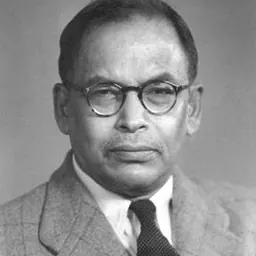







Related people
Same field, nearest in time


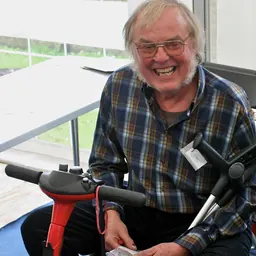
Contemporaries
People whose lives overlapped Govind Swarup's


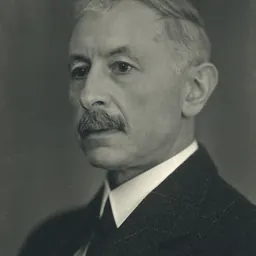

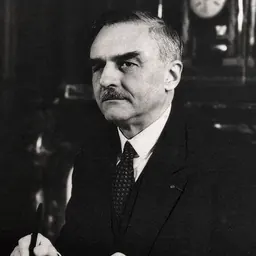
Frequently asked questions
Who was Govind Swarup?
Indian radio astronomer (1929–2020)
When was Govind Swarup born?
Govind Swarup was born on 23 March 1929 in Moradabad district.
When did Govind Swarup die?
Govind Swarup died on 7 September 2020 in Pune.
What was Govind Swarup's occupation?
Govind Swarup was an astronomer and researcher.
What was Govind Swarup known for?
Govind Swarup was known for R&D and Radioastronomy.
What nationality was Govind Swarup?
Govind Swarup was Indian.
Sources & further reading
Cite this page
APA: Biography.guide. (2026). Govind Swarup. https://biography.guide/govind-swarup/
MLA: "Govind Swarup." Biography.guide, https://biography.guide/govind-swarup/.
Chicago: "Govind Swarup." Biography.guide. https://biography.guide/govind-swarup/.
Data last updated: 2026-09-20 · Spot an error? Report a correction.
Page generated 2026-09-27 05:10 UTC