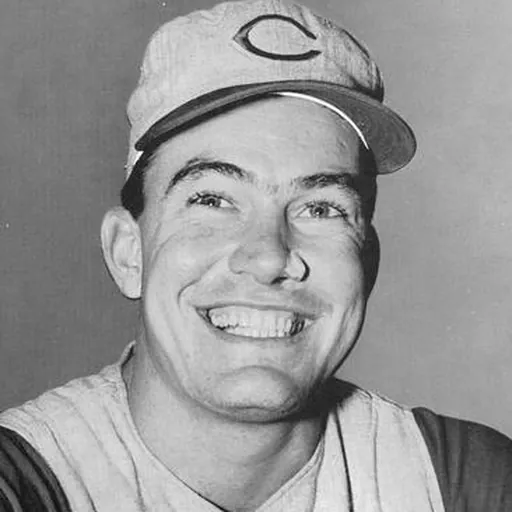
About Gordy Coleman
Lived 1934 – 1994 (aged 59). Gordy Coleman was an American baseball player.
Gordon Calvin Coleman (July 5, 1934 – March 12, 1994) was an American professional baseball first baseman. He played in Major League Baseball with the Cleveland Indians and Cincinnati Reds. He helped the Reds win the 1961 National League pennant, and was inducted into the Cincinnati Reds Hall of Fame in 1972. In 1966, he led all Major League Baseball with a .368 average as a pinch-hitter.
In nine Major League seasons, he appeared in 773 games, totaled 98 home runs, 387 runs batted in, and compiled a .273 batting average.
Early life Gordy Coleman was born July 5, 1934, in Rockville, Maryland, located in Montgomery County. He was a star athlete at Richard Montgomery High School, earning letters in baseball, football, basketball, and track. He was an All-State end in football his junior or senior year, and was invited to play in a national high school all-star game, but could not attend once they learned he was only a junior. Coleman led the school's basketball team to the state semifinals his senior year, and in baseball he excelled as both a pitcher and a hitter. On his 18th birthday in 1952, Coleman hit three home runs, a double and four singles, while playing two games for the Braves that day.
He attended Duke University on a football scholarship, playing both baseball and football as a freshman. He had about 30 football scholarship offers, but chose Duke because baseball was also an important sport played there. He attended Duke for one year before turning to professional baseball in 1953. He had decided that if he was still offered a professional baseball contract after one year at Duke, he would pursue baseball. He was assigned to the Reading Indians of the Eastern League, where he played in 13 games. His Reading teammates included future Major League manager Joe Altobelli, and Major Leaguers Score and Rocky Colavito, under future Major League manager Kerby Farrell.
His first full minor league season came in 1954, as an outfielder for the Spartanburg Peaches of the Class B Tri-State League. He had a .318 batting average, with 13 home runs, 100 runs batted in (RBI), 93 runs scored, and an .852 OPS (on-base plus slugging). He had a .953 fielding percentage as an outfielder, with 228 putouts, 18 assists and 12 errors. Coleman had a conventional batting stance prior to this season, but changed his stance so he could deal with inside pitches, which he otherwise could not handle. In 93 games, he hit .349, with 16 home runs, 77 RBIs, 78 runs scored and a .925 OPS. However, his fielding percentage in the outfield fell to .920, with 12 errors and 11 assists. The Kernels were Three-I League champions with a 92–34 record, winning the league title by 22 games. In addition to Coleman, the team included future Major League Baseball (MLB) players, Jim "Mudcat" Grant, Norm Cash, Russ Nixon and Tony Kubek. Coleman was the only Kernel player named to the Three-I first-team All-Star team. He hit .316, with 27 home runs, 118 RBIs, 83 runs and an .875 OPS. He had a .988 fielding percentage at first base.
He was out of baseball in 1957 and 1958 while serving in the U.S. Army at Fort McPherson, Georgia.
Major leagues Coleman made his Major League debut for the Indians on September 19, 1959 at age 25 in a game hosted by the Kansas City Athletics and won by the Indians, 13–7. In one at-bat as a pinch hitter, he got his first big-league hit, a fifth-inning triple off Bob Grim. He had only 16 plate appearances in six games, but batted .533. These were his only games for Cleveland. On December 15, 1959, Coleman was traded along with Billy Martin and Cal McLish to the Cincinnati Reds for Johnny Temple.
In 1960 he split time with the Reds, for whom he played 66 games, and the Reds' Triple-A affiliate Seattle Rainiers of the Pacific Coast League. He began the season in Seattle and hit .324, with 10 home runs, 60 RBIs, 54 runs scored and an .894 OPS for the Rainiers; with a .991 fielding percentage at first base. The Reds called him up in late July. With the Reds, he hit .271, with six home runs, 32 RBIs, 26 runs scored and a .699 OPS; and he had a .998 fielding percentage at first base. Coleman took over at first base for the Reds, and future Hall of Fame outfielder Frank Robinson moved to left field, replacing Wally Post. He hit a home run in his first at bat for the Reds. His two-run home run came in game 2 at Yankee Stadium in the fourth inning off starting pitcher Ralph Terry in a 6–2 Reds' win, their only one of the series.
In 1962, Coleman hit a career-high 28 home runs, to go along with 86 RBIs, a .277 batting average and .816 OPS. In 1963, he only played in 105 games, starting 94. He hit .247 with 14 home runs and 59 RBIs. Coleman hit .400 as a pinch-hitter in 1963. with Coleman only starting 48.
In 1965, the Reds moved Johnson to third base. Coleman started 87 games at first base, with future Hall of Famer Pérez starting 66 games at first base in his rookie season. Coleman hit a career-high .302, with 14 home runs and 57 RBIs, In 1966, he started only 63 games at first base, and hit .251 with five home runs and 37 RBI. Pérez started 62 games, with a .265 average, four home runs and 39 RBIs. Rookie and future All-Star Lee May started 16 games at first base, and hit .333 in 75 at bats; and Johnson played 11 games at first base. He finished the 1967 season with the Los Angeles Dodgers' Triple-A affiliate the Spokane Indians in the Pacific Coast League, hitting .195 in only 91 plate appearances.
Over his career, Coleman had a .273 batting average, with 98 home runs, 387 RBIs, 282 runs scored and a .772 OPS. Over a six-year period with the Reds, he was 40 for 117 (.342) as a pinch-hitter. He was not known as a good fielder (though he had a career .990 fielding percentage at first base), and had an unconventional batting style, hitting with one foot "in the bucket".
Honors In 1972, he was selected to join the Cincinnati Reds Hall of Fame.
Baseball executive and broadcaster Coleman served as a minor league manager for a short time in Spokane at the end of the 1967 season. After his playing career ended, beginning in 1968, Coleman worked for many years in public relations for the Cincinnati Reds as director of the team's speakers bureau, making thousands of appearances speaking at civic and other organizations' events, and interacting with local newspapers. He focused on a four-state area known as "Reds Country" (Ohio, Kentucky, Indiana and West Virginia), and would travel thousands of miles each year. Coleman had given over 2,000 talks for the Reds by his first ten years as head of the speakers bureau.
Personal life and death Coleman married Marian Huggins The city of his birth, Rockville, Maryland, declared July 5, 2008, (what would have been his 74th birthday) Gordy Coleman Day after a group of Richard Montgomery High School alumni sought to raise funds for a new baseball field scoreboard and plaque commemorating Coleman's life and to name the field in his honor. Coleman was especially known for his humble, genial and respectful nature. In his thousands of speaker engagements, he never told off-color or ethnically based stories, but rather spoke in a manner that would be acceptable to everyone.
Don’t just read it —
keep it.
Full-length biographies made to live with: read them, listen on the way to work, watch them tonight.
- E-book
- Audio
- Video
Instant download · yours to keep · every purchase keeps this site free
Important facts
People in Gordy Coleman's life
Named in this biography and alive at the same time





Related people
Same field, nearest in time
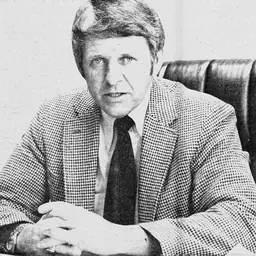

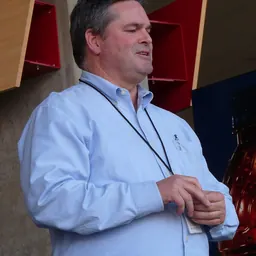
Contemporaries
People whose lives overlapped Gordy Coleman's



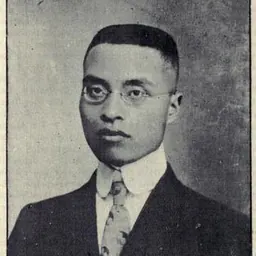

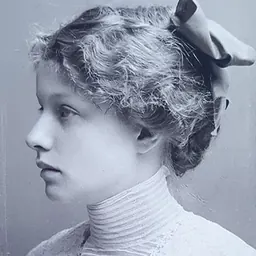
Frequently asked questions
Who was Gordy Coleman?
American baseball player (1934–1994)
When was Gordy Coleman born?
Gordy Coleman was born on 5 July 1934 in Rockville.
When did Gordy Coleman die?
Gordy Coleman died on 12 March 1994 in Cincinnati.
What was Gordy Coleman's occupation?
Gordy Coleman was a baseball player.
What nationality was Gordy Coleman?
Gordy Coleman was American.
Sources & further reading
Cite this page
APA: Biography.guide. (2026). Gordy Coleman. https://biography.guide/gordy-coleman/
MLA: "Gordy Coleman." Biography.guide, https://biography.guide/gordy-coleman/.
Chicago: "Gordy Coleman." Biography.guide. https://biography.guide/gordy-coleman/.
Data last updated: 2026-09-22 · Spot an error? Report a correction.
Portrait: Wikimedia Commons · author & licence
Page generated 2026-09-27 05:04 UTC