
About Gordon Vette
Lived 1933 – 2015 (aged 82). Gordon Vette was an aircraft pilot.
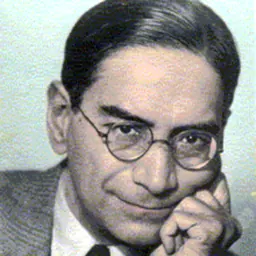
Alwyn Gordon Vette ONZM (9 July 1933 – 9 August 2015) was a New Zealand airline captain best known for his involvement in the Cessna 188 Pacific rescue and his research into the cause of the Air New Zealand Flight TE901 crash. He spent five years in the Royal New Zealand Air Force (RNZAF) and 55 years as a commercial pilot. Vette was portrayed by Roy Billing in the 1988 miniseries Erebus: the Aftermath, which recounts Vette's research into the cause of the Mount Erebus Disaster; and by Robert Loggia in the 1993 TV movie Mercy Mission: The Rescue of Flight 771, which recounts Vette's experiences piloting Air New Zealand Flight 103.
Career Vette joined Air New Zealand (at that point known as Tasman Empire Airways Limited – TEAL) as an engineering apprentice in 1948 at 15 years of age. At the same time, he began flying training at Auckland Aero Club. Soon after, Vette spent a five-year service commission in the RNZAF as a flying instructor, earning A1 and A military and civilian flight instructor ratings, respectively.
Rescue of Cessna 188
On 21 December 1978, Cessna 188 pilot Jay Prochnow radioed in a Mayday call to air traffic control. Prochnow, previously a pilot in the United States Navy, had lost his bearings on a flight from Pago Pago to Norfolk Island when his Automatic Direction Finder (ADF) malfunctioned. At the same time, Gordon Vette was serving as captain of ANZ Flight 103 from Nadi to Auckland (with his first officer Arthur Dovey and flight engineer Gordon Brooks), making him the closest person to Prochnow that air traffic control could find. Vette agreed to help in the search for the lost Cessna. Vette also tried dumping 24,000 pounds of fuel from his own aircraft in the hope that Prochnow might be able to see it, but this proved to be unsuccessful. Prochnow and Vette then compared the time at which each of them observed the sun to set, and the addition of this new information finally made it possible for the Cessna's position to be calculated. After 23 hours of flying, and almost out of fuel—having used a lower speed to stretch out the Cessna's usual 22 hours of fuel A fictionalized account of the event was made into a TV movie in 1993. The film, Mercy Mission: The Rescue of Flight 771, starred Robert Loggia as Gordon Vette and Scott Bakula as Jay Perkins (changed from Prochnow). Map showing Air New Zealand Flight 901's flight path and its impact site on Mt. Erebus Flight TE901 took off on 29 November 1979. As the plane descended to sightseeing altitude upon reaching Antarctica, the ground proximity warning system (GPWS) went off seemingly out of nowhere. The flight crew barely had a chance to react before TE901 slammed into the side of Mount Erebus, killing everyone on board.
The initial Transport Accident Investigation Commission (TAIC) report on the accident prepared by Chief Inspector of Air Accidents Ron Chippindale and released on 30 May 1980 initially blamed the crash on pilot error, but Vette challenged this finding. He had trained Collins himself and found it unlikely that he would exhibit that level of negligence. In an interview some years after the accident, Vette described Collins as "one of the most cautious pilots in the world."
Due in part to public discontent and in part to a campaign for re-examination by Vette himself, a Royal Commission of Inquiry was formed on 7 July 1980 to examine the TAIC's finding of pilot error. Vette's research, along with other evidence, was presented to High Court Judge Peter Mahon, who was in charge of the commission. Vette served as an adviser to Mahon during the proceedings, Mahon's final report was published on 27 April 1981, and it largely agreed with Vette's hypotheses.
Though the truth of the Flight TE901 crash eventually won out, the cost to its defenders was high. Mahon believed that the partial overturning of his findings meant that his fellow justices had lost faith in his abilities, and he resigned in 1982. Vette's career also suffered, as his crusade for truth had ended friendships and caused conflicts with Air New Zealand, his employer at the time. He was eventually driven to an early exit from the company he had worked for since 1948. The book was adapted into the TV miniseries; Erebus: The Aftermath in 1988, with Frank Finlay starring as Justice Mahon and Roy Billing as Captain Vette.
Publications Vette published two books on the Mount Erebus Disaster: Impact Erebus in 1983 and Impact Erebus II with John MacDonald in 1999. Impact Erebus II also came with a videotape about the crash and the events that followed, featuring interviews with Justice Mahon and others involved. The International Civil Aviation Organisation (ICAO) used Vette's report as an example of how a combination of organizational failures could cause an accident, calling it "10 years ahead of its time" and adding that if its lessons had been heeded, "Chernobyl, Bhopal, Clapham Junction, King’s Cross and certainly the Dryden Report would not have existed". These recommendations were a factor in the development of enhanced ground proximity warning systems (EGPWS) in the 1990s and terrain awareness and warning system (TAWS) with forward-looking capabilities since then. TAWS systems are widely recommended by international airline safety organizations such as the United States Federal Aviation Administration (FAA), and TAWS systems were installed in 95% of commercial jets worldwide by 2007.
Vette has received much appreciation and acclaim for his contributions to the aviation industry. On 16 July 1988, the University of Glasgow awarded Vette with an honorary Engineering Doctorate in recognition of this, On 20 September 2007, Vette was appointed an Officer of the New Zealand Order of Merit (ONZM) "for services to aviation." In March 2009, the International Federation of Air Line Pilots' Associations (IFALPA) awarded Vette with a Presidential Citation.
Don’t just read it —
keep it.
Full-length biographies made to live with: read them, listen on the way to work, watch them tonight.
- E-book
- Audio
- Video
Instant download · yours to keep · every purchase keeps this site free
Important facts
People in Gordon Vette's life
Named in this biography and alive at the same time


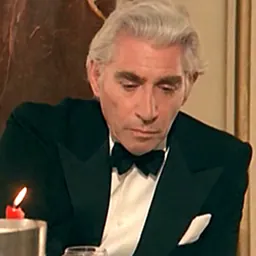
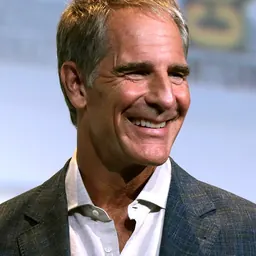


Related people
Same field, nearest in time
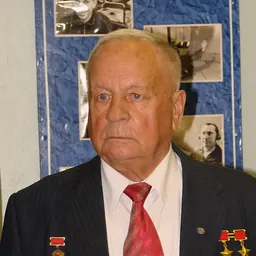
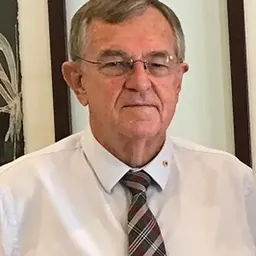

Contemporaries
People whose lives overlapped Gordon Vette's




Frequently asked questions
Who was Gordon Vette?
New Zealand aviator
When was Gordon Vette born?
Gordon Vette was born on 9 July 1933.
When did Gordon Vette die?
Gordon Vette died on 9 August 2015 in Auckland.
What was Gordon Vette's occupation?
Gordon Vette was an aircraft pilot.
Sources & further reading
Cite this page
APA: Biography.guide. (2026). Gordon Vette. https://biography.guide/gordon-vette/
MLA: "Gordon Vette." Biography.guide, https://biography.guide/gordon-vette/.
Chicago: "Gordon Vette." Biography.guide. https://biography.guide/gordon-vette/.
Data last updated: 2026-09-20 · Spot an error? Report a correction.
Page generated 2026-09-27 05:00 UTC