
About Gordon Haddon Clark
Lived 1902 – 1985 (aged 82). Gordon Haddon Clark was an American theologian and philosopher.
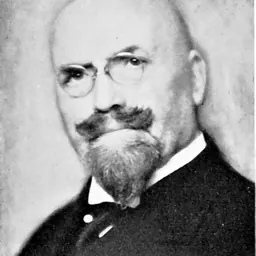
Gordon Haddon Clark (August 31, 1902 – April 9, 1985) was an American philosopher and Calvinist theologian. He was a leading figure associated with presuppositional apologetics, although not a presuppositonalist himself, and was chairman of the Philosophy Department at Butler University for 28 years. He was an expert in pre-Socratic and ancient philosophy and was noted for defending the idea of propositional revelation against empiricism and rationalism, in arguing that all truth is propositional. His theory of knowledge is sometimes called scripturalism.
Biography
Clark was raised in a Christian home and studied Calvinist thought from a young age. In 1924, he graduated from the University of Pennsylvania with a bachelor's degree in French and earned his doctorate in Philosophy from the same institution in 1929. The following year he studied at the Sorbonne.
He began teaching at the University of Pennsylvania after receiving his bachelor's degree and also taught at the Reformed Episcopal Seminary in Philadelphia. In 1936, he accepted a professorship in Philosophy at Wheaton College, Illinois, where he remained until 1943 when he accepted the Chairmanship of the Philosophy Department at Butler University in Indianapolis. After his retirement from Butler in 1973, he taught at Covenant College in Lookout Mountain, Georgia, and Sangre de Cristo Seminary in Westcliffe, Colorado.
Clark's denominational affiliations would change many times. He was born into and eventually became a ruling elder in the Presbyterian Church in the United States of America. However, he would eventually leave with a small group of conservatives, led by John Gresham Machen, to help form the Presbyterian Church of America (renamed the Orthodox Presbyterian Church in 1938) and would be ordained in the OPC in 1944. However, in 1948, following the Clark-Van Til Controversy, he joined the United Presbyterian Church of North America. Following the UPCNA's 1956 merger with the Presbyterian Church in the United States of America (the same denomination from which the OPC had separated from in 1936) to form the United Presbyterian Church in the United States of America, Clark joined the Reformed Presbyterian Church, General Synod in 1957. Clark was instrumental in arranging a merger between the RPCGS and the Evangelical Presbyterian Church to form the Reformed Presbyterian Church, Evangelical Synod in 1965. When the RPCES became part of the Presbyterian Church in America in 1982, Clark refused to join the PCA and instead entered the unaffiliated Covenant Presbytery in 1984.
Clark was also elected president of the Evangelical Theological Society in 1965.
He died in 1985 and was buried near Westcliffe, Colorado.
Philosophy
Clark's philosophy and theology has been summarized as: Epistemology: propositional revelation in the Bible Soteriology: faith alone Metaphysics: theism Ethics: the superiority of divine law over human law/Christian egoism Politics: constitutional republic
Personal life
Clark met his future wife Ruth Schmidt during his graduate studies at the University of Pennsylvania; she had actually been baptized by Gordon's father as a baby. They married in 1929 and stayed together for 48 years until Ruth's death from leukemia in 1977. They had two daughters, Lois Antoinette (later Lois Zeller, b. 1936) and Nancy Elizabeth (later Betsy Clark George, b. 1941). At the time of his death, Clark was survived by his two daughters and their husbands, 12 grandchildren, and one great-grandchild.
Clark was well known as a keen chessplayer. In 1966, he won the championship of the King's Men Chess Club in Indianapolis.
Philosophy An Introduction to Christian Philosophy , in which Clark's thought is well summarized in three lectures given at Wheaton College, reissued in Christian Philosophy Three Types of Religious Philosophy, reissued in Christian Philosophy Thales to Dewey, a history of philosophy Ancient Philosophy, Dr. Clark's section of a History of Philosophy, which he co-published with three other authors; also includes eleven major essays, including his doctoral dissertation on Aristotle William James and John Dewey Behaviorism and Christianity Philosophy of Science and Belief in God Historiography: Secular and Religious A Christian View of Men and Things, which develops Clark's Christian worldview A Christian Philosophy of Education Logic, a textbook on logic for students Essays on Ethics and Politics Lord God of Truth printed with Concerning the Teacher by St. Augustine Selections from Hellenistic Philosophy edited by Clark Readings in Ethics edited by Clark and T. V. Smith Clark Speaks from the Grave written just before Clark died and published posthumously, responding to some of his critics
Theology In Defense of Theology Religion, Reason, and Revelation, Clark's major work on apologetics God's Hammer: The Bible and Its Critics What Do Presbyterians Believe?, a commentary on the Westminster Confession of Faith Predestination, the combined edition of Biblical Predestination and Predestination in the Old Testament; a study of the idea of election in the Bible Karl Barth's Theological Method, a book critical of Barth Language and Theology The Johannine Logos, on John the Evangelist's use of the term Logos Faith and Saving Faith ; reissued as What is Saving Faith? Today's Evangelism: Counterfeit or Genuine? The Biblical Doctrine of Man The Incarnation The Holy Spirit The Atonement Sanctification The Trinity Logical Criticism of Textual Criticism
Commentaries First Corinthians: A Contemporary Commentary Ephesians Philippians Colossians First and Second Thessalonians The Pastoral Epistles on the first and second letters to Timothy and Titus New Heavens, New Earth on the first and second letters of Peter First John
Additionally, Ronald Nash edited a Festschrift The Philosophy of Gordon H. Clark (Philadelphia: Presbyterian and Reformed, 1968), which presented a summary of Clark's thought (viz., the Wheaton lectures mentioned above), critiques by several authors, and rejoinders by Clark.
Don’t just read it —
keep it.
Full-length biographies made to live with: read them, listen on the way to work, watch them tonight.
- E-book
- Audio
- Video
Instant download · yours to keep · every purchase keeps this site free
Important facts
People in Gordon Haddon Clark's life
Named in this biography and alive at the same time






Related people
Same field, nearest in time



Contemporaries
People whose lives overlapped Gordon Haddon Clark's


Frequently asked questions
Who was Gordon Haddon Clark?
American philosopher & theologian (1902-1985)
When was Gordon Haddon Clark born?
Gordon Haddon Clark was born on 31 August 1902.
When did Gordon Haddon Clark die?
Gordon Haddon Clark died on 9 April 1985.
What was Gordon Haddon Clark's occupation?
Gordon Haddon Clark was a theologian and philosopher.
What nationality was Gordon Haddon Clark?
Gordon Haddon Clark was American.
Sources & further reading
· Wikipedia: Gordon Haddon Clark
Cite this page
APA: Biography.guide. (2026). Gordon Haddon Clark. https://biography.guide/gordon-haddon-clark/
MLA: "Gordon Haddon Clark." Biography.guide, https://biography.guide/gordon-haddon-clark/.
Chicago: "Gordon Haddon Clark." Biography.guide. https://biography.guide/gordon-haddon-clark/.
Data last updated: 2026-09-20 · Spot an error? Report a correction.
Page generated 2026-09-27 05:06 UTC