
About Gordon Browne
Lived 1858 – 1932 (aged 74). Gordon Browne was a British painter and illustrator.
Gordon Frederick Browne (15 April 1858 – 27 May 1932) was an English artist and a prolific illustrator of children's books in the late 19th century and early 20th century. He was a meticulous craftsman and went to a great deal of effort to ensure that his illustrations were accurate. He illustrated six or seven books a year in addition to a huge volume of magazine illustration.
Early life He was born in Banstead, the younger son of notable book illustrator Hablot Knight Browne (who as "Phiz" illustrated books by Charles Dickens). He was privately educated and then studied art at the Heatherley School of Fine Art and South Kensington Schools. At Art School he insisted on drawing only from life.
Work Browne worked in watercolour and pen and ink. He was a member of the Royal Institute of Painters in Water Colours (RI) and a founder member of the Royal Society of British Artists (RBA). Browne was an early member of the Society of Graphic Art and showed three works at their first exhibition in 1921.
Some sources say that Browne began accepting commissions when still a student as money was in short supply at home as his father had been unwell in 1867 and was partly incapacitated by illness. However, Kirkpatrick considers this unlikely as Browne was only 9 years of age in 1867, and that his earliest known illustrations only appeared in 1875.
Brown's first book illustrations was for The Day After the Holidays (1875), a school story by Ascott R Hope. This inaugurated numerous commissions for books and for contributions to periodicals. The first book he illustrated for Blackie was Facing Death: The Hero of the Vaughan Pit (1882) by G. A. Henty. His historical research for his illustrations was painstaking. He assembled a collection of armour, helmets, pistols, daggers, swords, uniforms, and even saddles. When working, he would refer to these constantly to ensure his depictions of historic dress and arms were accurate. Such was Browne's renown for his careful research that George Bernard Shaw, in a review of Stories of Old Renown by Ascot R. Hope said: Mr. Hope describes Guy of Warwick as unhorsed, and fighting the dragon with his sword after he has been thrown and has lost his spear. Mr. Gordon Browne's illustration shows Guy on horseback fighting with his sword. Which is right?
Example of book illustration Browne illustrated fourteen of G. A. Henty's novels, including the first seven published by Blackie and Son. One of these was Facing Death: The Hero of the Vaughan Pit: A Tale of the Coal Mines. This was first published by Blackie in 1882 with six drawings by Gordon Browne. A second version of the first edition was published in the same year, but this time with eight illustrations as shown here.
Authors illustrated by Browne The range of authors whose books were illustrated by Brown is extensive and the list, drawn from a range of sources includes: Grant Allen (1848–1899), a Canadian science writer and novelist. Hans Christian Andersen (1805–1875), a prolific Danish author best remembered for his fairy tales. Sir Edwin Arnold (1832–1904), an English poet and journalist, who is most known for his work The Light of Asia. Helen Atteridge (1856–1931), author of children's fiction. R. M. Ballantyne (1825–1894), a prolific Scottish author of juvenile fiction and an accomplished water-colourist. Alice Banks, who wrote books for young children. R. D. Blackmore (1825–1900), an English novelist now best remembered for Lorna Doone. Catherine Christian (1901–1895), an English novelist, known for her children's books and re-telling of Arthurian legends. Harry Collingwood (1843–1922), a writer of boys' adventure fiction, usually in a nautical setting. Alice Corkran (1843–1916), an Irish author of children's fiction and an editor of children's magazines and annuals. E. E. Cowper (1859–1933), Edith Eliza Cowper, a prolific English author of juvenile fiction, much of which was published by the SPCK, who had eight children by Frank Cowper, yachtsman and author, from whom she separated shortly after the last of her children was born. Samuel Rutherford Crockett (1859–1914), a prolific Scottish novelist, who wrote more than 60 books. F. J. Harvey Darton (1878–1936), an author, publisher, and historian of children's literature. Countess d'Aulnoy (c. 16501705), a French writer best known for her fairy tales. Daniel Defoe (c. 16591731), who wrote Robinson Crusoe and A Journal of the Plague Year among other works. Miguel de Cervantes (c. 15471616), a Spanish writer best known for Don Quixote. Evelyn Everett-Green (1856–1932), who moved from pious stores for children, through historical romances, to adult romances under a range of pseudonyms. Juliana Horatia Ewing (1841–1885), an English writer of children's stories, which show both an insight into childhood and a strong religious faith. B. L. Farjeon (1838–1903), a prolific English novelist, playwright, printer and journalist. Frederick Farrar (1831–1903), an Anglican cleric, schoolteacher, and author of essays and of boys' school stories. George Manville Fenn (1831–1909), a prolific author of fiction for young adults. Amy Le Feuvre (1861–1929), a prolific author of books for children with a Christian message. Friedrich de la Motte Fouqué (1777–1843), a German writer of the Romantic style. Jean Froissart (c . 1337c. 1405), a French-speaking medieval author and court historian whose work embodied the chivalric revival. Thomas Guthrie (1803–1873), a Scottish religious preacher and philanthropist. George Halse (1826–1895), an English sculptor, novelist, and poet. Herbert Hayens (1861–1944), who wrote juvenile fiction and school-books G. A. Henty (1832–1902), a prolific writer of boy's adventure fiction, often set in a historical context, who had himself served in the military and been a war correspondent. Silas Hocking (1850–1935), a prolific Cornish novelist and a Methodist preacher. Edwin Hodder (1837–1904), a prolific author on many topics including travel, geography, history, and religion. Ascott R. Hope (1846–1927), a prolific author of children's books, especially school stories, and of Black's Guides. Frank Hudson, an English novelist who wrote on sporting topics and for children. Washington Irving (1783–1859), an American short-story writer, essayist, biographer, historian, and diplomat who wrote Rip Van Winkle and other stories. Harry Jones (1823–1900), an Anglican cleric and author, magazine contributor and editor, and a chaplain-in-ordinary to Queen Victoria. Andrew Lang (1844–1912), the prolific Scottish author interested in folk and fairy tales. Lord Tennyson (1809–1892), the Poet Laureate of the United Kingdom during much of Queen Victoria's reign. Mary MacLeod (1859–1914), an editor and publisher's reader who summarised stories from Shakespeare and others for children. John Masefield (1878–1967), an English poet and writer, and UK Poet Laureate from 19301967. L. T. Meade (1844–1914), Elizabeth Thomasina Meade Smith, a prolific Irish writer of stories for girls. Mrs Molesworth (1839–1921), an English writer of children's stories, who also wrote adult novels under a pseudonym. Alice T. Morris (1851–1955), wrote illustrated books for young children, married book designer and graphic artist Talwin Morris. E. Nesbit (1858–1924), an English poet and novelist who wrote The Railway Children among other works. Barry Pain (1864–1928), an English journalist, poet and writer. Charles Reade (1814–1884), an English novelist and dramatist. Talbot Baines Reed (1852–1893), an English writer of boys' fiction, especially school stories. William Clark Russell (1844–1911), an English writer, best known for his novels in nautical settings. George Edmund B. Saintsbury (1845–1933), an English writer, literary historian, scholar, critic and wine connoisseur. Walter Scott (1771–1832), the Scottish historical novelist, poet, and historian who wrote Ivanhoe. William Shakespeare (1564–1616), the Bard of Avon. R. L. Stevenson (1850–1894), the Scottish poet and novelist who wrote Treasure Island and other adventure fiction. Jonathan Swift (1667–1745), an Anglo-Irish satirist, essayist, pamphleteer, poet and cleric, best remembered for Gulliver's Travels. Georgina M. Synge (1858–1911), who wrote books for young children, and on travel. William Makepeace Thackeray (1811–1863), a British novelist, author and illustrator born in India, best known for Vanity Fair. Ethel Sybil Turner (1870–1958), an English-born Australian novelist and writer of children's fiction. Percy Westerman (1875–1959), a prolific author of boys' adventure fiction, many with military and naval themes.
Example of self-illustration Browne wrote and illustrated several books for young children using the pen name A. Nobody. The following shows an example of the simplified style he used for young children.
Magazine Illustration Browne illustrated for many magazines. The following list is based on page 79 of Kirkpatrick, the source is indicated where names have been drawn from other sources: Andy
columns-list| Atalanta Aunt Judy's Magazine Black and White The Boy's Own Paper The British Workman The Captain Cassell's Family Magazine Cassell's Saturday Journal The Children's Friend Chums The English Illustrated Magazine Darton's Leading Strings The cause of death was heart failure. His effects totalled £426 17s 9d.
Sketchley said that: ... on the whole, the stores illustrated by Gordon Browne are adequately illustrated. and goes on to say that he illustrates more from reality than from the imagination, and that his ideas of fairyland... are no less brisk and picturesque than are his ideas of everyday and of romance. Nevertheless, she concluded that his style It is a healthy style, the ideals of beauty and of strength are never coarse, wanton or listless, the humour is friendly, and if the pathos occasionally verges on sentimentality, the writer, perhaps, rather than the artist is responsible.
Richard Dalby wrote Gordon Browne. His prolificity averaged six books a year for nearly half a century. Many late Victorian writers, from Mrs Ewing to Henty and Fenn, had their stories illustrated.
Don’t just read it —
keep it.
Full-length biographies made to live with: read them, listen on the way to work, watch them tonight.
- E-book
- Audio
- Video
Instant download · yours to keep · every purchase keeps this site free
Important facts
People in Gordon Browne's life
Named in this biography and alive at the same time




Related people
Same field, nearest in time
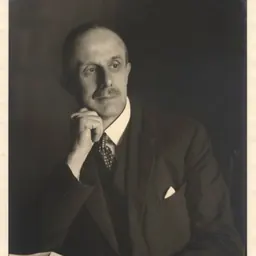
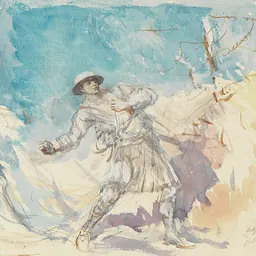
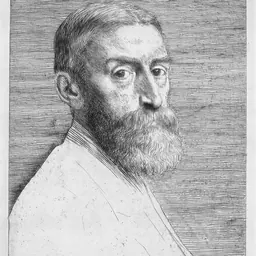
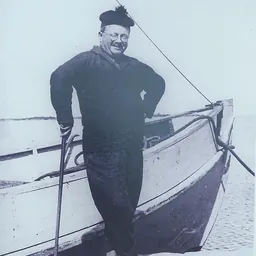
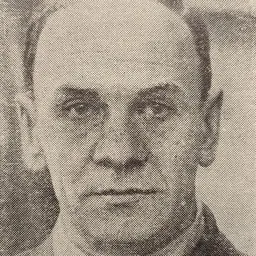
Contemporaries
People whose lives overlapped Gordon Browne's



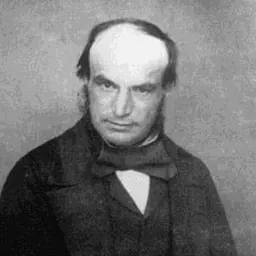
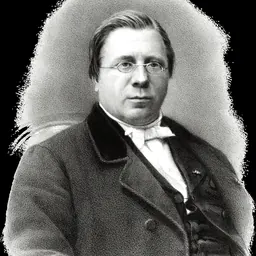
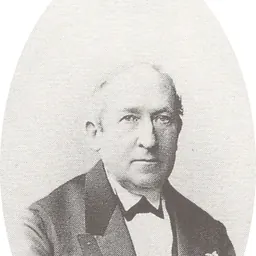
Frequently asked questions
Who was Gordon Browne?
English artist and children's book illustrator (1858-1932)
When was Gordon Browne born?
Gordon Browne was born on 15 April 1858 in Banstead.
When did Gordon Browne die?
Gordon Browne died on 27 May 1932 in Richmond.
What was Gordon Browne's occupation?
Gordon Browne was a painter and illustrator.
What nationality was Gordon Browne?
Gordon Browne was British.
Sources & further reading
Cite this page
APA: Biography.guide. (2026). Gordon Browne. https://biography.guide/gordon-browne/
MLA: "Gordon Browne." Biography.guide, https://biography.guide/gordon-browne/.
Chicago: "Gordon Browne." Biography.guide. https://biography.guide/gordon-browne/.
Data last updated: 2026-09-20 · Spot an error? Report a correction.
Page generated 2026-09-27 05:24 UTC