
About Gord Renwick
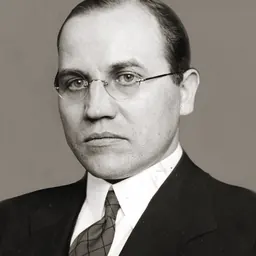
Lived 1935 – 2021 (aged 85). Gord Renwick was a businessperson, known for Cambridge Hornets, Canadian Amateur Hockey Association and International Ice Hockey Federation.
Gordon Ralph Renwick (February 13, 1935 – January 6, 2021) was a Canadian ice hockey administrator, who served as president of the Canadian Amateur Hockey Association (CAHA), vice-president of the International Ice Hockey Federation (IIHF), and was the team president of the Galt Hornets.
Renwick led the Hornets to Allan Cup championships for senior ice hockey in 1969 and 1971. His travels to the Ahearne Cup in Europe led to him opening the door for European teams playing tournaments in North America, and his role as a Chef de Mission for these events. Renwick was the founding chairman of the Wrigley Cup hockey tournament for midget age group in 1974, and then became vice-president of the CAHA in 1975. He served as president of the CAHA from 1977 to 1979, during a time when the CAHA battled with the World Hockey Association over junior ice hockey players, and struggled with Hockey Canada and the Government of Canada, for control of international hockey. During his time as president, the CAHA began the process of recognizing women's ice hockey in Canada, and implemented rules for mandatory safety equipment for youths. Renwick was the last elected president of the CAHA, which transitioned to having a full-time president in 1979.
Renwick later served eight years as vice-president of the IIHF, implementing bookkeeping and accounting reforms, and was responsible for marketing and sponsorship of international events including the Canada Cup, and the World Cup of Hockey. He also served as the chairman of the IIHF committees for rules, by-laws and statutes, and helped negotiate National Hockey League involvement in the Winter Olympic Games. He was inducted into the IIHF Hall of Fame in 2002, received the Order of Hockey in Canada in 2012, and is the namesake of the Renwick Cup.
Early life Gordon Ralph Renwick was born on February 13, 1935, in Galt, Ontario, the eldest of three children to Donald and Daisy Renwick. He was an aspiring baseball pitcher while attending the Galt Collegiate Institute and Vocational School. During a summer baseball camp in his junior year, he was nervous pitching to former major league player Goody Rosen, and hit Rosen in the elbow with a wild pitch.
Galt Hornets The Allan Cup was the championship trophy for amateur senior ice hockey in Canada.
Renwick served as president of the Galt Hornets team from 1966 to 1973, which won two Allan Cups for the senior ice hockey championship of Canada. He was encouraged to revive the team's ownership group by close friend, and the team's previous coach Bill Wylie. In 1966, Renwick named Earl Balfour as the team's new playing coach, and signed Gary Collins.
Two seasons later, the 1968–69 Hornets team won 52 of 67 games played, and won the Ontario championship in a four-game sweep of the Barrie Flyers. In the national playoffs, Galt defeated the Gander Flyers in five games, then the Victoriaville Tigers in six games to reach the final. Galt captured the 1969 Allan Cup winning in four consecutive games over the Calgary Stampeders.
Renwick and the team executive used a share-the-wealth philosophy, where the players saw a proportion of the team's profits. Galt won another Ontario championship in the 1970–71 season, with the goaltending tandem of Harold Hurley and Ken Broderick. In the playoffs, Galt defeated the Barrie Flyers, Orillia Terriers, Sault Ste. Marie, Thunder Bay Twins, and the Grand Falls-Windsor Cataracts to reach the finals. Galt captured the 1971 Allan Cup winning in four consecutive games over the same Calgary team from 1969, and played to sellout crowds at the Galt Arena Gardens. The Hornets represented Canada at the 1971 Ahearne Cup in Stockholm, finishing in third place behind teams from Russia and Sweden.
CAHA vice-president title=1970s international tours...|quote=It opened up the door, the opportunity for senior clubs right across Canada to go to Europe and play in tournaments and meet the guys. — —Gord Renwick, 2012 and reelected to the same position in May 1974. After two years on the executive, he was acclaimed as the first vice-president in May 1975, and held the position for two years.
Renwick made connections with other European teams while his Galt Hornets travelled to international tournaments. He opened the door for European senior clubs to play series in North America at the same time the National Hockey League (NHL) and the World Hockey Association were beginning to sign European players, and also exposed sold out North American arenas to European teams. He also hosted an international senior hockey tournament in December 1972, involving his own Galt team, HC Dynamo Moscow from the Soviet Union, the Prague Selects from Czechoslovakia, Timrå IK from Sweden, and the Owen Sound Downtowners and Kingston Aces from Ontario.
Renwick organized the original Wrigley Cup in 1974, as the tournament chairman. The event was a national midget age group hockey tournament for the top 12 teams in Canada, with the winning team to earn a trip to the Soviet Union. He was also responsible for implementing the CAHA development programs for coaches, referees and managers, but struggled with appropriate funding. When the annual meeting in 1977 approved $523,000 for development, Renwick stated that the CAHA needed about $5 million to fully implement what it envisioned.
CAHA president First year
Renwick was elected president of the CAHA on May 27, 1977, succeeding Don Johnson. His first order of business was to find a replacement for Gordon Juckes, who was retiring as the executive director of the CAHA. In June 1977, Renwick appointed David Branch as the new executive director of the CAHA effective September 1, 1977. The CAHA was also facing difficulties implementing its goals due to the cost of inflation and decreasing income. On May 25, 1978, the CAHA passed a resolution that set up a female hockey council, which allowed for female divisions within the CAHA, separate from the male divisions. The CAHA executive reviewed an application from the independent Manitoba Major Junior Hockey League to affiliate with the CAHA as a Junior A league, but the CAHA offered the league a Junior B status instead. The CAHA also faced differences between its provinces regarding mandatory helmets for ice hockey referees, and Renwick denied reports of cancelling the western portion of the 1978 Centennial Cup playoffs due to whether games were officiated by referees wearing helmets.
The CAHA and Hockey Canada were in competition with each other over control of hockey in Canada. Renwick said that dealing with Hockey Canada was the most unpleasant part of his role as the CAHA president. He was disappointed in the abilities of Doug Fisher as the chairman, and described Alan Eagleson as a dictator who wielded influence in the favour of professional players. Renwick looked to defend the amateur interests in Canada, and sought representation on the Hockey Canada committee which oversaw the 1978 World Junior Ice Hockey Championships. When Fisher insisted that the CAHA not be involved in international hockey, and accused the CAHA of being hostile towards the Hockey Canada mandate, Renwick called for Fisher's resignation. Renwick further denied that the CAHA was interfering in Hockey Canada's affairs, and actually supported Hockey Canada at meetings to approve the Canada Cup.
title=Canadian national team...|quote=We feel the [Olympic] committee could be a CAHA committee rather than a Hockey Canada committee inasmuch as most of the people involved are affiliated with the CAHA. — —Gord Renwick, 1978 Renwick also expressed concerns that the Government of Canada had too much control on hockey in Canada, and that he was frustrated with Hockey Canada being in charge of the Canadian national team at the Winter Olympic Games, which was restricted to amateur participation. He felt that Hockey Canada should focus on trying to get the NHL and WHA to cooperate instead, and blamed Hockey Canada for the financial losses at the 1978 World Junior Ice Hockey Championships hosted in Canada.
Second year Renwick was reelected by acclamation as CAHA president on May 25, 1978, Renwick announced a five-year deal to rename the Wrigley Cup in July 1978, to become the Air Canada Cup for the national midget championship. He and Ed Chynoweth announced a series between Western Hockey League teams and a Russian Select team for December 1978.
Renwick expressed concerns about a proposal in November 1978 to have government appointees running youth hockey instead of volunteers. He considered volunteers to be the backbone of minor ice hockey in Canada, and felt they would lose the incentive to participate without having a say in how hockey operated. He also felt that there was little that the federal government of CAHA could do in preventing professional leagues from signing junior-aged players.
title=Accusations by the WHA...|quote=These petty, ridiculous people, these amateur hockey people in Canada who have no idea what they're talking about—what they're conducting is a form of blackmail. — —Howard Baldwin, 1978 A temporary truce was arranged where Renwick agreed not to block the WHA games, pending meeting set up with the WHA, Hockey Canada, and Iona Campagnolo. He claimed that the CAHA was owed $320,000 in development fees, which included a $150,000 bond signed by the WHA in November 1977, as a promise not to sign junior-aged players. Talks to resolve the issues broke down in November 1978, and Renwick informed the IIHF that the WHA was no longer in good standing with the CAHA, thus blocking the sanction of WHA international games by the IIHF.
The dispute with the WHA led to further disagreements with Hockey Canada in November 1978. Torrance Wylie was the new chairman of Hockey Canada, and he claimed that the CAHA had signed an agreement in July 1978 stating that Hockey Canada will sanction "all international and professional team involvements". Renwick disputed this by saying that such an agreement was tentative, and not approved by the CAHA executive board. Eagleson later threatened to cancel international events, because the CAHA had retained the power to veto international games with its IIHF membership. In January 1979, Hockey Canada sought to get its own seat on the IIHF council, and then later wanted to take over the CAHA's seat occupied by Renwick. He also refused to hand over the sanctioning approval to the IIHF executive itself, when Hockey Canada requested to bypass the CAHA. Later that month, when Lou Lefaive from Sport Canada said that Hockey Canada informed the government it would stop organizing teams for Olympics and World Championships, Renwick said the threat was an excuse for Eaglesons's inability to organize a profitable Canada Cup, and reiterated that the CAHA had supported the Hockey Canada endeavours.
At the annual general meeting in May 1979, the CAHA responded to a government report critical of its player development program. Renwick was tired of the constant questioning of the CAHA by federal and provincial governments, but he put together a committee to examine the report in more detail. He also said that governments are quick to support the professional players, but give little help to amateurs and youths. The CAHA eliminated body checking in age levels below pee-wee; it sought stricter enforcement of player safety rules including high-sticking, illegal hockey sticks, and body checking; and it made CSA approved helmets and face masks mandatory by March 1, 1980. The CAHA allowed decided to allow advertising on the arena boards to help with income.
The Quebec Amateur Hockey Association (QAHA) threatened to leave the CAHA at the 1979 general meeting, citing "the lack of leadership of the national organization", and having its concerns and recommendations ignored by the CAHA. Renwick was surprised by the QAHA statement and criticism, and said that the QAHA has not nominated anyone to sit on the CAHA board, or take part in the technical committee. Also at the meeting, the CAHA unanimously chose to have a full-time paid president to look after affairs. The president would be responsible to an elected volunteer board of directors, and be assisted by the executive director. Renwick indicated that the CAHA would begin searching immediately to fill the position, and that neither he, nor CAHA vice-president Frank McKinnon would apply for the position.
Post-presidency
Renwick was succeeded as CAHA president by Murray Costello, who served in a full-time capacity. Renwick returned to senior ice hockey, and served as president of the OHA Senior A Hockey League from 1979 to 1981.
When the CAHA resurrected the Canadian national team in 1981, he said that previous efforts for the program were underfunded, hence being represented by club teams instead. In 1984, the Ontario Hockey Association (OHA) relocated to Cambridge, and became of tenant of Renwick Construction at 1425 Bishop Street. In April 1985, Renwick attended the funeral of Bunny Ahearne on behalf of Canada, and stated that while Canadians had their differences with Ahearne, he was respected for his efforts in international hockey.
IIHF vice-president title=World hockey politics...|quote=I've always found it to be a little more interesting to be involved internationally. You are coming from so many different countries. That was kind of fun to watch that come together. — —Gord Renwick, 2012 As the vice-president, he streamlined the accounting process and oversaw the conversion of IIHF bookkeeping to a computerized system.
In February 1989, when Peter Nedved defected to Canada from Czechoslovakia, Renwick said that Nedved must be released from his home country according to IIHF statutes before he could play for Canada, unless there was a court order otherwise. When the schedule for the 1992 Men's World Ice Hockey Championships was moved further back in April due to ice hockey at the 1992 Winter Olympics, Renwick felt that it would benefit Team Canada due to more available players not in the 1992 Stanley Cup playoffs. The German Ice Hockey Federation protested the shootout win by Team Canada in the 1992 Winter Olympics due to a referee error, but the game result was upheld by the IIHF, and Renwick stated that the previous goal counted once the puck had been put back into play. In March 1994 after the Winter Olympics, Canada and Sweden made a proposal to the IIHF to eliminate the shootout, and Renwick felt that there would be opposition, and that "Europeans are pretty high on the shootout and they are used to it".
Renwick played an integral role in discussions between the NHL and the IIHF, that lead to NHL participation in the Winter Olympic Games. Renwick was cautious that lengthening the NHL season schedule to accommodate the Olympics would decrease the number of players available to participate in the Ice Hockey World Championships.
Renwick was the first declared candidate to replace Günther Sabetzki, who planned on retiring as IIHF president in 1994. Renwick was the preferred choice of the CAHA for the position, despite previous campaigning for the position by Eagleson. Journalist Alan Adams noted that despite Renwick being well respected behind-the-scenes work and loyalty to the game, Europeans would be unlikely to elect a Canadian as president, due to fears of NHL encroachment into Europe, and having a president geographically far away from the European market. Renwick chose to retire from hockey, after his failed candidacy to be IIHF president.
Personal life title=Cambridge Sports Hall of Fame...|quote=I probably get a lot more credit than I deserve. What stimulates me to do it is the love of the game and the success of marketing. — —Gord Renwick, 1997 In 1991, he received the OHA Gold Stick, in recognition of contributions to hockey as a builder. He was made a life member of the IIHF in 1994, after he retired from international service.
Renwick was inducted into the Cambridge Sports Hall of Fame as an individual in 1997, and inducted into the Cambridge Sports Hall of Fame a third time in 2004, as a member of the 1970–71 Galt Hornets team. He received the order on June 25, 2012, along with fellow honourees Jean Béliveau, Cassie Campbell, Wayne Gretzky and Gordie Howe. and congratulations by Rob Leone in the Legislative Assembly of Ontario.
Renwick was also made a life member of Hockey Canada, He is also the namesake of the Renwick Cup, which is awarded annually to the AAA senior ice hockey champion of Ontario, who moves on to the Allan Cup.
In 2019, the Cambridge Memorial Hospital dedicated the Renwick family bridge in his honour, a glass structure connecting two wings of the hospital.
Don’t just read it —
keep it.
Full-length biographies made to live with: read them, listen on the way to work, watch them tonight.
- E-book
- Audio
- Video
Instant download · yours to keep · every purchase keeps this site free
Important facts
People in Gord Renwick's life
Named in this biography and alive at the same time




Related people
Same field, nearest in time



Contemporaries
People whose lives overlapped Gord Renwick's


Frequently asked questions
Who was Gord Renwick?
Canadian hockey administrator (1935–2021)
When was Gord Renwick born?
Gord Renwick was born on 13 February 1935 in Cambridge.
When did Gord Renwick die?
Gord Renwick died on 6 January 2021 in Cambridge.
What was Gord Renwick's occupation?
Gord Renwick was a businessperson.
What was Gord Renwick known for?
Gord Renwick was known for Cambridge Hornets, Canadian Amateur Hockey Association and International Ice Hockey Federation.
Sources & further reading
Cite this page
APA: Biography.guide. (2026). Gord Renwick. https://biography.guide/gord-renwick/
MLA: "Gord Renwick." Biography.guide, https://biography.guide/gord-renwick/.
Chicago: "Gord Renwick." Biography.guide. https://biography.guide/gord-renwick/.
Data last updated: 2026-09-22 · Spot an error? Report a correction.
Page generated 2026-09-27 05:11 UTC