
Goodwife Knapp
Connecticut woman accused of witchcraft
About Goodwife Knapp
Lived 1605 – 1653 (aged 47–48).
Goodwife Knapp ( – 1653) was a woman hanged for witchcraft in 1653 in the Connecticut Colony. One of eleven executed witch hunt victims in the colony, Knapp was notable for never confessing to being a witch and for not naming any other women during her trial.
Biography Not much is known about Knapp's life, including her name. She was married to Roger Knapp, who had settled in New Haven before 1638 and later moved to Fairfield. The Knapps had three children – Jonathan, Josiah and Lydia.
Knapp was variously described as a "woman of good repute" and a "just and high-minded old lady"; conversely, she was also described in some sources as a "simple-minded woman" who was regarded to with "contempt" by townspeople in Fairfield.
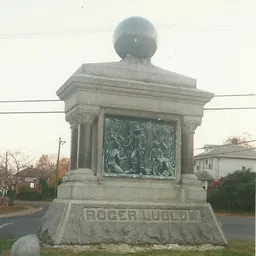
Arrest, trial and execution Knapp's case is one of the most well-documented witch trials in Connecticut, likely due to its relative high profile; among the magistrates were John Davenport, one of the founders of New Haven, and Roger Ludlow, the deputy governor of the Connecticut Colony and the Massachusetts Bay Colony.
Knapp was arrested and tried for being a witch in New Haven. Knapp consistently denied the charges against her, both following her arrest, during her trial, and after her sentencing. A midwife, Goody Odell, and Luce Pell, the wife of a local surgeon, examined Knapp's body for which marks, concluding that she had "witch's teats". Numerous people testified against her, including Goodwife Staples, whose testimony against Knapp was described as being damning.
Knapp was hanged in 1653. Following her death, her body was checked for marks of the devil, none of which were identified. Among those who examined her body was Staples, who, despite being one of Knapp's accusers, was understood to have changed her mind following her trial, stating "there were naught but such [marks] as she herself or any woman had".
In 2019, a memorial for Knapp was unveiled at the Burroughs Community Center in Black Rock, Bridgeport, which stands on the site of Knapp's execution. A memorial service was led by David Spollett, pastor of the First Church Congregational; the church's first pastor had escorted Knapp to the gallows. Representatives from the Black Hat Society, a collective of Connecticut witches, also attended the ceremony.
Beverly Kahn, a descendent of Knapp, testified before the Connecticut General Assembly's Judiciary Committee supporting a resolution that would officially pardon Knapp and others accused of witchcraft in colonial Connecticut. In May 2023, the resolution was passed, pardoning Knapp.
Don’t just read it —
keep it.
Full-length biographies made to live with: read them, listen on the way to work, watch them tonight.
- E-book
- Audio
- Video
Instant download · yours to keep · every purchase keeps this site free
Important facts
People in Goodwife Knapp's life
Named in this biography and alive at the same time
Contemporaries
People whose lives overlapped Goodwife Knapp's





Frequently asked questions
Who was Goodwife Knapp?
Connecticut woman accused of witchcraft
When was Goodwife Knapp born?
Goodwife Knapp was born in 1605.
When did Goodwife Knapp die?
Goodwife Knapp died in 1653.
Sources & further reading
Cite this page
APA: Biography.guide. (2026). Goodwife Knapp. https://biography.guide/goodwife-knapp/
MLA: "Goodwife Knapp." Biography.guide, https://biography.guide/goodwife-knapp/.
Chicago: "Goodwife Knapp." Biography.guide. https://biography.guide/goodwife-knapp/.
Data last updated: 2026-09-20 · Spot an error? Report a correction.
Page generated 2026-09-27 05:24 UTC