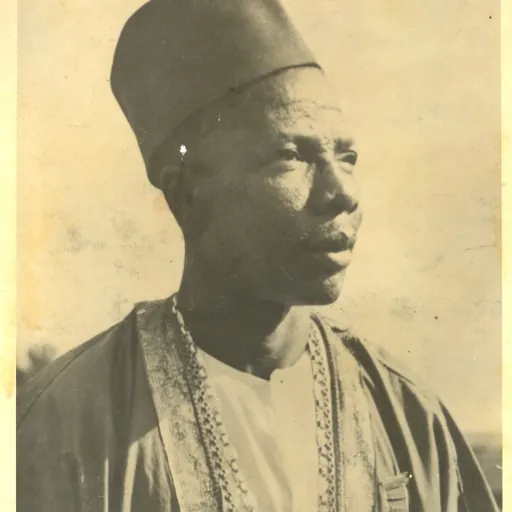
Gomani II
Malawian chief
About Gomani II
Lived 1921 – 1954 (aged 32–33). Gomani II was a gomani Ngoni Tribe.
Inkosi ya Makosi (king of kings) Gomani II was born Zitonga (child of knobkerries) at Chipiri in present-day Mozambique. His mother was naNgondo, junior wife to Gomani I, also known as Chatamthumba.
Early life He was a descendant of Mputa and Chikuse, becoming paramount king of the Maseko Ngoni of Ntcheu, southern Malawi, from 1896 to 1954. He was also one of the few leaders to have stood against the establishment of Federation of Rhodesia and Nyasaland.
After mastering the basics of reading and writing, Zitonga went to Henry Henderson Institute in Blantyre. He was baptised in 1921, the year he became chief, reviving the Maseko royal house.
Taking office Under the Native Ordinance of 1933, Zitonga, now using the Christian name of Philip, was officially recognised as the paramount chief of Ntcheu district. Oct 27, 1926, he was guest of honour when people of the central Angoniland had built an obelisk, in memory of his father Gomani 1, who was killed by British colonialists.
In the 1930s, when the colonial government introduced modern agriculture, Gomani II encouraged his people to adopt them, becoming a model chief.
Resistance to Federation, arrest and death Totally opposed to the Federation of Nyasaland and Rhodesia, he was supposed to be part of the delegation of chiefs to London to oppose its institution. But because of poor health, his son Willard represented him. This delegation met some key figures in London including Reverend Michael Scott at the African Bureau and Cannon Collins of Christian Action.
When the Federation was imposed in 1953, Gomani began to pursue resistance by ignoring official agricultural and conservation regulations. In response, the colonial government suspended and then withdrew its recognition as the paramount chief. In May 1953, the police tried to force Gomani out of the district but failed due to the thousands of people that had gathered at his house in Lizwe la Zulu (or Lizuli in short).
In the midst of the chaos, Gomani and heir to his throne, Willard, together with Reverend Michael Scott, escaped into Mozambique where they hid near Villa Courtinho. Michael Scott was visiting the chief's court when this happened. They were arrested by Mozambican authorities and handed back to the authorities in Malawi. Scott was declared a prohibited immigrant and deported.
His arrest was followed by a major disquiet throughout the colony.
In June 1953, he was due to appear in the magistrate court in Zomba. He could not appear because he was sick, admitted at the Seventh Day Adventist hospital in Thyolo, southern Malawi. He died shortly, and was buried at Lizulu. His funeral was attended by thousands of people including the leading nationalists of the day.
He was succeeded by his son Willard, who became Gomani III.
Don’t just read it —
keep it.
Full-length biographies made to live with: read them, listen on the way to work, watch them tonight.
- E-book
- Audio
- Video
Instant download · yours to keep · every purchase keeps this site free
Important facts
Family & relationships
People in Gomani II's life
Named in this biography and alive at the same time


Contemporaries
People whose lives overlapped Gomani II's





Frequently asked questions
Who was Gomani II?
Malawian chief
When was Gomani II born?
Gomani II was born in 1921.
When did Gomani II die?
Gomani II died in 1954.
What was Gomani II's occupation?
Gomani II was a gomani Ngoni Tribe.
Sources & further reading
Cite this page
APA: Biography.guide. (2026). Gomani II. https://biography.guide/gomani-ii/
MLA: "Gomani II." Biography.guide, https://biography.guide/gomani-ii/.
Chicago: "Gomani II." Biography.guide. https://biography.guide/gomani-ii/.
Data last updated: 2026-09-22 · Spot an error? Report a correction.
Portrait: Wikimedia Commons · author & licence
Page generated 2026-09-27 05:04 UTC