
About Goldsworthy Gurney
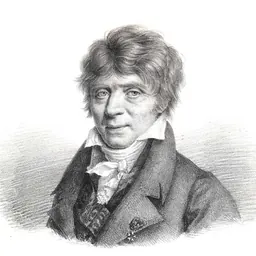
Lived 1793 – 1875 (aged 82). Goldsworthy Gurney was a British inventor, chemist, architect, physicist, construction and gentleman scientist.
Sir Goldsworthy Gurney (14 February 1793 – 28 February 1875) was a British surgeon, chemist, architect, builder, lecturer and consultant. He was a prototypical British gentleman scientist and inventor of the Victorian era.
Amongst many accomplishments, he developed the oxy-hydrogen blowpipe, and later applied its principles to a novel form of illumination, the Bude-Light; developed a series of early steam-powered road vehicles; and laid claim—still discussed and disputed today—to the blastpipe, a key component in the success of steam locomotives, engines, and other coal-fired systems.
Events surrounding the failure of his steam vehicle enterprise gave rise to controversy in his time, with considerable polarisation of opinion. His daughter Anna Jane Gurney (1816–1895) was devoted to him. During her lifetime, she engaged in a campaign to ensure the blastpipe was seen as his invention.
Biography
Gurney was born in St Merryn, Cornwall, England on 14 February 1793. His unusual Christian name was his grandmother's surname but taken from his godmother who was a Maid of Honour to Queen Charlotte. Gurney's grandfather married into money, allowing his father, and to an extent himself, to live as gentlemen.
He was schooled at the Grammar School at Truro, where he showed an interest in contemporary sciences; and had the opportunity through friends to meet Richard Trevithick and see his 'Puffing Devil', a full-size steam road carriage, at Camborne.
After school he took a medical education with a Dr. Avery at Wadebridge, succeeding to the whole practice in 1813, and providing him with sufficient income to marry Elizabeth Symons, a farmer's daughter from Launcells, in 1814. The couple settled in Wadebridge where their daughter Anna Jane was born in January 1815. He practised as a surgeon, but he also became interested in chemistry and mechanical science; he was also an accomplished pianist, and constructed his own piano, described as a 'large instrument'.
He moved with his family to London in 1820, apparently discontented with rural life and wishing to seek his fortune. The family settled at 7 Argyle Street, near Hanover Square, where Gurney continued his practice as a surgeon. There he expanded his scientific knowledge and started giving a series of lectures on the elements of chemical science to the Surrey Institution, where he was appointed lecturer in 1822. A son, Goldsworthy John, was also born to the couple in that year, at Launcells (later to die relatively young in 1847 ).
A skill attributed to Gurney was an ability to express scientific thought on paper and through lectures. His lectures in the 1822-3 period included one on the application of steam power to road vehicles. He was also of a practical bent, and in 1823 was awarded an Isis gold medal of the Royal Society of Arts for devising an oxy-hydrogen blowpipe.
By 1825, he had started practical work on a steam carriage, taking space for a small workshop in Oxford Street and filing a first patent for "An apparatus for propelling carriages on common roads or railways – without the aid of horses, with sufficient speed for the carriage of passengers and goods". His work encompassed the development of the blastpipe, which used steam to increase the flow of air through a steam engine's chimney, so increasing the draw of air over the fire and, in short, much increasing the power-to-weight ratio of the steam engine.
In 1826 he purchased from Jacob Perkins a manufacturing works at, and moved his family to living space in, 154 Albany Street, near Regent's Park, and proceeded to improve the designs of his carriages, described below. Whilst the carriages certainly had technical merit and much promise, he was unsuccessful in commercialising them; by the spring of 1832 he had run out of funding and was forced to auction his remaining business assets, eventually losing a great deal of his own and investors' money. The circumstances of the failure engendered controversy expressed in contemporary scientific publications, as well as in committees of the House of Commons.
In 1830, Gurney leased a plot of land overlooking Summerleaze Beach in Bude, from his friend Sir Thomas Acland, and set about the construction of a new house to be built amongst the sand hills. The construction rested on an innovative concrete raft foundation, representing an early worked example of this technique. The original house called "The Castle" still stands but has been extended over the past century. It is currently owned and managed by Bude-Stratton Town Council and houses a heritage centre with a number of exhibits relating to Gurney. In this period he became godfather to William Carew Hazlitt, who notes that Gurney was involved in property development in Fulham.
At The Castle, Gurney regrouped from his carriage failure, applying his mind to the principle of illumination by the forcing of oxygen into a flame to increase the brilliance of the flame, giving rise to the Bude-Light. He also applied the principles of the blastpipe or steam jet to the ventilation of mines, as well as to the extinguishing of underground fires.
His wife Elizabeth died in 1837, and is buried in St. Martin in the Fields. With his daughter – described as his constant companion – he moved to 'Reeds', a small house on the outskirts of Poughill, near Bude. In 1844 he bought a lease on Hornacott Manor, Boyton, from Bude, where he built Wodleigh Cottage for himself, and engaged his interest in farming. In 1850 he gave up the lease on The Castle. In this period, he became a consultant, applying his innovative techniques to a range of problems, notably, after 1852, to the ventilation of the new Houses of Parliament where in 1854 he was appointed 'Inspector of Ventilation'. He had previously successfully lit parliament and Trafalgar Square.
Perhaps arising out of the Boyton farming connection he took a second wife, being married at St. Giles in the Field to Jane Betty, the 24-year-old daughter of a farmer from Sheepwash, Devon; Gurney was 61. The marriage appears to have been unsuccessful; there was perhaps some contention between Anna Jane (39) and her much younger stepmother. Jane Betty was removed from Gurney's will, although they were never divorced.
Gurney continued to divide his time between London and Cornwall, variously engaged in work with clients; experimenting and innovating in diverse fields such as heating (the Gurney Stove) or electrical conduction; and in improving his Hornacott estate. He was appointed president of the Launceston Agricultural Society.
In 1863, Gurney was knighted by Queen Victoria, but later that year suffered a paralytic stroke; he sold Hornacott and retired back to Reeds in Cornwall, where he lived with his devoted Anna Jane, ultimately dying on 28 February 1875. He is buried at Launcells parish church.
Gurney's steam coach Promotional 1827 image by George Morton of Gurney's steam coach, This print is an 1828 reissue. In the period 1824–31, Gurney designed and built a number of steam-powered road vehicles. He established a business, the Gurney Steam Carriage Company, to develop and promote steam-powered road transport. He obtained patents for various claimed technical improvements, sold franchises to investors to run services using his vehicles and built at least one steam coach and ten steam drags, steam-powered towing vehicles. The army took an interest in his activities and for them he undertook in July 1829 the first long-distance steam-powered journey by rail or road.
In 1824, Gurney began work on applying steam power to road vehicles. Throughout his period in London he resided at 7, Argyle Street, near Oxford Circus. Initially he had a workshop close by, which was drawn by G.J.Scharf. It was a room, suitable for making a boiler, parts of a vehicle or a working model, not a full-size vehicle.
In early 1825 he was approached by Walter Hancock, who had just completed his own first prototype steam carriage; they agreed to meet in Regent's Park where Gurney would demonstrate the prototype which he had had built based on his own working model. During a journey of two miles along a well-made road, the vehicle, which was a steam drag (tow-vehicle) stopped involuntarily five times. The two parted.
On 14 May 1825 Gurney obtained patent No. 5170 for his implementation of propellers, mechanical legs whose action imitated that of horses. These were shaped like a long "s", ʃ, and can be seen in front of the rear wheels on the promotional 1827 image. On 21 October 1825 he obtained patent No. 5270 for his design of a lightweight tubular boiler.
Gurney was by no means the only pioneer in the history of steam road vehicles – Trevithick was first and Hancock a contemporary – but Gurney had a flair for publicity and drew wealthy – and well-connected – investors, such as Colonel Viney. After the dissolution of his partnership with Gurney, Viney paid him £5,000 for a share in the patents and the licence for the Gloucester - Cheltenham road.
Gurney later said that his first prototype weighed four tons and that he worked to reduce this to 2 tons for his steam coach, the vehicle for which he is best known. This took the form of a large stage coach with 6 passengers inside and 12 (he later claimed 15) outside, plus the guide, who doubled as the engine-man/stoker. The body of the vehicle was 15' long, or 20' including the front pole and a pair of steered pilot wheels.
The print "The New Steam Carriage" at the top of this section is an 1828 reprint of an earlier print by George Morton. It shows the coach in front of a pub with propellers in front of the rear wheels. The caption states "It has been constructed..." and "The rate of travelling is intended to be from 8 to 10 miles per hour". This dates it to mid-1827. The "London and Bath" livery was perhaps an inducement to get Major Dobbyn to invest: in September 1827 he paid Gurney £6,000 for the franchise for the London, Bath and Bristol road, for which Gurney would build him eight coaches.
In tests, Gurney found that the propellers didn't work well and added a cranked drive to the rear axle with clutches to each wheel. At the end of the driven axle were "crotches" (i.e. two metal fingers) which acted on metal blocks fixed to the nave of the wheel. A handle fixed to the hub of the wheel could be wound in to engage the metal blocks with the crotches, thereby driving the wheel. In testimony to a Parliamentary inquiry in 1831, Gurney blamed workmen who "neglected to lock the wheel", i.e. to engage the clutch on the second rear wheel, so that engine braking would be applied through both rear wheels. Gurney's steam coach of 1828 caricatured by CruikshankOn 16 January 1828 Prince Pückler-Muskau reported that he had travelled on the coach:The new steam-carriage is completed, and goes five miles in half an hour on trial in Regent's Park. But there was something to repair every moment. Projected Improvements
On 11 October 1827 (i.e. before the public demonstrations), Gurney filed patent drawings for an improved steam coach. A simplified version of this was subsequently published together with an explanation of the parts (see image).
The patent drawing shows where Gurney saw the need for change. The propellers are abandoned. The boiler is substantially larger. A blower is added in the fore boot and the four chimneys are replaced by a single wide one between the two separators. The transmission was simplified with clutches in which the two surfaces were either bolted together or left free to rotate independently.
Five days later, on 27 July 1829, a procession of four vehicles set out for Bath from Cranford Bridge, just to the west of Hounslow, the main coaching station west of London. At General Gordon's instigation, Gurney's drag was to be tested on the first long-distance journey at speed by steam locomotion.
Sandwiched between carriages drawn by horses were Gurney's steam drag with Gurney aboard, drawing his private carriage. Dance's account of the journey is at pp.265-268 of The Taylor Papers.
At Melksham there was a fray with people throwing stones at the vehicle and its occupants. The stoker was injured, the vehicle damaged and it had to be escorted under guard to Bath to prevent further attacks. It remained there for two days for repairs and was then escorted back to Melksham. Gurney claimed the return from Melksham to Hounslow took 10 hours (including stoppages) for a distance of 84 miles. The chimney appears to have been a triangular-section hood above the boiler, with a transverse outlet at the top, similar to that on his patent design for an improved steam coach. As Gurney later said, it would not be seen by approaching horses.
In 1831 Gurney built and sent the first two of a planned six steam drags to John Ward in Glasgow for use on the Edinburgh - Glasgow road. One of them made a successful trip to Paisley and Renfrew, but attempts on the road to Edinburgh failed, leaving the vehicle damaged. Gurney and his engineer returned to London, having (as the engineer thought) disabled the vehicle by removing the safety valve. Ward's engineer patched it up for a demonstration at the Glasgow cavalry barracks in June 1831. It exploded, seriously injuring two boys. Ward withdrew from his contract with Gurney.
A charge of £2 was levied on each steam carriage journey, whilst the toll for a horsedrawn carriage was 2 shillings (one-twentieth of the amount). This may be contrasted with a contemporary exchequer loan to the railway developers of £100,000. Maceroni continues:
At the same time, press coverage of an accident befalling a Glasgow steam drag adversely affected the reputation of the vehicles. Gurney was bankrupted with debts of £232,000.
Sufficient was the concern about Gurney's bankruptcy, and sufficient were his contacts, that a further select committee was convened from 1831 to 1835, on Mr.Goldsworthy Gurney's Case. Its final report stated:
Coda: Dance's Activities in 1833 Sir Charles Dance's steam-drawn omnibus about to cross Waterloo Bridge on its service to Greenwich, October 1833In 1833 Dance came to London with his steam-carriage, and had it overhauled by Messrs. Maudslay, Sons, and Field, a leading firm of steam and mechanical engineers. The work undertaken led to patent No. 6465 by Sir Charles Dance and Joshua Field for improvements to the boiler.
In 1840, Dionysius Lardner declared:First and most prominent in the history of the application of steam to the propelling of carriages on turnpike roads stands the name of Mr. Goldsworthy Gurney ... in his Automobile Biographies, Lyman Horace Weeks comments that
Other work
A key development of his time at the Surrey Institute was use of the oxy-hydrogen blowpipe, normally credited to Robert Hare, in which an intensely hot flame was created by burning a jet of oxygen and hydrogen together. The blowpipe was the underpinning of limelight, and Gurney was its first exponent.
According to A History of The Growth of The Steam-Engine by Robert H. Thurston, Gurney was a proponent of the ammonia engine. "In 1822… Mr. Goldsworthy Gurney, who subsequently took an active part in their introduction, stated, in his lectures, that "elementary power is capable of being applied to propel carriages along common roads with great political advantage, and the floating knowledge of the day places the object within reach." He made an ammonia engine—probably the first ever made—and worked it so successfully, that he made use of it in driving a little locomotive."
Arising from his successes with mine ventilation he was commissioned in 1852 to improve the gas lighting, heating, and especially the ventilation systems for the new Houses of Parliament at Westminster. Although he had some success in moving air around the palace buildings, ridding the legislature of the foul smell of the Thames was beyond his skill.
Gurney worked on many other projects, with interests and patents extending from improved steam engine design, to electric telegraphy and the design of musical instruments.
Steam Jet The steam-jet or blastpipe served to increase the draw of air through pipes, and was applied to improve mine and sewerage ventilation, to increase the efficiency of steam-powered stationary engines and blast furnaces, and road or rail vehicles. After the Rainhill trials of 1829, there was considerable controversy as to the genesis of this invention since it became associated in the mind of the public with George Stephenson—probably through the agency of Samuel Smiles' biography of that man. In her 1875 letter to The Times, his daughter traces the path of the idea: Gurney communicated it to Timothy Hackworth, who employed it in his Royal George locomotive of 1827, from which Stephenson allegedly took his inspiration for its inclusion in the Rocket. This is belied by Gurney's use of a fan to provide the blast in his patent design of October 1827 for an improved version of his steam carriage. The first of Gurney's steam carriages to which people objected on the grounds of noise were Sir Charles Dance's on the Cheltenham - Gloucester road in 1831. This was attributed to the use of steam blast. ). Anna Jane's subscription read:
A chiming clock presented by her in 1889 to St Olaf's Church, Poughill, in Bude, was inscribed "His inventions and discoveries in steam and electricity rendered transport by land and sea so rapid that it became necessary for all England to keep uniform clock time".
A final Anna Jane tribute was a stained glass window in St. Margaret's, Westminster (destroyed during the Second World War), with an inscription part of which reads:
Publications Lectures on the Elements of Chemical Science
Don’t just read it —
keep it.
Full-length biographies made to live with: read them, listen on the way to work, watch them tonight.
- E-book
- Audio
- Video
Instant download · yours to keep · every purchase keeps this site free
Important facts
People in Goldsworthy Gurney's life
Named in this biography and alive at the same time





Related people
Same field, nearest in time

Contemporaries
People whose lives overlapped Goldsworthy Gurney's





Frequently asked questions
Who was Goldsworthy Gurney?
surgeon, chemist, lecturer, consultant, architect, builder, gentleman scientist, inventor (1793–1875)
When was Goldsworthy Gurney born?
Goldsworthy Gurney was born on 14 February 1793 in Padstow, Treator.
When did Goldsworthy Gurney die?
Goldsworthy Gurney died on 28 February 1875 in Bude.
What was Goldsworthy Gurney's occupation?
Goldsworthy Gurney was an inventor, chemist, architect, physicist, construction and gentleman scientist.
What nationality was Goldsworthy Gurney?
Goldsworthy Gurney was British.
Sources & further reading
· Wikipedia: Goldsworthy Gurney
Cite this page
APA: Biography.guide. (2026). Goldsworthy Gurney. https://biography.guide/goldsworthy-gurney/
MLA: "Goldsworthy Gurney." Biography.guide, https://biography.guide/goldsworthy-gurney/.
Chicago: "Goldsworthy Gurney." Biography.guide. https://biography.guide/goldsworthy-gurney/.
Data last updated: 2026-09-26 · Spot an error? Report a correction.
Page generated 2026-09-27 05:14 UTC