
Gojong of the Korean Empire
26th king of Joseon, first emperor of the Korean Empire
About Gojong of the Korean Empire
Lived 1852 – 1919 (aged 66). Gojong of the Korean Empire was a Korean and South Korean monarch and king.
Gojong (; 8 September 1852 – 21 January 1919), personal name Yi Jaehwang, later changed to Yi Hui, also known as the Gwangmu Emperor, was the penultimate Korean monarch. He ruled Korea for 43 years, from 1864 until his forced abdication in 1907, initially as the 26th king of Joseon, and then as the first emperor of the Korean Empire. His wife, Queen Min (commonly known as Empress Myeongseong), played an active role in politics until her assassination carried out by the Japanese.
Gojong oversaw the bulk of the Korean monarchy's final years. He was born into a distant branch of the ruling House of Yi (a descendant of Grand Prince Inpyeong, the third son of King Injo), and ascended to the throne at the age of 11, upon the death of his nominal uncle, the heirless King Cheoljong. His biological father, Grand Internal Prince Heungseon (widely known as Heungseon Daewongun), acted as regent until he reached the age of majority, although he continued holding power until 1874. At this time, Korea was under policies of strict isolationism. By contrast, Japan had been rapidly modernizing under the Meiji Restoration. In 1876, Japan forcefully opened up Korea and began a decades-long process of moving the peninsula into its own sphere of influence. For the following few decades, Korea was highly unstable, and subjected to a number of foreign encroachments. Events such as the 1882 Imo Incident, the 1884 Kapsin Coup, the 1894–1895 Tonghak Peasant Revolution, and the 1895 assassination of Gojong's wife occurred during his reign. All of these events were related to or involved foreign powers.
All the while, Gojong attempted to consolidate control, seek foreign support, and modernize the country in order to keep Korea independent. He initiated the Gwangmu Reform, which sought to improve the military, industry, and education, to some amount of success. These reforms were seen as insufficient by some parts of the Korean literati, especially the Independence Club, which Gojong at first tolerated but eventually abolished in 1898. After Japan defeated China in the 1894–1895 First Sino-Japanese War, China lost its suzerainty over Korea, which it had held for centuries. In 1897, shortly after returning from his internal exile in the Russian legation in Seoul, Gojong proclaimed the establishment of the independent Korean Empire, and became its first emperor. Gojong's actions drew the ire of Japan. After Japan defeated Russia in the 1904–1905 Russo-Japanese War, it finally became the sole power in the region, and accelerated its pace of absorbing Korea. Two months after the victory, Korea under Gojong lost diplomatic sovereignty in the Japan–Korea Treaty of 1905, signed by the Five Eulsa Traitors. Gojong refused to sign it and made attempts to bring the treaty to the attention of the international community and convince leading powers of the treaty's illegitimacy, but to no avail.
Gojong was forced to abdicate in 1907, and was replaced by his son, Yi Cheok. He was then confined to Deoksugung. He made multiple attempts to escape and establish a government-in-exile abroad, but was unsuccessful each time. Korea formally became a Japanese colony in 1910, and the Korean imperial family was formally absorbed into the Japanese Imperial house. Gojong died on 21 January 1919, in conditions that were and still are seen in Korea as suspicious. The official cause of death was cerebral hemorrhage but rumors persisted that . His death was a direct catalyst for the March First Movement, which in turn bolstered the Korean independence movement.
Early life Yi Myeong-bok was born on 25 July 1852, in Jeongseonbang district, Seoul, Joseon. He was born into the royal House of Yi, and was the son of Yi Ha-eung and Lady Min.
King of Joseon
Japanese illustration of Gojong and Queen Min receiving Inoue Kaoru. On 13 December 1863, Yi was crowned in Injeong gate of Changdeokgung. He was only twelve years old when he was crowned. Queen Sinjeong acted as regent until he became an adult. His father, Prince Heungseon Daewongun, assisted in the affairs of Queen Sinjeong's regency. In 1866, when the queen proclaimed the abolishment of the regency, Gojong's rule started. Even though Gojong's father Daewongun had no rights to maintain the regency, he still acted as regent illegally.
Finally in 1873, Gojong announced the assumption of his direct royal rule. In November 1874, with the retirement of the Daewongun, Gojong's consort, Queen Min (posthumously known as Empress Myeongseong) and Yeoheung Min clan, gained complete control over the court, filling senior court positions with members of her family.
Gojong tried to strengthen the king's authority by giving important positions to consort kins and royal family members. It is known that Min Young-hwan, who was a distant relative of Queen Min, was Gojong's favorite official.
External pressures and unequal treaties
In the 19th century, tensions mounted between Qing China and Imperial Japan, culminating in the First Sino-Japanese War in 1894–1895. Much of this war was fought on the Korean peninsula. Japan, having acquired Western military technology after the Meiji Restoration, secured a victory against Joseon forces in Ganghwa Island, forcing Joseon to sign the Treaty of Ganghwa in 1876. Japan encroached upon Korean territory in search of fish, iron ore, and other natural resources. It also established a strong economic presence in the peninsula, heralding the beginning of Japanese imperialist expansion in East Asia. These events were the roots of Gojong's antipathy to the Japanese Empire.
The Treaty of Ganghwa became the first unequal treaty signed between Korea and a foreign country; it gave extraterritorial rights to Japanese citizens in Korea and forced the Korean government to open three ports, Busan, Chemulpo (Incheon), and Wonsan, to Japanese and foreign trade. With the signing of such a lopsided treaty, Korea became easy prey for competing imperialistic powers, paving the way for Korea's annexation by Japan.
Imo Rebellion and Kapsin Coup
King Gojong began to rely on a new paid army (byeolgigun) of soldiers equipped with rifles. These new armies were requested by the Gaehwa Party and was supervised by Yun Ung-nyeol. In contrast to the well-armed army, the old army had not received a salary for 13 months. The tattered army was finally paid one month's salary. Enraged, the old army sparked a riot, and the Daewongun seized power. When the Imo Incident happened, Queen Min requested the Qing Empire for military support. On 27 June 1882, the Qing deployed about 3,000 soldiers in Seoul. They kidnapped the Daewongun on 7 July 1882, which led the Min family to regain political power.
During the Imo incident when Queen Min was taking refuge in her relative's villa, Lady Seon-yeong of the Yeongwol Eom clan showed extreme devotion towards King Gojong. He rewarded her fealty by promoting her to the rank of Jimil Sanggung (5th senior rank of Women of the Internal Court).
On 4 December 1884, five revolutionaries attempted a coup d'état by leading a small anti-old minister army to detain King Gojong and Queen Min. These revolutionaries tried to remove the Qing army from Korea. The Kapsin Coup failed after 3 days. Some of its leaders, including Kim Okkyun, fled to Japan, and others were executed.
While suppressing this coup, Gojong actively invited Qing only to increase the Yuan Shikai's influence over Korea. Yet Gojong did try to maintain the independence of his nation. The Chinese even considered abdicating Gojong for consolidation of Qing influence in Korea. For Gojong, he believed that relying on to stronger powers was the best solution in the situation without neither army to guard him nor money. However, these decision never followed his own responsibility, ultimately poisoning his very own nation he intended to save.
Peasant revolts
Widespread poverty presented significant challenges to the 19th century Joseon Dynasty. Starvation was rampant, and much of the populace lived in run-down shanties lined along dirt roads. Famine, poverty, crushing taxes, and corruption among the ruling class, led to many notable peasant revolts in the 19th century.
In 1894, the Donghak Peasant Revolution took hold as an anti-government, anti-yangban, and anti-foreign campaign. One leading cause of the revolution was the tax system implemented by Queen Min. Gojong asked for the assistance from the Chinese and Japanese to crush the revolution. Yi Jun-yong and others coordinated with peasants to assassinate Gojong. However, the plot was leaked and the revolution failed.
Assassination of Queen Min
In 1895, Queen Min, posthumously elevated to Empress Myeongseong, was assassinated by Japanese agents. The Japanese minister to Korea, Miura Gorō, orchestrated the plot against her. A group of Japanese agents entered Gyeongbokgung in Seoul, which was under guard by Korean troops sympathetic to the Japanese, and the queen was killed in the palace. The queen had attempted to counter Japanese interference in Korea. She and her court were pro-Russian in the immediate run-up to the assassination.
Anti-Japanese sentiments in Korea In 1895 Japan won the First Sino-Japanese War, expanding its influence over the Korean government. The Kabo Reforms and the assassination of the queen stirred controversy in Korea, fomenting Korean anti-Japanese sentiment. Gojong's antipathy toward the Japanese intensified, and he turned to Russia as an ally by signing Russia–Korea Treaty of 1884. He sent many emissaries to Russian Empire.
On 11 February 1896, King Gojong and his crown prince fled from the Gyeongbokgung to the Russian legation in Seoul, from where they governed for about one year, an event known as Gojong's internal exile to the Russian legation. Because of staying in the Russian legation many concessions of Korea were taken by Russia. Min returned to Korea in October 1896 with Russian Army instructors. These instructors were able to train guards which enabled Gojong to return to palace in February 1897.
Emperor of Korea
Coronation
On 13 October 1897, Gojong declared himself Emperor of Korea in a ceremony at the newly constructed altar Hwangudan. and a new era name Gwangmu was declared. This was a symbolic gesture to mark the end of Qing's suzerainty over Korea.
Consolidation of power and reforms When the Daewongun died in 1898, Emperor Gwangmu refused to attend the funeral of his father because of their poor relationship. But it was also reported that the emperor's cries could be heard when he looked over the palace wall.
On 17 August 1899, Gojong enacted the Constitution of the Korean Empire, which granted him absolute power. Despite this, Gojong still entertained the possibility of establishing a constitutional monarchy. He discussed proposals proposed by the reformist Independence Club and Gaehwa Party. However, his reforms were seen as insufficient by members of the Independence Club, which angered them. After rumors emerged, possibly spread by conservative politicians, that the Independence Club planned to abolish the empire and proclaim a republic, Gojong abolished them instead.
Gojong was subjected to many assassination or abdication attempts. First in July 1898, Ahn Gyeong-su, the Minister of Military tried to abdicate Gojong. Second, on 12 September 1898, Kim Hong-rok tried to assassinate Gojong with by instilling poison in Gojong's coffee. In 1904, some Korean students in Japan tried to make Gojong abdicate, and make Prince Imperial Ui the emperor.
Efforts to secure Korea's independence
Military reforms
Gojong and the Crown Prince Sunjong with their PickelhaubeGojong was acutely aware of Korea's, and especially its army's, need to modernize. Min Young-hwan brought on Russian instructors that were tasked with modernizing the army. Gojong was pleased with their work. In March 1898, the Russian instructors departed, and Gojong ordered the Ministry of Military to take over. By the request of the Minister of Military, Yi Jong-geon, a military academy was established in April 1898. In order to command both the army and navy, Gojong appointed himself as the Grand Field Marshal of the Imperial Korean Armed Forces and the Crown Prince as Field Marshal on 29 June 1898.
On 2 July 1898, Gojong assumed full control over the army. which Gojong used to further his control. In 1899, he bought weapons from various countries and sent many cadets to Imperial Japanese Army Academy. Meanwhile, he continued expanding the military. By July 1900, there were 17,000 men of the Jinwidae. In 1901, about 44 percent of the Empire's total revenue was used for the military.
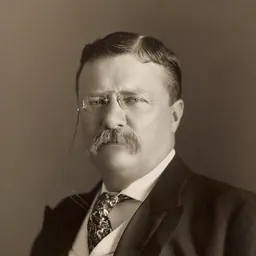
In 1905, Gojong wrote a letter to US President Theodore Roosevelt. But the Eulsa Treaty had already been signed by the time his envoy, Homer Hulbert, had delivered the letter. In it, Gojong wrote:For the sake of the Korean people we beg of you to use your powerful influence in this direction and to refuse to become a party to the further degradation of this Empire and the extinguishment of our last hope.
Abdication Gojong wearing a western-style uniform . He wore it since the abdication of 1907. On 2 July 1907, the information about the dispatch of the envoys reached the ears of Resident-General Itō Hirobumi at the time. Ito was experienced.
On the previous day, the 6th, Song Pyŏngjun, a Minister of Agriculture, Commerce and Industry, made a demand to Emperor Gojong.
According to Japanese records, the former council meeting on this day lasted for two hours, during which the Prime Minister instead made a declaration of war and threatened the Emperor, while the Minister of Agriculture, Commerce and Industry pressured him to apologize in front of the palace. After abdicating, Emperor Gojong was confined to his palace Deoksugung, and the Japanese replaced him with his son, Sunjong.
In June 1910, Gojong tried to escape to Primorsky Krai in Russia and establish a government in exile, but he failed to do so. On 22 August 1910, Korea was formally annexed by Japan. Gojong lost his imperial title, and was instead granted the title, "King Emeritus Yi of Deoksu" , and was recognized as a member of the imperial family of Japan. In 1915, Gojong again tried to flee from his confinement with the help of Sangsul, but failed. In 1918, he made another attempt, this time with the goal of going to Beijing with Lee Hoe-yeong, but again failed.
Death and legacy
On 21 January 1919, Gojong died suddenly at Deoksugung at the age of 66. There was and still is speculation that . The idea first emerged and was widely circulated around the time of his death. He is buried with his wife at the imperial tomb of Hongneung , Namyangju, Gyeonggi Province. The couple's grave is now considered a UNESCO World Heritage site, as part of the Royal Tombs of the Joseon dynasty.
Family Father: Grand Internal Prince Heungseon (; 24 January 1821 – 22 February 1898) Grandfather: Prince Namyeon (; 21 September 1788 – 4 May 1836) Grandmother: Princess Consort Yeoheung , of the Yeoheung Min clan (; 1784–1831) Adoptive father: King Munjo (; 18 September 1809 – 25 June 1830) Mother: Grand Internal Princess Consort Sunmok , of the Yeoheung Min clan (; 3 February 1818 – 8 January 1898) Grandfather: Min Chi-gu (; 1795–1875) Grandmother: Lady, of the Jeonju Yi clan (?–1873) Adoptive mother: Queen Sinjeong , of the Pungyang Jo clan (; 9 January 1809 – 23 May 1890) Consort(s) and their respective issue Empress Myeongseongtae , of the Yeoheung Min clan (; 17 November 1851 – 8 October 1895), personal name Ja-yeong Unnamed son (4 – 8 November 1871) Unnamed daughter (3 February – 28 September 1873) Yi Cheok , Emperor Sunjong (; 25 March 1874 – 25 April 1926), second son Unnamed son (5 – 18 April 1875) Unnamed son (18 February – 5 June 1878) Imperial Noble Consort Sunheon , of the Yeongwol Eom clan (; 2 February 1854 – 20 July 1911), personal name Seon-yeong Yi Un , Crown Prince Uimin (; 20 October 1897 – 1 May 1970), fourth son Gwiin of Yeongbodang Hall , of the Yi clan (; 14 March 1843 – 17 December 1928), personal name Sun-ah Yi Seon , Prince Imperial Wan (; 31 May 1868 – 21 February 1880), first son Unnamed daughter Gwiin , of the Deoksu Jang clan (; 12 October 1838 – 14 October 1887) Yi Kang , Prince Imperial Ui (; 30 March 1877 – 16 August 1955), third son Gwiin of Naeandang Hall , of the Yi clan (; 1847 – 13 February 1914) Unnamed daughter (1869–?) Gwiin of Bohyeondang Hall , of the Haeju Jeong clan (; 10 April 1882 – 20 March 1946) Yi U (; 20 August 1915 – 25 July 1916), sixth son Gwiin of Boknyeongdang Hall , of the Chungju Yang clan (; 27 September 1882 – 30 May 1929), personal name Chun-gi Princess Deokhye (; 25 May 1912 – 21 April 1989), first daughter Gwiin of Gwanghwadang Hall , of the Yi clan (; 1885 – 10 November 1965), personal name Wan-deok Yi Yuk (; 3 July 1914 – 22 January 1915), fifth son Palace Lady of Samchukdang Hall , of the Andong Kim clan (; 1890 – 23 September 1970), personal name Ok-gi Palace Lady of Jeonghwadang Hall , of the Gwangsan Kim clan
Ancestry
Honors Korean honors Founder and Sovereign of the Grand Order of the Golden Ruler – 17 April 1900 Founder and Sovereign of the Grand Order of the Auspicious Stars – 12 August 1902 Founder and Sovereign of the Grand Order of the Plum Blossoms – 17 April 1900 Founder and Sovereign of the Order of the National Crest – 17 April 1900 Founder and Sovereign of the Order of the Purple Falcon – 16 April 1901 Founder and Sovereign of the Order of the Eight Trigrams – 16 April 1901 Grand Cordon of the Grand Order of the Auspicious Phoenix – 1907
Foreign honors Grand Cross of the Order of Saints Maurice and Lazarus – 23 July 1895 Grand Cross of the Legion of Honour – 23 July 1895
Grand Cordon of the Order of the Chrysanthemum – 23 March 1897 Korean Colonization Decoration – 1 August 1912 Honorary Grand Commander of the Order of the Indian Empire – 17 December 1900 Grand Cross of the Order of Charles III, with Collar – 1900 Grand Cordon of the Royal Order of Leopold – 23 March 1901 Order of the Double Dragon, Class I Grade I – 1 December 1903 Knight of the Order of St. Stanislaus, 1st Class – 1 December 1903 Knight of the Order of the Elephant – 31 August 1903 Knight of the Order of the Black Eagle – 20 March 1904
In popular culture Portrayed by Lee Jin-woo and Lee Joon in the 2001–2002 KBS2 TV series Empress Myeongseong. Portrayed by Kim Young-min in the 2009 film The Sword with No Name. Portrayed by Choi Jong-hwan in the 2010 SBS TV series Jejungwon. Portrayed by Park Hee-soon in the 2012 film Gabi. Portrayed by Lee Min-woo in the 2014 KBS2 TV series Gunman in Joseon. Portrayed by Park Min-sang in the 2016 film The Map Against The World. Portrayed by Baek Yoon-sik in the 2016 film The Last Princess. Portrayed by Kang Yi-seok and Lee Seung-joon in the 2018 tvN TV series Mr. Sunshine.
Don’t just read it —
keep it.
Full-length biographies made to live with: read them, listen on the way to work, watch them tonight.
- E-book
- Audio
- Video
Instant download · yours to keep · every purchase keeps this site free
Important facts
Family & relationships
People in Gojong of the Korean Empire's life
Named in this biography and alive at the same time


Related people
Same field, nearest in time


Contemporaries
People whose lives overlapped Gojong of the Korean Empire's


Frequently asked questions
Who was Gojong of the Korean Empire?
26th king of Joseon, first emperor of the Korean Empire (1852–1919)
When was Gojong of the Korean Empire born?
Gojong of the Korean Empire was born on 25 July 1852 in Unhyeongung.
When did Gojong of the Korean Empire die?
Gojong of the Korean Empire died on 21 January 1919 in Deoksugung.
What was Gojong of the Korean Empire's occupation?
Gojong of the Korean Empire was a monarch and king.
What nationality was Gojong of the Korean Empire?
Gojong of the Korean Empire was Korean and South Korean.
Sources & further reading
· Wikipedia: Gojong of the Korean Empire
Cite this page
APA: Biography.guide. (2026). Gojong of the Korean Empire. https://biography.guide/gojong-of-the-korean-empire/
MLA: "Gojong of the Korean Empire." Biography.guide, https://biography.guide/gojong-of-the-korean-empire/.
Chicago: "Gojong of the Korean Empire." Biography.guide. https://biography.guide/gojong-of-the-korean-empire/.
Data last updated: 2026-09-20 · Spot an error? Report a correction.
Page generated 2026-09-27 05:29 UTC