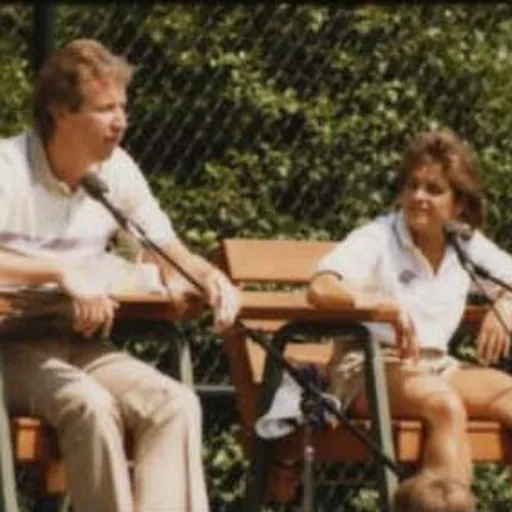
About Glenn Brenner
Lived 1948 – 1992 (aged 44). Glenn Brenner was an American sports commentator.
Glenn Brenner (January 2, 1948 – January 14, 1992) was a broadcast journalist and sports commentator in Washington, D.C., in the United States from 1977 to 1991. He was best known as the sports anchor for WUSA-TV from 1977 until 1991. At the time of his death in 1992 from a brain tumor, he was not only the most highly paid broadcast journalist in Washington but also the most popular broadcaster in the D.C. metropolitan area.
Life and career
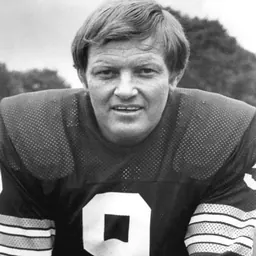
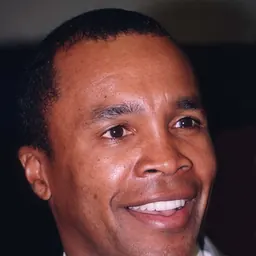
Early life Glenn Brenner was born on January 2, 1948, in Philadelphia, Pennsylvania, to Bill and Edie Brenner. At the age of four, he wanted to be a major league baseball player. Baseball remained Brenner's dream, however. Even though he only had one good pitch (a fastball), the New York Mets signed him to a minor league contract after he graduated from high school. While playing minor league baseball, Brenner attended Temple University and then Saint Joseph's University in Philadelphia. He graduated from Saint Joseph's with a bachelor's degree in political science and Communication studies. while weekend duties were held by Klaus Wagner. But Wagner wasn't working out, and WTOP-TV declined to renew his one-year contract. Brenner made his D.C. debut on March 4, 1977. Jibes at athletes, sports team owners, and others were common during Brenner's career, and yet he was so respected and well-liked that few people ever became angry with him. Among the "mystery pickers" were CBS News co-anchor Connie Chung, former Washington Redskins quarterback Sonny Jurgensen, boxer Sugar Ray Leonard, CBS News anchor Dan Rather, comedian Paul Reubens, Redskins quarterback Mark Rypien, actor William Shatner, singing group The Temptations, and local nun Sister Marie Louise Kirkland. Sister Marie Louise turned out to be a phenomenally good sports prognosticator, and Brenner's repeated use of her became an international story. People magazine made it a cover story.
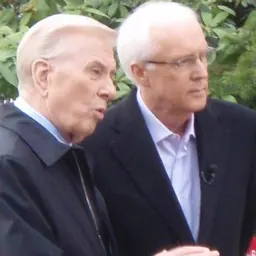
Viewers also enjoyed Brenner's banter with WTOP-TV news anchor Gordon Peterson, an authoritative figure in a three-piece suit with much on-air gravitas. Brenner often ribbed Peterson for his lifelong support of the also-ran Boston Red Sox major league baseball team. Brenner and Peterson became best of friends, and their jokes at one another's expense became local legend. and his physicians diagnosed a "vascular event". Two blood vessels in his head had ruptured and he had numbness on his left side, slight slurring of speech, and double vision. His doctors at George Washington University Hospital ruled out a stroke, however. But on November 17, 1991, The Washington Post reported that Brenner's doctor, Arthur I. Kobrine, confirmed the broadcaster had suffered a cerebral hemorrhage. He underwent an MR angiogram and a radiographical angiogram, but neither showed anything abnormal.
Brenner's physical condition initially improved. He was released from the hospital after Thanksgiving. He began to regain use of his left arm, he was walking again, and the double vision had largely gone away. Although he was expected to return to the air in early January, Brenner began suffering from vomiting and dizziness. WUSA said he would not return to the air for another four to six weeks. Bleeding in the brain had masked the tumor in previous exams. His prognosis was "poor," Redskins coach Joe Gibbs brought the Championship game ball to Brenner in the hospital. Many citizens in the D.C. area were in shock for several days. President George H. W. Bush issued a statement upon Brenner's death, which said, "Barbara and I are greatly saddened by the untimely death of Glenn Brenner, a man whose wit and ability has endeared him to so many Washingtonians. The suddenness of his death, and the warmth of his personality, leave all of us with a painful emptiness." More than 1,500 mourners attended. He was buried at Oak Hill Cemetery in the Georgetown neighborhood of the city.
Legacy In a 2010 retrospective, former WTTG and WUSA sportscaster Brett Haber noted that Brenner was well known outside the mid-Atlantic region. Brenner also continued to be the standard to which all regional sports broadcasters aspired, even 18 years after his death.
The Washington City Paper said that sportscaster George Michael might have been better-known nationwide due to his George Michael's Sports Machine, but that Michael remained the Salieri to Brenner's Mozart. The newspaper's Dave McKenna noted, "I worshipped Brenner. Everybody I knew around here when Brenner was on the air worshipped the guy."
The Washington, D.C. chapter of the National Academy of Television Arts and Sciences named its Glenn Brenner Award for Excellence in Sportscasting after him.
Don’t just read it —
keep it.
Full-length biographies made to live with: read them, listen on the way to work, watch them tonight.
- E-book
- Audio
- Video
Instant download · yours to keep · every purchase keeps this site free
Important facts
People in Glenn Brenner's life
Named in this biography and alive at the same time



Related people
Same field, nearest in time


Contemporaries
People whose lives overlapped Glenn Brenner's


Frequently asked questions
Who was Glenn Brenner?
Washington, D.C., sportscaster (1948–1992)
When was Glenn Brenner born?
Glenn Brenner was born on 2 January 1948 in Philadelphia.
When did Glenn Brenner die?
Glenn Brenner died on 14 January 1992 in Washington, D.C..
What was Glenn Brenner's occupation?
Glenn Brenner was a sports commentator.
What nationality was Glenn Brenner?
Glenn Brenner was American.
Sources & further reading
Cite this page
APA: Biography.guide. (2026). Glenn Brenner. https://biography.guide/glenn-brenner/
MLA: "Glenn Brenner." Biography.guide, https://biography.guide/glenn-brenner/.
Chicago: "Glenn Brenner." Biography.guide. https://biography.guide/glenn-brenner/.
Data last updated: 2026-09-22 · Spot an error? Report a correction.
Portrait: Wikimedia Commons · author & licence
Page generated 2026-09-27 05:01 UTC