
About Glenn Boyer
Lived 1924 – 2013 (aged 89). Glenn Boyer was an American novelist.
Glenn G. Boyer (January 5, 1924 – February 14, 2013) was a controversial author who published three books and a number of articles about Wyatt Earp and related figures in the American Old West. He was the first person to reveal the existence of Wyatt Earp's second wife, Mattie Blaylock. His publications were for many years regarded as the authoritative source on Wyatt Earp's life. However, when other experts began to seek evidence supporting Boyer's work, he would or could not prove the existence of documents that he said he owned and had cited as essential sources. In one case, an individual he cited as a key source was exposed as a complete fabrication. His reputation and the authenticity of his work was seriously damaged. Although he retained many supporters, his work became surrounded by controversy. At least one critic wrote that all of Boyer's later work was "riddled with bogus material".
Boyer married author Jane Candia Coleman in 1980. He died on February 14, 2013, at age 89, in Tucson, Arizona. He was survived by his wife Jane, two sons and three grandchildren.
Boyer collection
During his later years as an officer in the USAF, Boyer spent much of his personal time meeting with and interviewing surviving members of the Earp family. He interviewed a number of Wyatt’s relations including the Cason family, who had known Wyatt's common-law wife Josephine Earp as "Aunt Josie" in the 1930s. While serving in the U.S. Air Force in Ajo, Arizona, he met Albert Price Behan, Johnny Behan's son. Boyer accumulated 32 boxes of correspondence with the Earp family, family pictures, hand-written notes, audio recordings, weapons, and memorabilia,
In 2009, Boyer arranged with Legendary Publishing of Edmond, Oklahoma, the publishers of what would be his final book, Where the Heart Was, to have his VHS tapes converted to DVDs, and to have his research scanned and digitized, but no publication date was announced.
Cason manuscript
The facts about when Josephine Earp first arrived in the Arizona Territory, her life before and while living in Tombstone, and when she first began a relationship with Earp, have been obscured by her legal and personal efforts to keep that period private. After Earp's death, Josephine collaborated with two of her husband's cousins, Mabel Earp Cason and her sister Vinolia Earp Ackerman, to document her life. In her conversations with the Earp cousins, Josephine was imprecise about the timing and nature of events during her early life in the Arizona Territory and Tombstone. Josephine apparently wanted to keep her and Wyatt's tarnished history during the Tombstone period private and to sanitize their life story of anything that could be seen negatively. She was ready to leave him,
Cason says she and her sister "finally abandoned work on the manuscript because she [Josie] would not clear up the Tombstone sequence where it pertained to her and Wyatt."
After the publication of Boyer's book, An Illustrated Life of Doc Holliday in 1966, Wyatt Earp's grandniece Estelle Josephine Miller and her husband Bill Miller contacted Boyer. They were looking for a writer to write a book with a more balanced story about their uncle. Estelle Miller remembered Earp well. She said he "wasn't like them writers say." She insisted he was neither a Boy Scout nor a saint, but a "rough, tough, profane, rooting-tooting frontiersman."
Seeking more information, Boyer contacted Virgil Earp's granddaughter Mable Earp Cason only to learn she had died. Her daughter Jeanne Cason Laing cooperated with Boyer and sent Boyer a stack of material "almost a foot high",
Boyer wrote in the epilogue to the 1976 edition of his book I Married Wyatt Earp, "The first Josephine Earp manuscript, the one prepared with the assistance of Parsons and Clum, had been made available to me earlier by Mrs. Charles [Esther] Colyn, an Earp researcher, collector and genealogist of the first magnitude. Upon her death in 1973, this Earp relative by marriage bequeathed me her whole research collection to perpetuate. Without her generous assistance over the years, I would not have attempted to construct this book. The Cason manuscript alone simply lacked the necessary detail on Tombstone; it was essential to couple it with the earlier, more frank manuscript, before a complete narrative could be achieved."
A year after I Married Wyatt Earp was published in 1977, Boyer published a pamphlet, Trailing an American Myth, in which he stated that the Clum manuscript was actually written by several authors. He wrote that their work formed "the basis of the Tombstone years in I Married Wyatt Earp and "the Ten Eyck Papers in Wyatt Earp's Tombstone Vendetta."
Also in 1977, Boyer wrote and published another pamphlet, "Who Killed John Ringo?" It stated that fiction writers Dashiell Hammett, Wilson Mizner, Rex Beach and Walt Coburn had written a portion of the manuscript documenting Josephine' Tombstone years. He said the documents contributed "to the overall fabric of Josie's story were undoubtedly made by former Tombstone mayor and Earp friend John Clum," but that "some Earp researchers got hung up on this 'manuscript' business."
Boyer said that the Clum manuscript could be found in the University of Arizona archives but they could not produce it. Boyer finally admitted that he no longer had the Clum manuscript and could not locate it. When asked by a reporter in 1998 if the Clum manuscript was real, Boyer replied, "Why am I compelled to tell the truth about a manuscript like that that is worth a lot of money?" Boyer continues. "I may have it and I may not. That's none of your business." and many other articles. His Earp publications came under increased scrutiny and criticism during and after 1990, and he was the focus of considerable controversy.
Jeff Morey, one of the most respected Earp researcher and writer, was the first to publicly question Boyer's credibility. In 1994, he wrote an essay titled "The Curious Vendetta of Glenn G. Boyer" published by the Western Outlaw-Lawman History Association.
In 1998, three more articles were published that completely undermined his credibility. The first was an article by Gary L. Roberts "Trailing an American Mythmaker: History and Glenn G. Boyer’s Tombstone Vendetta," published by the same association. This was followed by two articles written by Tony Ortega of the Phoenix New Times: "How the West was Spun" in December 1998 and "I Varied Wyatt Earp" in March 1999.
Life of Doc Holliday
One of Boyer's first books, The Illustrated Life of Doc Holliday, was initially published in 1966 as a "crime novel." When a reader many years later questioned him about the truthfulness of the work, Boyer told her that it was a hoax and a satire he wrote to purposefully trap careless researchers. Boyer included pictures of Old Western individuals that turned out to be images of his family. Boyer wrote, "It had no other purpose but to set afoot an experiment that would expose these people conclusively for the type of hypocritical goddam history-faking they were doing. And it worked."
I Married Wyatt Earp
The University of Arizona Press first published the book in 1976 under the title I Married Wyatt Earp: The Recollections of Josephine Sarah Marcus. The copyright was issued in her name and her name was given as the author. A book published by a university press must be non-fiction. When it is sold as non-fiction, academics and knowledgeable non-academics consider the university's approval sacrosanct.
Boyer's book gained wide acceptance as a memoir written by Josephine and an accurate portrayal of her life with Wyatt Earp. The book was immensely popular for many years, capturing the imagination of people with an interest in western history, studied in classrooms, cited by scholars, and relied upon as factual by filmmakers. It became the university's fourth all-time best-selling book with 12 printings totaling more than 35,000 copies. Boyer in turn received wide recognition as the foremost authority on Wyatt Earp.
Boyer was asked to produce a copy of a key source document, the so-called "Clum manuscript", but he replied that the document had been lost and found and lost again. He concluded: "It is alive and well. In my head."
It was described by the Annual Review of Information Science and Technology in 2006 as a "creative exercise" and hoax. Some rival authors have said that the book cannot be relied on.
As a result of the criticism and faults discovered with the book, in early 2000 the University refused to comment about the book and referred all questions to university lawyers. In March the University of Arizona Press announced they had released all rights to the book, and returned unsold copies to Boyer. Boyer found a small publisher in Hawaii, shortened the title to I Married Wyatt Earp, and shifted authorship to his own name.
Wyatt Earp's Tombstone Vendetta
In an interview with the Phoenix New Times, Bob Palmquist, an attorney and avid Earp researcher, said he worked with Boyer for many years. He said that he read a portion of Boyer's manuscript for Wyatt Earp's Tombstone Vendetta in 1977. "And at that time he [Boyer] was saying it was a novel in the style of George McDonald Frasers The Flashman Papers." "The idea was to write a novel in the style of a memoir as if somebody was actually telling the story, in this case Ted Ten Eyck," Palmquist says. In a 1977 letter to Earp researcher Robert Mullin, Boyer told a very different story about Ten Eyck. Boyer wrote that he had received a new manuscript from Earp family members, "allegedly by one Teodore [sic] Ten Eyck, a name I can find nowhere else in Earpiana." Boyer claimed that the manuscript was "clearly authentic" and that it contained "fascinating revelations (if they are true) and would make an ace movie." In an interview with Wild West Magazine, Boyer defended his use of a invented character in the book. "I was more than slightly amused that some in the Earp field were shocked and aghast that I used a literary device to tell the story." "Your average high school kid could figure out that the character (Ten Eyck) was a storytelling device. Even the most howling of my critics would grant that I am not stupid. Ergo, it stands to reason that if I used a figure that was not historically present in Tombstone during that period, something less than a genius could pick up on that—or so I thought." The doubts raised by Wyatt Earp's Tombstone Vendetta seriously damaged his credibility. set in New Mexico that fictionalized late 19th-century events there. Boyer also published several articles in Arizona Highways. During the 1990s Boyer wrote the Morgette fictional series based around a man named Dorn set in the Old West. He also published a fictional book “Custer, Terry and Me.” about Gen. George Armstrong Custer. His last book, in 2009 Where the Heart Was, was a fictional semi-autobiography loosely based on his own family and childhood growing up rural Wisconsin. Dyke learned that Boyer had gained an oral history from Earp relatives who had known Wyatt, which Boyer relied in part for some of his work. But Boyer limited what Dyke could say about the collection, and Dyke said that Boyer told him that parts of his collection "grew legs and took a hike." including an original journal kept by Josephine Earp, Wyatt's wife, with the condition that he would approve who could see the documents.
Refuses access to critics
In the 1990s, other authors and academics began to ask questions about his sources. Despite the wealth of information contained in his archives, Boyer uniformly declined to allow critics access to his repository. He promised Gary Roberts and Casey Tefertiller, two vocal critics of Boyer's work, access to his archives, but when they visited him in person, he reneged on his agreement.
Condemns critics
Boyer was often contemptuous of his critics, calling them "homosexuals", "fanatics and their puppets", among other things.
Effect on research
Jack Burrows, who wrote John Ringo, The Gunfighter Who Never Was, said, “How can he just take a stack of material and give it a name that has nothing to do with what’s included? You can take a cowpie and call it filet mignon, but somebody’s going to catch on during dinner. This is just gobbledygook.”
Estate sale
On April 17, 2014, Boyer's family put much of his Earp collection and many artifacts up for auction. Among the 32 boxes of documentation, files, pictures and memorabilia for sale were three pistols and a Winchester lever-action shotgun. One of the pistols is a Colt revolver once owned by Virgil Earp, a Remington Ball and Cap Revolver owned by Earp's grandfather, and a Colt .45-caliber Earp descendants said had been owned by Wyatt Earp. The shotgun was also reported to be Wyatt Earp's. Personal items of Josephine Earp's in the auction include her riding crop, opera glasses and jewelry. and a collector of American Old West guns and memorabilia, said that it would be "impossible to separate the authenticity of the auction items from Boyer's own troubled history." This is particularly true because the provenance of the weapons is based on letters written by or given to Boyer.
Bill Miller, a nephew by marriage to Wyatt Earp, wrote in a letter to Boyer that he received two of the pistols and the shotgun from Allie Earp, Virgil's wife. Casey Tefertiller, a long-time critic of Boyer's work, commented on the auction. "How do you trust material you're buying from somebody caught fabricating evidence? He was the most charismatic, charming person I have ever met. But people wound up paying for it by buying into a hoax." Boyer's widow, Jane Coleman, said, "Glenn would hate that."
Published works (non-fiction) (non-fiction) (historical fiction) (fiction) (fiction) (fiction) (fiction) (fiction) (fiction) (non-fiction) (historical fiction) (non-fiction) (fiction) (fiction) (fiction) (fiction)
(semi-autobiography)
Don’t just read it —
keep it.
Full-length biographies made to live with: read them, listen on the way to work, watch them tonight.
- E-book
- Audio
- Video
Instant download · yours to keep · every purchase keeps this site free
Important facts
People in Glenn Boyer's life
Named in this biography and alive at the same time
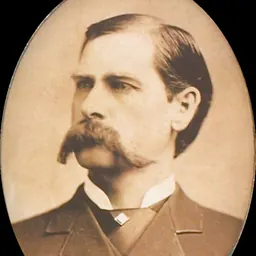




Related people
Same field, nearest in time



Contemporaries
People whose lives overlapped Glenn Boyer's

Frequently asked questions
Who was Glenn Boyer?
American historical novelist (1924–2013)
When was Glenn Boyer born?
Glenn Boyer was born on 5 January 1924 in Wisconsin.
When did Glenn Boyer die?
Glenn Boyer died on 14 February 2013 in Tucson, Arizona.
What was Glenn Boyer's occupation?
Glenn Boyer was a novelist.
What nationality was Glenn Boyer?
Glenn Boyer was American.
Sources & further reading
Cite this page
APA: Biography.guide. (2026). Glenn Boyer. https://biography.guide/glenn-boyer/
MLA: "Glenn Boyer." Biography.guide, https://biography.guide/glenn-boyer/.
Chicago: "Glenn Boyer." Biography.guide. https://biography.guide/glenn-boyer/.
Data last updated: 2026-09-22 · Spot an error? Report a correction.
Page generated 2026-09-27 05:33 UTC