
Gleb Baklanov
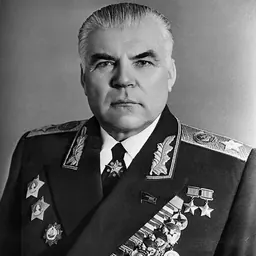
Soviet statesman, Army colonel general
About Gleb Baklanov
Lived 1910 – 1976 (aged 65). Gleb Baklanov was a Russian gymnast, statesperson, military officer and soldier.
Gleb Vladimirovich Baklanov (; – 16 January 1976) was a Soviet Army colonel general and a Hero of the Soviet Union.
Born to a wealthy family, Baklanov was drafted into the Red Army and was selected for command positions during the interwar period. He served in staff positions and was wounded during the Winter War while a regimental chief of staff. After the German invasion of the Soviet Union in June 1941, he became a regimental commander but was wounded in fighting in Belarus and did not return to the front until early 1942 as a brigade commander. Baklanov commanded the 299th Rifle Division during the Battle of Stalingrad, being decorated for his actions, and went on to lead the 13th Guards Rifle Division at the Battle of Kursk among other actions. In mid-1944 he was promoted to command a rifle corps, a position in which he ended the war. For his leadership in the capture of Dresden in the final weeks of the war Baklanov was made a Hero of the Soviet Union. He held senior command positions after the end of the war, commanding the 13th Army, the Siberian Military District, and the Northern Group of Forces before his retirement during the Cold War.
Early life Baklanov was born on to a wealthy family in Moscow. His father Vladimir Baklanov owned a weaving factory and his mother Alexandra had been an actress before bearing children. His sister Olga Baclanova left the Russian SFSR in 1926 and did not return, having chosen to become a naturalized citizen of the United States. After completing secondary school he attended the V.I. Lenin Moscow Polytechnic College before being drafted into the Red Army in November 1932.
Interwar period and Winter War Baklanov was sent to the 1st Moscow Proletarian Rifle Division and graduated from a one-year command course in December 1933, going on to serve in its 3rd Rifle Regiment as a platoon commander, assistant company commander, battalion chief of staff, chief of chemical defense for the regiment, and assistant regimental chief of staff. He was transferred to the reserve in July 1938 during the Great Purge but returned to duty in May 1939 as chief of staff of the 541st Rifle Regiment of the 136th Rifle Division, serving in the Winter War against Finland in late 1939 and early 1940. Wounded in combat during the war, Baklanov received the Order of the Red Banner in recognition of his actions, his first decoration. After the end of the Winter War, he completed the first course at the Frunze Military Academy, before being appointed chief of staff of the 6th Motor Rifle Regiment of the 1st Moscow Motor Rifle Division in December 1940. Baklanov became a member of the Communist Party of the Soviet Union in the same year.
German-Soviet War Shortly after Operation Barbarossa, the German invasion of the Soviet Union began, the 1st Motor Rifle Division was rushed to the Western Front in late June 1941. Baklanov was soon promoted to command the 175th Motor Rifle Regiment of the division, but he was wounded near Orsha during the border battles. Upon recovery in November he was made commander of a battalion of students at the Omsk Infantry School. Returning to the front in January 1942, Baklanov took command of the 157th Rifle Brigade, part of the 11th Army of the Northwestern Front, distinguishing himself in fighting at Staraya Russa. Transferred south to command the 299th Rifle Division in June 1942, he led it in the Battle of Stalingrad as part of the 66th Army. 66th Army commander Rodion Malinovsky evaluated Baklanov as a "personally brave, strong-willed, and demanding commander...quickly acquiring experience in division command...a developing, capable commander." He was awarded the Order of Alexander Nevsky and the American Distinguished Service Cross for his actions at Stalingrad, and promoted to major general on 1 March 1943.
Baklanov first requested to retire in August 1966, but was denied; his second request in 1967 was accepted. Baklanov died on 16 January 1976 and is buried at the Novodevichy Cemetery. and had a son, Andrei, and a daughter, Yelena.
He was a deputy of the Supreme Soviet of the Soviet Union during its sixth and seventh convocations, and a member of the Soviet Olympic Committee. A Moscow gymnastics champion in his youth, Baklanov served as president of the Gymnastics Federation of the Soviet Union between 1972 and 1975.
Awards Baklanov received the following awards and decorations:
Hero of the Soviet Union Order of Lenin Order of the Red Banner (3) Order of Kutuzov, 1st class Order of Suvorov, 2nd class Order of Kutuzov, 2nd class Order of Alexander Nevsky Order of the Red Star Distinguished Service Cross (United States) Commander of the Legion of Merit Czechoslovak War Cross 1939–1945
Don’t just read it —
keep it.
Full-length biographies made to live with: read them, listen on the way to work, watch them tonight.
- E-book
- Audio
- Video
Instant download · yours to keep · every purchase keeps this site free
Important facts
People in Gleb Baklanov's life
Named in this biography and alive at the same time
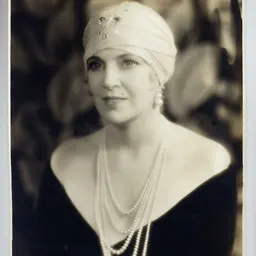
Related people
Same field, nearest in time


Contemporaries
People whose lives overlapped Gleb Baklanov's






Frequently asked questions
Who was Gleb Baklanov?
Soviet statesman, Army colonel general (1910-1976)
When was Gleb Baklanov born?
Gleb Baklanov was born on 1 August 1910 in Moscow.
When did Gleb Baklanov die?
Gleb Baklanov died on 16 January 1976 in Moscow.
What was Gleb Baklanov's occupation?
Gleb Baklanov was a gymnast, statesperson, military officer and soldier.
What nationality was Gleb Baklanov?
Gleb Baklanov was Russian.
Sources & further reading
Cite this page
APA: Biography.guide. (2026). Gleb Baklanov. https://biography.guide/gleb-baklanov/
MLA: "Gleb Baklanov." Biography.guide, https://biography.guide/gleb-baklanov/.
Chicago: "Gleb Baklanov." Biography.guide. https://biography.guide/gleb-baklanov/.
Data last updated: 2026-09-20 · Spot an error? Report a correction.
Page generated 2026-09-27 05:20 UTC