
About Gladys Bentley
Lived 1907 – 1960 (aged 52). Gladys Bentley was an American singer, composer and blues musician.
Gladys Alberta Bentley (August 12, 1907 – January 18, 1960) was an American blues singer, pianist, and entertainer who became a prominent figure during the Harlem Renaissance. She was widely recognized for having a strong contralto voice, spirited stage presence, and a riveting performance style. She is remembered for breaking barriers in jazz, blues, and gender identity.
Bentley got her start after being signed to Okeh Records and eventually her name became synonymous with Harry Hansberry's Clam House, a well-known gay speakeasy in New York City in the 1920s. She headlined in Harlem's Ubangi Club as a black lesbian and cross-dressing performer, often being backed by drag queens in her performances. Bentley was typically dressed in men's clothes which included a signature tail coat and top hat and was known to be a spirited piano player and for singing risqué renditions to popular songs of the time in her deep and powerful voice.
With the repeal of Prohibition in 1933, she eventually relocated to southern California in the late 1930s where she was billed "America's Greatest Sepia Piano Player" and the "Brown Bomber of Sophisticated Songs". Bentley continued to perform, tour, and record music well into the 1950s.
Personal life and sexuality
Early life Bentley was born on August 12, 1907, in Philadelphia, Pennsylvania to George L. Bentley and Mary Mote. She was raised in a working-class family that struggled financially. The eldest of four, she began showing interest in music and performance from a young age, eventually developing talents in singing and piano. In an article Bentley wrote for Ebony magazine in 1952, there was trouble in the home as she was growing up and a strained relationship between her and her mother. She stated that she always felt unwanted or rejected because her mother desperately wanted her to have been born a boy and further said that her grandmother raised her for 6 months as an infant on a bottle. In her childhood, she often wore the suits of her three younger brothers to school and had a crush on one of her female teachers in elementary school. in her performances through innuendo or though rousing dances and was known to flirt with women in the audience. Bentley challenged traditional gender roles by performing suggestive songs, openly expressing attraction to women, and wearing masculine clothing. In 1931, Bentley had a civil ceremony in New Jersey, in a public union with a white woman whose identity is not confirmed.
In her later years, Bentley conformed to more traditional gender roles, arguably due to the rising social conservatism and pressure at the time. When Bentley relocated to Los Angeles, she reportedly married J. T. Gibson, who died in 1952, the same year in which she married Charles Roberts, a cook in Los Angeles. They were married in Santa Barbara, California, went on a honeymoon in Mexico. Bentley claimed to have been "cured" by taking female hormones later in life. Bentley wrote her 1952 essay, "I Am a Woman Again", for Ebony magazine in which she stated she had undergone an operation which "helped change her life again". She later became a devout member of The Temple of Love in Christ, Inc., to be ordained as a minister before her death in 1960.
Career
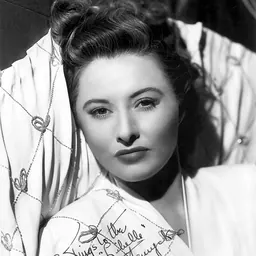
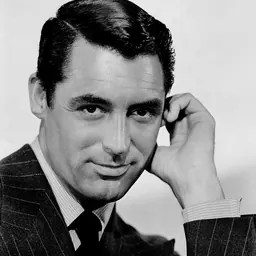
Harlem She moved from Philadelphia to Harlem, a neighborhood in New York City in 1925 at the age of 16. Bentley began performing at rent parties and started establishing her reputation as a performer. She heard that Harry Hansberry's Clam House on 133rd Street, one of the city's most notorious gay speakeasies, needed a male pianist. This is when she began performing in men's attire ("white full dress shirts, stiff collars, small bow ties, oxfords, short Eton jackets, and hair cut straight back"), She toured the country, some destinations being Cleveland, Pittsburgh, Chicago, and Hollywood, where she was well liked by Cesar Romero, Hugh Herbert, Cary Grant, Barbara Stanwyck, and other celebrities.
Bentley had great talent as a piano player, singer, and entertainer. Her performances (in the words of Alfred Duckett) were "comical, sweet and risqué" Bentley was known for taking popular songs and putting a promiscuous spin on them. She sang loud, and her vocal style was deep and booming, sometimes using a growling effect and imitations of a horn. In August 1928, she signed with Okeh Records company and recorded eight sides over the course of the next year up until 1929. In 1930 she recorded a side with the Washboard Serenaders for Victor, and later recorded for the Excelsior, and Flame labels. Her vocal range was wide, as can be heard in her recordings. She mostly sang in a deep, low range, but also reached high notes. Bentley's performances appealed to black, white, gay, and straight audiences alike, and many celebrities attended her shows. Langston Hughes recorded his reaction to the beginning of Bentley's career success:
For two or three amazing years, Miss Bentley sat, and played piano all night long … with scarcely a break between the notes, sliding from one song to another, with a powerful and continuous underbeat of jungle rhythm. Miss Bentley was an amazing exhibition of musical energy – a large, dark, masculine lady, whose feet pounded the floor while her fingers pounded the keyboard – a perfect piece of African sculpture, animated by her own rhythm.
Legal battle Bentley was involved in a legal dispute overseen by the Manhattan Supreme Court in 1933. The owners Harry Hansberry and Nat Palein of Hansberry's Clam House claimed that Bentley allegedly violated a five-year performance contract with the venue and thus should be barred from performing elsewhere in Harlem. Hansberry and Palein were prompted to take legal action after Bentley allegedly left the club to perform at other venues. This was in efforts to prohibit Bentley from taking her musical career to the Broadway division as her performances were central to the success of the club. She allegedly agreed to perform exclusively for the Clam House around 10pm every night.
The same year, she attempted to move her act to Broadway, despite legal issues. There she received many complaints about her raunchy performances which resulted in the police locking up the doors of places she performed. Unable to express her talent on Broadway, moved back to Harlem in 1934, where she then played at the Ubangi Club for three years before it closed in 1937.
California On the decline of the Harlem speakeasies with the repeal of Prohibition, she relocated to southern California to live with her mother in Los Angeles, California, where she was billed as "America's Greatest Sepia Piano Player" and the "Brown Bomber of Sophisticated Songs". In the 1940 and 50's she headlined at various clubs including Rose Room in Hollywood, Joaquin's El Rancho in Los Angeles, and Mona's 440 Club, the first lesbian bar to open in San Francisco, California in 1936.
As times progressed and federal laws continued to change surrounding the Red and Lavender scares of the 1940s and 1950s, Bentley eventually had to carry special permits to allow her to perform in her signature suit and top hat. Bentley was openly lesbian early in her career, but during the McCarthy Era, she began wearing dresses in her performances and married Charles Roberts, 28 year-old cook, in a civil ceremony in Santa Barbara, California, in 1952.
Bentley became a devotee of the Temple of Love in Christ, Inc. and was preparing to become an ordained minister, claiming to have been "cured" by taking female hormones. It was initially believed to be the "Asian flu" but later recognized as pneumonia. At the time of her death, she had been more involved in The Temple of Love in Christ, Inc. and had just been ordained as a minister despite never getting her official paperwork.
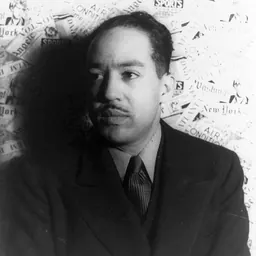
Fictional characters based on Bentley appear severally in literary works, cementing her as a blueprint for the masculine woman archetype in pop culture. Notable references to Gladys Bentley can be found in Carl Van Vechten's novel Parties, Clement Woods' novel Deep River, Blair Niles' novel Strange Brother, and in Langston Hughes play Little Ham where a character called Masculine Lady is said to look “exactly like Gladys Bentley”.
In 2016, musician Shirlette Ammons released an album entitled Twilight for Gladys Bentley, which paid tribute to Bentley's legacy and "reimagined" Bentley in relationship to hip hop culture. There is ongoing discourse about Bentley's true identity and if her apparent shift from homosexuality was purely in efforts to maintain favor in the public eye amid the cultural shift post World War II.
In 2019, The New York Times newspaper began a series called "Overlooked No More," in which the editorial staff aims to correct a perceived bias in reporting by republishing obituaries of historical minorities and women. Bentley was one of the featured obituaries in Overlooked No More. Ubangi Club, Harlem, New York City, New York Connie's Inn ("Jungle Alley"), 2221 Seventh Street, Harlem, New York City, New York Apollo Theatre, Harlem, New York City, New York The Cotton Club, Harlem, New York City, New York Joaquin's El Rancho, Los Angeles, California Mona's 440 Club, North Beach, San Francisco, California Doll House, 12213 Ventura Blvd, Los Angeles, California
Discography Okeh Records
Recorded August 8 and 31, 1928 "Worried Blues" / "Ground Hog Blues" (August 1928) #8610 "How Long, How Long Blues" / "Moanful Wailin' Blues" (August 1928) #8612 Recorded November 15, 1928, and March 26, 1929 "Wild Geese Blues" / "How Much Can I Stand" (November 1928, with piano, not released) "Wild Geese Blues" / "How Much Can I Stand" (November 1928, with guitar) #8643 "Red Beans and Rice" / "Big Gorilla Man" (March 1929) #8707
Victor "Washboards Get Together" / "Kazoo Moan", #38127, scatting vocal on A-side only (title often listed as "Washboard Get Together"), with the Washboard Serenaders, recorded March 1930; reissued twice, as Bluebird B-5790 (circa 1934) and B-6633 (circa 1936)
Excelsior Records
As Gladys Bentley Quintette, 1945 "Boogie'n My Woogie" / "Thrill Me Till I Get My Fill", #164 "Red Beans & Rice Blues" / "Find Out What He Likes (and How He Likes It)" #165/166 "Big Gorilla Blues" / "Lay It on the Line", #166/165 "Boogie Woogie Cue" / "Give It Up", #168 "Notoriety Papa" / "It Went to the Girl Next Door", #169
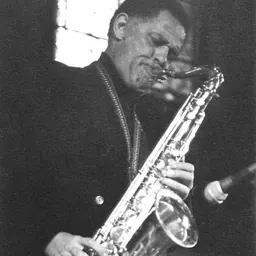
Swingtime Records "Jingle Jangle Jump", #321, vocals for Wardell Gray and the Dexter Gordon Quintet, 1952 "Fourth of July Boogie" / "June-Teenth Jamboree", #337, as Fatso Bentley, July 4, 1953
Flame Records "Easter Mardi Gras" / "Before Midnight", Flame 1001, Cincinnati, early 1950s, label misspells name as Gladys Bently; mentioned in her August 1952 article in Ebony and thus recorded in 1952 or earlier
Don’t just read it —
keep it.
Full-length biographies made to live with: read them, listen on the way to work, watch them tonight.
- E-book
- Audio
- Video
Instant download · yours to keep · every purchase keeps this site free
Important facts
People in Gladys Bentley's life
Named in this biography and alive at the same time



Related people
Same field, nearest in time

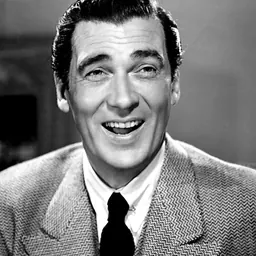

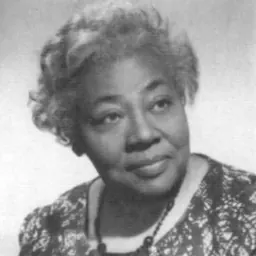
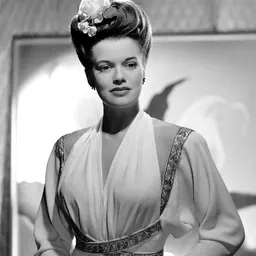
Contemporaries
People whose lives overlapped Gladys Bentley's


Frequently asked questions
Who was Gladys Bentley?
American blues singer
When was Gladys Bentley born?
Gladys Bentley was born on 12 August 1907 in Philadelphia.
When did Gladys Bentley die?
Gladys Bentley died on 18 January 1960 in Los Angeles.
What was Gladys Bentley's occupation?
Gladys Bentley was a singer, composer and blues musician.
What nationality was Gladys Bentley?
Gladys Bentley was American.
Sources & further reading
Cite this page
APA: Biography.guide. (2026). Gladys Bentley. https://biography.guide/gladys-bentley/
MLA: "Gladys Bentley." Biography.guide, https://biography.guide/gladys-bentley/.
Chicago: "Gladys Bentley." Biography.guide. https://biography.guide/gladys-bentley/.
Data last updated: 2026-09-20 · Spot an error? Report a correction.
Page generated 2026-09-27 05:27 UTC