
About Giuseppe Ripamonti
Lived 1573 – 1643 (aged 70). Giuseppe Ripamonti was an Italian historian and catholic priest.
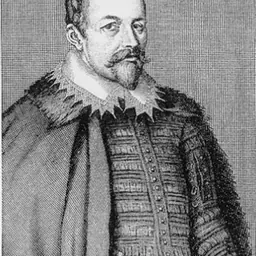
Giuseppe Ripamonti (July 1573 – 11 August 1643) was an Italian Catholic priest and historian. Ripamonti was a prolific writer, to the extent that he can be considered as the most important Milanese writer of the first half of the seventeenth century, alongside Federico Borromeo.
He wrote in Latin Historia Ecclesiae Mediolanensis (1625) ("History of the Church of Milan"). He is perhaps better known for the De peste Mediolani quae fuit anno 1630 (1640) ("About the plague that occurred in Milan in year 1630"), which relates the events occurring in the city during the 1629–1631 Italian bubonic plague. Alessandro Manzoni used this account to describe in detail the effects of the plague in his masterpiece, The Betrothed. In 1841, the latin chronicle of the plague by Ripamonti was published in Italian translation by Francesco Cusani.
Biography Ripamonti was born of humble parents in Colle Brianza. A protégé of Cardinal Federico Borromeo (cousin of St Charles Borromeo) he completed his humanistic education at the Archiepiscopal seminary in Milan.
Ripamonti became a Doctor of the Biblioteca Ambrosiana in September 1607.
Ripamonti was a quarrelsome sort who had a sharp tongue and consequently many enemies. In 1622 Ripamonti was sentenced to five years of imprisonment, but Cardinal Borromeo commuted the sentence to confinement within the archbishop's palace, thus allowing him to finish the second and the third volumes of his Historia relating to the recently bygone era of Charles Borromeo. In 1630, still thanks to the indulgence of Federico Borromeo, Ripamonti was re-admitted to the Ambrosiana.
On 23 December 1635, the Council of Seventy Decurioni awarded him the title of State Historian (a title never before used in Milan) with an attached salary. Ripamonti thus assumed the responsibility of taking forward the Historia patria from the year 1313, that is from the final year covered in the Historia of Tristano Calco that had been recently published (1628).
The release, in 1641, of the first volume of Ripamonti's Historia patria, in an edition by the Malatesta family. This volume covered Milanese history from 1313 to 1558, that is, until the era of Charles V; in 1641 De peste was also released, a fundamentally important record of that recent painful tragedy.
In December 1643, the second volume of the Historia patria was released, depicting the history of Milan from 1559 to 1584, that is, the era of Charles Borromeo. Ripamonti died at Rovagnate in that same year. However he left the material ready for the continuation of the work: three other printed volumes followed between 1646 and 1648, the first two edited by Stefano Sclatter, and the third by Orazio Landi. This third and final volume is of particular importance, covering the era of Federico Borromeo, and this volume went up to the most recent past, that is until 1641, thus establishing itself as the greatest work of historiography of the time.
Scholarship and correspondence Ripamonti's Historia patria is extremely rich in information; however this information is not always well-considered and often unravels into a thread of historical interpretation. The excellent Latin adopted is often pompous, based on the model of Livy and embellished with a touch of baroque style.
Ripamonti corresponded with scholars all over Europe, including Isaac Casaubon and the German philologist Caspar Schoppe. Charles Mackay in his Extraordinary Popular Delusions and the Madness of Crowds (1841), which contains a sections on the Milan plague, used Ripamonti's De peste as a primary source.
Works Titlepage of Ripamonti's De peste, Milan, 1641. Engraving by Cesare Bassano
Historiarum patriae in continuationem Tristani Calchi libri XXIII, usque ad mortem Federici Card. Borromei, Milano, 1641-1643. Alcuni brani delle Storie patrie di Giuseppe Ripamonti per la prima volta tradotti dall'originale latino dal conte Tullio Dandolo, Milano, coi tipi di Antonio Arzione e C., 1856.
Don’t just read it —
keep it.
Full-length biographies made to live with: read them, listen on the way to work, watch them tonight.
- E-book
- Audio
- Video
Instant download · yours to keep · every purchase keeps this site free
Important facts
People in Giuseppe Ripamonti's life
Named in this biography and alive at the same time


Related people
Same field, nearest in time




Contemporaries
People whose lives overlapped Giuseppe Ripamonti's



Frequently asked questions
Who was Giuseppe Ripamonti?
Italian historian (1573-1643)
When was Giuseppe Ripamonti born?
Giuseppe Ripamonti was born on 31 July 1573 in Colle Brianza.
When did Giuseppe Ripamonti die?
Giuseppe Ripamonti died on 11 August 1643 in Rovagnate.
What was Giuseppe Ripamonti's occupation?
Giuseppe Ripamonti was a historian and catholic priest.
What nationality was Giuseppe Ripamonti?
Giuseppe Ripamonti was Italian.
Sources & further reading
· Wikipedia: Giuseppe Ripamonti
Cite this page
APA: Biography.guide. (2026). Giuseppe Ripamonti. https://biography.guide/giuseppe-ripamonti/
MLA: "Giuseppe Ripamonti." Biography.guide, https://biography.guide/giuseppe-ripamonti/.
Chicago: "Giuseppe Ripamonti." Biography.guide. https://biography.guide/giuseppe-ripamonti/.
Data last updated: 2026-09-20 · Spot an error? Report a correction.
Page generated 2026-09-27 05:24 UTC