
About Charles Borromeo
Lived 1538 – 1584 (aged 46). Charles Borromeo was a catholic priest, catholic deacon, archbishop, diplomat, inquisitor and preacher.
Charles Borromeo (; ; 2 October 1538 – 3 November 1584) was an Italian Catholic prelate who served as Archbishop of Milan from 1564 to 1584. He was made a cardinal in 1560.
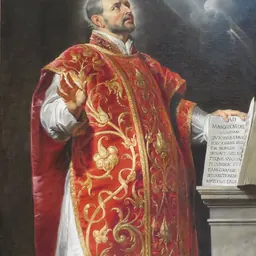
Borromeo founded the Confraternity of Christian Doctrine and was a leading figure of the Counter-Reformation together with Ignatius of Loyola and Philip Neri. In that role, he was responsible for significant reforms in the Catholic Church, including the founding of seminaries for the education of priests. He was canonized in 1610 and his feast day is 4 November.
Early life Charles was the fourth child, descended from the banker Giovanni Borromeo. Borromeo was a descendant of nobility; the Borromeo family was one of the most ancient and wealthiest in Lombardy, made famous by several notable men, both in the church and state. The family coat of arms included the Borromean rings, which are sometimes taken to symbolize the Holy Trinity. Borromeo's father, Gilbert, was Count of Arona. His mother, Margaret, was a member of the Milanese branch of the House of Medici. The second son in a family of six children, he was born in the castle of Arona on Lake Maggiore 36 miles from Milan on 2 October 1538.
Borromeo received the tonsure when he was about twelve years old. At this time, his paternal uncle Giulio Cesare Borromeo turned over to him the income from the rich Benedictine abbey of Sts. Gratinian and Felin, one of the ancient perquisites of the family. Borromeo made plain to his father that all revenues from the abbey beyond what was required to prepare him for a career in the church belonged to the poor and could not be applied to secular use. The young man attended the University of Pavia, where he applied himself to the study of civil and canon law. Due to a slight speech impediment, he was regarded as slow, but his thoroughness and industry meant that he made rapid progress. In 1554, his father died, and although he had an elder brother, Count Federico, he was requested by the family to take the management of their domestic affairs. After a time, he resumed his studies, and on 6 December 1559, he earned a doctorate in canon and civil law.
Period in Rome On 25 December 1559, Borromeo's uncle Cardinal Giovanni Angelo Medici was elected as Pope Pius IV. The newly elected pope required his nephew to come to Rome, and on 13 January 1560 appointed him protonotary apostolic. Shortly thereafter, on 31 January 1560, the pope created him cardinal, and thus Borromeo as cardinal-nephew was entrusted with both the public and the privy seal of the ecclesiastical state.
Borromeo organized the third and last session of the Council of Trent, in 1562–63. His brother's death, along with his contacts with the Jesuits and the Theatines and the example of bishops such as Bartholomew of Braga, were the causes of the conversion of Borromeo towards a more strict and operative Christian life, and his aim became to put into practice the dignity and duties of the bishop as drafted by the recent Council of Trent. Borromeo was formally appointed archbishop of Milan on 12 May 1564 at the age of 25, after the former archbishop Ippolito II d'Este waived his claims on that archbishopric, but he was only allowed by the pope to leave Rome one year later. Borromeo made his formal entry into Milan as archbishop on 23 September 1565. Milan was the largest archdiocese in Italy at the time, with more than 3,000 clergy and 800,000 people. Both its clergy and laity had drifted from church teaching. The selling of indulgences and ecclesiastical positions was prevalent; monasteries were "full of disorder"; many religious were "lazy, ignorant, and debauched".
Borromeo made numerous pastoral visits and restored dignity to divine service. He urged churches to be designed in conformity with the decrees of the Council of Trent, which stated that sacred art and architecture lacking adequate scriptural foundation was in effect prohibited, as was any inclusion of classical pagan elements in religious art. He divided the nave of the church into two compartments to separate the sexes at worship. He extended his reforms to the collegiate churches, monasteries and even to the Confraternities of Penitents, particularly that of St. John the Baptist. This group was to attend to prisoners and those condemned to death, to give them help and support.
Borromeo believed that abuses in the church arose from ignorant clergy. Among his most important actions, he established seminaries, colleges, and communities for the education of candidates for holy orders. His emphasis on Catholic learning greatly increased the preparation of men for the priesthood and benefited their congregations. In addition, he founded the fraternity of Oblates of St. Ambrose, a society of secular men who did not take orders but devoted themselves to the church and followed a discipline of monastic prayers and study. They provided assistance to parishes when so directed.
Influence on English affairs
Borromeo had also been involved in English affairs when he assisted Pius IV. Many English Catholics had fled to Italy at this time because of the persecutions under Queen Elizabeth I. He gave pastoral attention to English Catholics who fled to Italy to escape the new laws against the Catholic faith.
Persecution of religious dissidents
Though the Diet of Ilanz of 1524 and 1526 had proclaimed freedom of worship in the Three Leagues, Borromeo repressed Protestantism in the Swiss valleys. The Catholic Encyclopedia relates: "In November he began a visitation as Apostolic visitor of all the cantons of Switzerland and the Grisons, leaving the affairs of his diocese in the hands of Monsignor Owen Lewis, his vicar-general. He began in the Valle Mesolcina; here not only was there heresy to be fought, but also witchcraft and sorcery, and at Roveredo it was discovered that 'the provost or rector, was the foremost in sorceries'". During his pastoral visit to the region, 150 people were arrested for practicing witchcraft. Eleven women and the provost were condemned by the civil authorities to be burned alive.
Reacting to the pressure of the Protestant Reformation, Borromeo encouraged Ludwig Pfyffer in his development of the "Golden League" but did not live to see its formation in 1586. Based in Lucerne, the organization (also called the Borromean League) linked activities of several Swiss Catholic cantons of Switzerland, which became the centre of Catholic Counter-Reformation efforts and was determined to expel heretics. It created severe strains in the Swiss civil administration and caused the break-up of Appenzell canton along religious lines.
Controversy and last days Charged with implementing the reforms dictated by the Council of Trent, Borromeo's uncompromising stance brought him into conflict with secular leaders, priests, and even the Pope.
Iconography Borromeo's emblem is the Latin word humilitas (humility), which is a portion of the Borromeo shield. He is usually represented in art in his robes, barefoot, carrying the cross as archbishop, a rope around his neck, one hand raised in blessing, thus recalling his work during the plague.
Il Sancarlone : colossal statue of Carlo Borromeo erected in Arona, Italy in 1697. The work of Giovanni Battista Crespi, the statue is 23 m tall and stands on a plinth 12 m in height.
Legacy Borromeo's correspondence shows his influential position in Europe during his lifetime. The popes under whom he served sought his advice. The Catholic sovereigns of Europe – Henry III of France, Philip II of Spain, Mary, Queen of Scots – and others showed how they valued his influence. Cardinal Valerio of Verona said of him that Borromeo was "to the well-born a pattern of virtue, to his brother cardinals an example of true nobility." Cardinal Baronius styled him "a second Ambrose, whose early death, lamented by all good men, inflicted great loss on the Church."
Late in the sixteenth or at the beginning of the seventeenth century, Catholics in England circulated among themselves a "Life of St. Charles". thumb
Monuments Contrary to Borromeo's last wishes, the Duomo di Milano created a memorial crypt to honour him at the church. His relative Federico Borromeo and admirers commissioned a statue 20 m high that was erected on the hill above Arona, as they regarded him as an important leader of the Counter-Reformation.
Writings Besides the Noctes Vaticanae, to which he appeared to have contributed, Borromeo's written legacy consisted only of some homilies, discourses and sermons, with a collection of letters. Borromeo's sermons have been translated into many languages.
Music Marc-Antoine Charpentier composed a motet, Pestis Mediolanensis, commemorating Borromeo's work during the plague of 1576.
Churches A large number of churches dedicated to St. Charles Borromeo exist, including:
Europe
Karlskirche, Vienna, Austria St Charles Borromeo Church, Sheffield St Charles Borromeo Church, Kingston upon Hull, England St. Charles Borromeo RC Church, Hampton Magna, England St. Charles Borromeo RC Church, Aigburth, Liverpool, England Our Lady and St Charles Borromeo Catholic Church, Wisbech, England St. Charles Borromeo Roman Catholic Oratory, North Kelvinside, Glasgow, Scotland St. Charles Borromeo Church, Antwerp, Belgium San Carlo ai Catinari, Rome, Italy San Carlo al Corso, Rome, Italy San Carlo alle Quattro Fontane, Rome, Italy St. Charles Borromeo Roman Catholic Church, Pancevo, Vojvodina, Serbia Church of St. Charles Borromeo (Warsaw, Poland) Chiesa San Carlo Borromeo, Biasca, Ticino, Switzerland St. Charles Borromeo Cemetery Church, Vienna St. Charles Borromeo Church, Leixlip, Ireland St Charles Borromeo, Fitzrovia, London, England
North America
St. Charles Borromeo Catholic Church, Peru, Indiana Saint Charles Borromeo Catholic Church, Grand Coteau, Louisiana St. Charles Borromeo Cathedral (Cathédrale Saint-Charles-Borromée) Joliette Quebec Canada St. Charles Borromeo Catholic Church, Fermeuse, Newfoundland, Canada Saint Charles Borromeo Catholic Church, Toronto, Ontario, Canada St. Charles Borromeo Catholic Church, Read, Ontario, Canada Saint Charles Borromeo Catholic Church, North Hollywood, California St Charles Borromeo Catholic Church, Visalia, California Cathedral of San Carlos Borromeo, California Mission San Carlos Borromeo de Carmelo, California St. Charles Borromeo Parish Church, Sacramento, California St. Charles Borromeo Catholic Church and Academy (Pt. Loma, California) St. Charles Borromeo Roman Catholic Church, Port Charlotte, Florida St. Charles Borromeo Roman Catholic Church in Hampshire, Illinois St. Charles Borromeo Church (Destrehan, Louisiana) St. Charles Borromeo Church, Brooklyn New York St. Charles Borromeo Church (New York City), New York St. Charles's Church (Staten Island, New York) St. Charles Borromeo Catholic Church (Nederland, Texas) St. Charles Borromeo Catholic Church in St. Charles, Missouri St. Charles Borromeo Catholic Church in Minneapolis, Minnesota St. Charles Borromeo (St. Charles, Minnesota) St. Charles Borromeo Catholic Church (Oakes, North Dakota) St. Charles Borromeo Catholic Church (Kettering, Ohio) St. Charles Borromeo (Lima, Ohio) St. Charles Borromeo Church (Parma, Ohio) The neighborhood of Pointe-Saint-Charles St. Charles Borromeo (South Charleston, Ohio) St. Charles Borromeo (Toledo, Ohio) St. Charles Borromeo in Pikesville, Maryland St. Charles Borromeo Catholic Church (Pittsfield, MA) St. Charles Borromeo Catholic Church (Woburn, Massachusetts) St. Charles Borromeo Catholic Church (Picayune, Mississippi) St. Charles Borromeo Catholic Church (Gretna, Nebraska) St. Charles Borromeo Catholic Church (Skillman, New Jersey) St. Charles Borromeo Roman Catholic Church in Greece, New York St. Charles Borromeo Catholic Church (Syracuse, New York) St. Charles Borromeo Catholic Church (Ahoskie, North Carolina) St. Charles Borromeo Catholic Church (Morganton, North Carolina) St. Charles Borromeo Catholic Church (Drexel Hill, Pennsylvania) St Charles Borromeo Roman Catholic Church (Fermeuse, Newfoundland and Labrador) St. Charles Borromeo Roman Catholic Church, est. 1846, Woonsocket, Rhode Island St. Charles Borromeo Catholic Church (Milan, Indiana), in Ripley County St. Charles Church (Arlington, Virginia) St. Charles Parish, Spokane, Washington St. Charles Borromeo Catholic Church (Oklahoma City, OK) St. Charles Borromeo Catholic Church (Du Bois, Illinois)
St. Charles Borromeo Catholic Church (Meredith, NH) St. Charles Borromeo Catholic Church (Milwaukee, WI) St. Charles Borromeo Catholic Church (Kingsland, TX) St. Charles Borromeo Catholic Church (Philadelphia, Pa) Parroquia San Carlos Borromeo (Aguadilla, PR) St. Charles Borromeo Catholic Church, Kansas City, Missouri
St-Charles-Borromée, Catholic Church, Charlesbourg, Québec St. Charles, Catholic Church, Québec, Canada St. Charles Borromeo Catholic Church and School (Bloomington, IN)
South America Cathedral of San Carlos de Bariloche, Argentina St. Charles Borromeo Cathedral, São Carlos, Brazil Cathedral Basilica of San Carlos Borromeo (Puno), Peru San Carlos Borromeo, San Carlos, Uruguay Cathedral of San Carlos (Cojedes), Venezuela Church of Chonchi, Chiloé, Chile (UNESCO World Heritage Site)
Seminaries St Charles Borromeo Seminary of the Archdiocese of Košice, in Košice, Slovakia St. Charles Borromeo Seminary of the Archdiocese of Philadelphia, Pennsylvania, United States San Carlos Seminary of the Archdiocese of Manila in Makati, Philippines Colegio San Carlos, a recognized primary and secondary school in Bogotá, Colombia, and home for a Benedictine community of priests Saint Charles Borromeo Major Seminary of Nyakibanda in Rwanda St Charles' Seminary in Perth, Australia Borromeo Seminary in Wickliffe, Ohio St. Charles Seminary in Carthagena, Ohio, now a retirement home St. Charles Seminary (Staten Island, New York), closed and slated for private homes St. Charles Seminary (SVD), Goden Rock, Trichy, Tamil Nadu, India · St Charles Borromeo Minor Seminary Senior High School, Tamale, Ghana
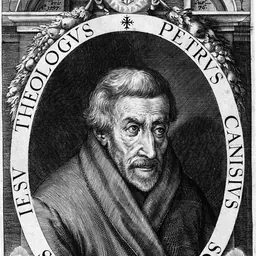
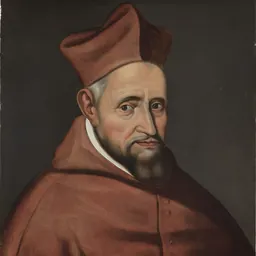
Other His nephew, Federico Borromeo (1564–1631), was archbishop of Milan from 1595 and founded the Ambrosian Library in that city. He donated his collection of art and literature to the library. He appeared as a character in Alessandro Manzoni's novel The Betrothed (I promessi sposi). Sint. Borromeus Hospital, the first Catholic hospital in Indonesia, was founded by Perkumpulan Perhimpunan St. Carolus Vereeniging (PPSC). It is managed by Kongregasi Suster-Suster Cinta Kasih St. Carolus Borromeus (Sisters of Mercy of St. Borromeo) since its foundation in 1913. Borromeo was crucial in furthering the career of composer Orfeo Vecchi. Borromeo is one of four people mentioned at the beginning of the Catechism of the Catholic Church, as responsible for the Council of Trent, which gave way to the modern-day catechism. The others are Peter Canisius, Turibius of Mongrovejo and Robert Bellarmine. Saint Charles Preparatory School, a former college seminary now a four-year Catholic college preparatory school in Columbus, Ohio Lewis University, a Catholic and Lasallian University, St. Charles Borromeo North Campus St. Charles, Missouri St. Charles, Illinois St. Charles, Minnesota São Carlos, Brazil Saint-Charles-Borromée, Quebec, Canada San Carlos City, Pangasinan, Philippines St. Charles Academy in San Carlos City, Pangasinan, Philippines The San Carlos de Borromeo Fortress on Margarita Island, state of Nueva Esparta, Venezuela, completed in 1684, was intended to help protect settlements in the Bay of Pampatar area against the constant threat of piracy University of San Carlos in Cebu City, Philippines Universidad de San Carlos de Guatemala in Guatemala, originally named "Royal and Pontifical University of San Carlos Borromeo"
Don’t just read it —
keep it.
Full-length biographies made to live with: read them, listen on the way to work, watch them tonight.
- E-book
- Audio
- Video
Instant download · yours to keep · every purchase keeps this site free
Important facts
more
Saint Borromeo, San Carlo Borromeo, Saint Carolus Borromaeus, St. Carlo Borromeo, Charles Borromeus, Charles Borromée, Saint Charles BorroméePeople in Charles Borromeo's life
Named in this biography and alive at the same time




Related people
Same field, nearest in time



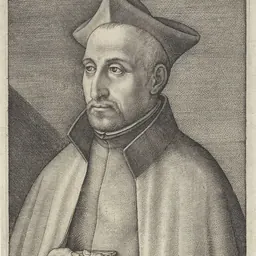
Contemporaries
People whose lives overlapped Charles Borromeo's




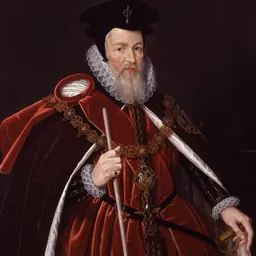
Frequently asked questions
Who was Charles Borromeo?
Italian Catholic prelate (1538–1584)
When was Charles Borromeo born?
Charles Borromeo was born on 2 October 1538 in Arona.
When did Charles Borromeo die?
Charles Borromeo died on 3 November 1584 in Milan.
What was Charles Borromeo's occupation?
Charles Borromeo was a catholic priest, catholic deacon, archbishop, diplomat, inquisitor and preacher.
Sources & further reading
Cite this page
APA: Biography.guide. (2026). Charles Borromeo. https://biography.guide/charles-borromeo/
MLA: "Charles Borromeo." Biography.guide, https://biography.guide/charles-borromeo/.
Chicago: "Charles Borromeo." Biography.guide. https://biography.guide/charles-borromeo/.
Data last updated: 2026-09-20 · Spot an error? Report a correction.
Page generated 2026-09-27 05:23 UTC