
Turibius of Mongrovejo
Spanish Roman Catholic archbishop and saint
About Turibius of Mongrovejo
Lived 1538 – 1606 (aged 67). Turibius of Mongrovejo was a catholic priest, inquisitor and archbishop.
Toribio Alfonso de Mogrovejo (16 November 1538 – 23 March 1606) was a Spanish Catholic prelate who served as Archbishop of Lima from 1579 until his death.
He first studied the humanities and law before being appointed as a university professor. His piety and learning had reached the ears of King Philip II, and at the behest of the latter, he went on to become Grand Inquisitor, considered unusual given he had no previous government or judicial experience. His distinguished work for the Inquisition earned him praise from the king, who nominated him for the vacant Lima archdiocese. This was confirmed by the Pope, under protest from Turibius.
Mogrovejo was ordained in the priesthood in 1578, and consecrated as an archbishop in 1580, before setting off for Peru to begin his mission. An eminent and charismatic preacher, he set about baptising and catechising the indigenous people. He confirmed almost half a million people; these included Rose of Lima and Martin de Porres.
After his death, his reputation for holiness and learning lived on, leading to calls for his canonisation. Pope Innocent XI beatified the late archbishop, and Pope Benedict XIII canonised him as a saint on 10 December 1726. His second visitation took four years, but the third was shorter.
Turibius organised for the building of roads and schools as well as chapels and hospitals. He ensured these could be staffed from nearby convents, also instituted by him. Turibius' concern for the very poorest (see next section) extended also to destitute Spanish. Their seeking assistance was constrained by the colony's social norms. Succour from Turibius arrived nevertheless, often without the source coming to light.
Indigenous people The start of Turibius' episcopate almost coincided with the end of eleven years under the viceroyalty of Francisco de Toledo, the fifth viceroy. His administration had had a negative impact on the indigenous peoples of Peru, the cost of his bringing political and economic order that had him dubbed as the "best of Peru's viceroys". In Lima, remote from the vast hinterland, was an exploitative society, derived from the encomienda tradition. Mine operators and merchant princes lived an opulent lifestyle, thriving on the enforced labour of the indigenous people. Toledo had taken advantage of the pre-existing practice of forced labour under the mit'a of the Inca Empire, and had expanded it. Called "reductions", Toledo's policy had forcibly relocated many of the indigenous peoples into new settlements, to gather labour to work in mines and other Spanish enterprises, to collect tributes and taxes, and to enforce their Christianisation.
Against this, Turibius was seen as a champion of the rights of the natives. The Spanish had been attracted from their homeland to make their fortunes. They were left with no effective constraint on their using almost any means in their power. Turibius often came across shocking examples of tyranny, maltreatment and cynical indifference to Christian precepts of morality. Redress for abuses by officials was nigh-on impossible. The distance from Spain was insuperable, and communication within the viceroyalty was via sparse roads in a vast territory. He learned the local dialects and fought for rights and liberties, confronting the viceroy's power and control. He was even persecuted by the civil authorities but his patient persistence prevailed.
Eventually Turibius was rewarded with some success. The eighth viceroyal, García Hurtado de Mendoza made efforts to "crack down on the oppression of the indigenous population at the hands of the Spanish colonizers. "
Clerical formation Partly because of a dearth of good priests, there were among the indigenous people enormous numbers who were baptised but who knew little of the Christian religion. Realising that some clerical behaviour had grown too scandalous to countenance, Mogrovejo sought reformation of priests under his charge. Some came to resent this, though support and assistance was forthcoming from the viceroy. In 1591 he founded the first seminary in the Western Hemisphere. He insisted that learning indigenous languages was a prerequisite. in Zaña in a critical condition. He pulled himself up to receive the Viaticum, and died shortly thereafter at 3:30 pm on 23 March 1606 (Holy Thursday). His final words were those of Jesus Christ on the cross, as in Luke 23:46: "Lord, into Your hands I commit my spirit" His remains were interred in the archdiocesan cathedral in Lima.
Sainthood Mogrovejo's beatification was celebrated under Pope Innocent XI in 1679 (ratified in the papal bull "Laudeamus"). In the papal bull "Quoniam Spiritus", Pope Benedict XIII canonised him as a saint on 10 December 1726.
At one time celebrated on 27 April, Turibius' liturgical feast is nowadays on 23 March. His cult was once limited mainly to South America, but his pioneering and enduring reforms have now made this more widespread.
In 1983, Pope John Paul II proclaimed him patron saint of the Latin American episcopate.
Don’t just read it —
keep it.
Full-length biographies made to live with: read them, listen on the way to work, watch them tonight.
- E-book
- Audio
- Video
Instant download · yours to keep · every purchase keeps this site free
Important facts
more
Toribio Alfonso de Mogrovejo, Saint Turibius of MongrovejoPeople in Turibius of Mongrovejo's life
Named in this biography and alive at the same time

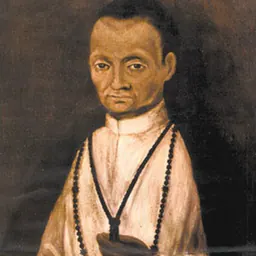

Related people
Same field, nearest in time


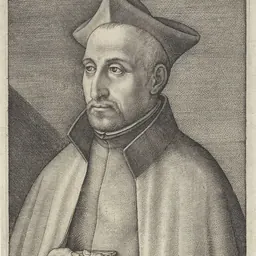
Contemporaries
People whose lives overlapped Turibius of Mongrovejo's
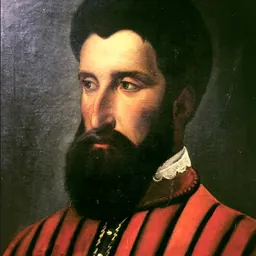
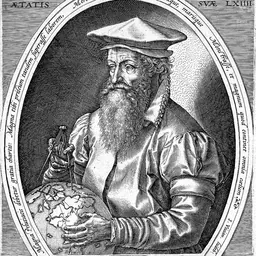


Frequently asked questions
Who was Turibius of Mongrovejo?
Spanish Roman Catholic archbishop and saint (1538–1606)
When was Turibius of Mongrovejo born?
Turibius of Mongrovejo was born on 16 November 1538 in Mayorga.
When did Turibius of Mongrovejo die?
Turibius of Mongrovejo died on 23 March 1606 in Zaña.
What was Turibius of Mongrovejo's occupation?
Turibius of Mongrovejo was a catholic priest, inquisitor and archbishop.
What nationality was Turibius of Mongrovejo?
Turibius of Mongrovejo's recorded nationality: Crown of Castile.
Sources & further reading
· Wikipedia: Turibius of Mongrovejo
· DBpedia: Turibius of Mogrovejo
Cite this page
APA: Biography.guide. (2026). Turibius of Mongrovejo. https://biography.guide/turibius-of-mongrovejo/
MLA: "Turibius of Mongrovejo." Biography.guide, https://biography.guide/turibius-of-mongrovejo/.
Chicago: "Turibius of Mongrovejo." Biography.guide. https://biography.guide/turibius-of-mongrovejo/.
Data last updated: 2026-09-20 · Spot an error? Report a correction.
Page generated 2026-09-27 05:27 UTC