
About Giuseppe Dabormida
Lived 1799 – 1869 (aged 69). Giuseppe Dabormida was an Italian politician.
Giuseppe Secondo Dabormida (or Da Bormida) (Verrua Savoia, 21 November 1799 – Buriasco, 10 August 1869) was an Italian general and politician. He was Minister of War of the Kingdom of Sardinia (22 August 1848 – 27 October 1848) during the First Italian War of Independence, then Foreign Minister twice (4 November 1852 – 10 January 1855), (19 July 1859 – 21 January 1860). He studied at the Napoleonic Imperial High School in Genoa and embarked on a military career. On March 29, 1815, he entered the artillery as a cadet. Two years later he became second lieutenant, and was made lieutenant on 14 September 1819.
Following the uprisings of 1820-1821 he was sent with his regiment to Novara and after the failure of the insurrection, perhaps due to his friendship with the patriot Giacinto Collegno, he was transferred to Sardinia. The role of Minister of War was therefore entrusted to Dabormida on 22 August 1848, with the task of reorganizing the army and placing it in a position to resume hostilities. After the armistice he had insisted on placing a French general at the head of the Piedmontese troops, and suggesting Thomas Robert Bugeaud, Nicolas Changarnier and Marie-Alphonse Bedeau. When he became minister, he sent Colonel Alfonso La Marmora to Paris for difficult negotiations for this purpose, although Charles Albert proved more favorable to the idea of giving command to the Polish general Wojciech Chrzanowski.
Despite the serious defeat suffered in the first military campaign, Charles Albert insisted on retaining personal command of the army. On 13 September 1848 he decided to return from Alessandria to the capital Turin and arranged for all the men of the command to follow him. But Dabormida, in agreement with the rest of the government, explicitly ordered the generals to remain in place. The command therefore remained in Alessandria, effectively in the hands of Bava and Franzini, who in the meantime had been appointed chief of staff.
Foreign minister (1852-1855) In December 1849, in the elections for the IV legislature of the Kingdom of Sardinia, Dabormida was re-elected to the constituency of Avigliana, which had already elected him to the I, II and III legislatures. and who three days before taking office was appointed senator, on 1 November. Dabormida tried to limit the damage by offering to circulate official statements condemning the anti-Austrian insults in the press to neighboring states or to express similar views in a formal diplomatic note.
The Crimean War Within months however the government’s attention shifted to the Russian occupation of the Danubian Principalities, which was to lead to the Crimean War. This situation presented new challenges for Sardinia: the Austrians refused to join Britain and France in opposing Russia unless they were given guarantees of security in Italy - Radetzky went so far as to demand that Austria be permitted to occupy Alessandria as a guarantee of Sardinia keeping the peace while she was engaged with Russia.
Some politicians in Turin meanwhile calculated that they could isolate Austria and secure British and French support for Italian nationalism by offering Sardinian support against Russia. Dabormida however was set on a policy of neutrality. Both Vittorio Emanuele II and Cavour were however eager to intervene in the conflict alongside the two Western powers, above all to prevent Austria from doing so, which would have completely isolated Sardinia. On 22 December 1854 Austria signed an agreement with France for mutual territorial guarantees in Italy. This initiative, together with a formal request for help from Britain and France, pushed the government to abandon the Dabormida’s policy of caution.
A cabinet meeting on 13 December 1854 decided that Sardinia should offer to join Britain and France in return for the granting of a loan, admission to the peace negotiations, a guarantee that Austria would not attack while her troops were in the Crimea, and a commitment on the part of the allies to obtain from Vienna the revocation of the seizures of Lombard refugees' assets.
France and Britain, however, rejected these conditions. Right wing politicians led by Count Revel urged Vittorio Emanuele on 1 January 1855 to form a new government that would take the country into the war in any case, with no preconditions. For his part, Dabormida, when he met the ambassadors of France and Great Britain on 7 January 1855, declared that without the guarantees previously agreed by the cabinet, Sardinia would not enter the war. He was contradicted the same day by Vittorio Emanuele, who reassured the French ambassador that "if those [in the government] don't want to march I will take others who will march".
On 9 January Dabormida had a difficult meeting with Cavour, other members of the government and the two ambassadors. After 4 hours of discussion, at midnight, Cavour postponed the session to the next day. During the night Dabormida, determined not to give in on the guarantees from the allies, but now in the minority, resigned.
Once the second war of independence ended and Cavour resigned due to disagreements with the king regarding the armistice of Villafranca, Vittorio Emanuele II entrusted the presidency of the council on 19 July 1859 to La Marmora and the foreign ministry to Dabormida. Although he was out of the government, Cavour spoke out in favour of annexing Tuscany and Modena for annexations, and on 16 January 1860 Vittorio Emanuele II invited him to form a cabinet, causing the La Marmora government to fall.
Later years On 22 April 1860 Dabormida was appointed member of the examination commission at the Royal Academy of Turin; from 24 June of that year to 26 October 1866 he was president of the artillery committee; from 8 July 1862 to 10 January 1866 he was president of the Superior Council of Military Institutes and on 22 February 1863 he was awarded the title of count. On 22 May 1866 he received the honor of grand officer of the Crown of Italy. Forced to retire on 26 October of the same year due to a stroke, he died in Buriasco on 19 August 1869.
Honours Giuseppe Dabormida was decorated with many honours, both civilian and military, by Sardinia, Italy and other states.
Italian honours
Gran cordone dell'Ordine dei SS. Maurizio e Lazzaro - ribbon for ordinary uniform Grand cordon of the Order of Saints Maurice and Lazarus — 26 March 1853
Foreign honours
Gran croce dell'Ordine di S. Benedetto d'Avis di Portogallo - ribbon for ordinary uniform Grand Cross of the Military Order of Aviz (Portugal) — 17 February 1856
Cavaliere dell'Ordine S. Stanislao (Russia) - ribbon for ordinary uniform Knight of the Order of Saint Stanislaus (Russia) — 6 March 1833 Cavaliere di prima classe dell'Ordine di S. Anna (Russia) - ribbon for ordinary uniform Knight First Class of the Order of Saint Anna (Russia) — 27 May 1856 Cavaliere dell'Ordine di Sant'Andrea (Russia) - ribbon for ordinary uniform Knight of the Order of St. Andrew (Russia) — 1859
Don’t just read it —
keep it.
Full-length biographies made to live with: read them, listen on the way to work, watch them tonight.
- E-book
- Audio
- Video
Instant download · yours to keep · every purchase keeps this site free
Important facts
People in Giuseppe Dabormida's life
Named in this biography and alive at the same time
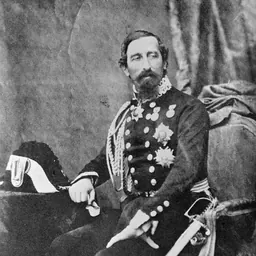
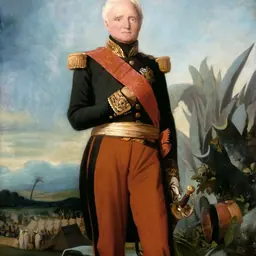
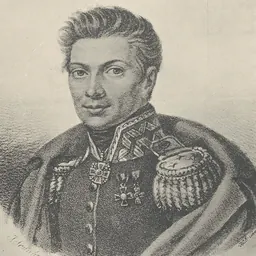
Related people
Same field, nearest in time
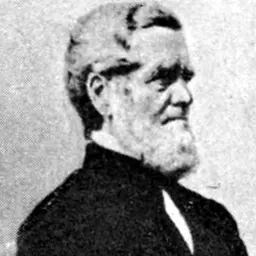



Contemporaries
People whose lives overlapped Giuseppe Dabormida's






Frequently asked questions
Who was Giuseppe Dabormida?
Italian politician (1799-1869)
When was Giuseppe Dabormida born?
Giuseppe Dabormida was born on 21 November 1799 in Verrua Savoia.
When did Giuseppe Dabormida die?
Giuseppe Dabormida died on 19 August 1869 in Buriasco.
What was Giuseppe Dabormida's occupation?
Giuseppe Dabormida was a politician.
What nationality was Giuseppe Dabormida?
Giuseppe Dabormida was Italian.
Sources & further reading
· Wikipedia: Giuseppe Dabormida
Cite this page
APA: Biography.guide. (2026). Giuseppe Dabormida. https://biography.guide/giuseppe-dabormida/
MLA: "Giuseppe Dabormida." Biography.guide, https://biography.guide/giuseppe-dabormida/.
Chicago: "Giuseppe Dabormida." Biography.guide. https://biography.guide/giuseppe-dabormida/.
Data last updated: 2026-09-20 · Spot an error? Report a correction.
Page generated 2026-09-27 05:27 UTC