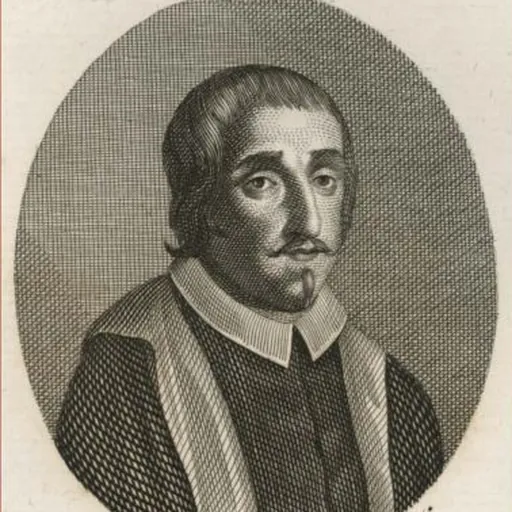
About Giuseppe Battista
Lived 1610 – 1675 (aged 65). Giuseppe Battista was a poet.
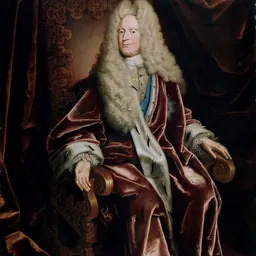
Giuseppe Battista (; 11 February 1610 – 6 March 1675) was a prolific Italian marinist poet and writer.
Biography Giuseppe Battista was born in Grottaglie, between Brindisi and Taranto. When very young he lost his parents; but he was able to study both at his native place and later with the Jesuits in Naples. Here he came to the notice of Giovanni Battista Manso, who apparently took him to live at his own house. He joined the Oziosi Academy in 1633 and was appointed by Manso as his literary executor. Battista became a leading figure in the Oziosi's later revival in the mid-1600s. After the death of Manso (1645), he moved the household of Prince Francesco Caracciolo, and then withdrew to his native village, where he lived a simple literary life. Though greatly troubled by physical ailments, he made frequent journeys in southern Italy. He died at Naples, March 6, 1675.
Critical assessment
Battista published extensive collections of verse, the Latin Epigrammatum centuriae tres (1653), and the Italian Poesie meliche (in four parts, 1653–70), and Epicedi eroici (1667). His poems were once admired; they fitted the taste of their day. Girolamo Tiraboschi finds Battista 'a bad poet, who united in himself all the faults of his age,' but admits that his treatise on Poetry (1676) was influential. According to Benedetto Croce Battista was, together with Giuseppe Artale, the founder of a school of poetry aiming at going further the baroque in its quest for novelty. 'Giuseppe Battista was the leader, Giuseppe Artale the second in command of that sort of "baroque of the baroque" which flourished in the second half of the seventeenth century.'
Battista is now generally held to be an imitator of Marino, but the extent of his debt may be doubted: Battista's elaborate concettismo alternates solemn moral reflections with explicitly autobiographical elements common in mid-seventeenth-century poetry, and the celebration of the ceremonies and pastimes of Neapolitan literary and aristocratic society.
Battista wrote several essays published in Venice in 1673, probably based on discussions within the Oziosi during the 1630s and 40s. He wrote also a biblical tragedy, Assalone (1676), and a collection of Lettere (1678). These latter posthumous publications, all printed in Venice, testify to his ambitions as a literary all-rounder, and to the importance attributed to his work throughout Italy.
Battista was a member of the Accademia dei Gelati of Bologna and the Accademia degli Oscuri of Lucca and was on friendly terms with several important literary figures of the time, including Antonio Muscettola, Angelico Aprosio, Lorenzo Crasso, Pietro Michiele, and Giovanni Francesco Loredano. He was a friend of Massimo Stanzione, who gifted him a painting depicting Hercules and Antaeus.
Works
Don’t just read it —
keep it.
Full-length biographies made to live with: read them, listen on the way to work, watch them tonight.
- E-book
- Audio
- Video
Instant download · yours to keep · every purchase keeps this site free
Important facts
People in Giuseppe Battista's life
Named in this biography and alive at the same time



Related people
Same field, nearest in time


Contemporaries
People whose lives overlapped Giuseppe Battista's





Frequently asked questions
Who was Giuseppe Battista?
Italian poet
When was Giuseppe Battista born?
Giuseppe Battista was born on 11 February 1610 in Grottaglie.
When did Giuseppe Battista die?
Giuseppe Battista died on 6 March 1675 in Naples.
What was Giuseppe Battista's occupation?
Giuseppe Battista was a poet.
What nationality was Giuseppe Battista?
Giuseppe Battista's recorded nationality: Naples.
Sources & further reading
· Wikipedia: Giuseppe Battista
Cite this page
APA: Biography.guide. (2026). Giuseppe Battista. https://biography.guide/giuseppe-battista/
MLA: "Giuseppe Battista." Biography.guide, https://biography.guide/giuseppe-battista/.
Chicago: "Giuseppe Battista." Biography.guide. https://biography.guide/giuseppe-battista/.
Data last updated: 2026-09-21 · Spot an error? Report a correction.
Portrait: Wikimedia Commons · author & licence
Page generated 2026-09-27 04:59 UTC