
About Girija Prasad Koirala
Lived 1924 – 2010 (aged 85). Girija Prasad Koirala was a Nepali politician.
Nepal Ratna Girija Prasad Koirala ( ; 4 July 1924 – 20 March 2010), affectionately known as Girija Babu, was a Nepalese politician. He headed the Nepali Congress and served as the Prime Minister of Nepal on four occasions: from 1991 to 1994, 1998 to 1999, 2000 to 2001, and 2006 to 2008. He was the Acting Head of State of Nepal between January 2007 and July 2008 as the country transitioned from a monarchy to a republic.
Koirala, who was active in politics for over sixty years, was a pioneer of the Nepalese labour movement, having started the first political workers' movement on Nepalese soil, known as the Biratnagar jute mill strike in his hometown, Biratnagar. In 1991 he became the first democratically elected prime minister in Nepal since 1959, when his brother B. P. Koirala and the Nepali Congress party were swept into power in the country's first democratic election. He was the most prominent and consequential political leader in Nepal from 1990 to 2008.
Personal life
Koirala was born on 4 July 1924 in Saharsa, in the Bihar and Orissa Province of British India into a Bahun family. His father, Krishna Prasad Koirala, was a Nepali living in exile. Their daughter Sujata Koirala was born in 1953. Sushma died in a kerosene-stove explosion in 1967. He along with his daughter Sujata were followers of the Indian spiritual leader Sathya Sai Baba.
Girija Prasad Koirala belonged to one of Nepal's most prominent political families. Two of his brothers were prime ministers: Matrika Prasad Koirala from 1951 to 1952 and 1953 to 1955, and Bishweshwar Prasad Koirala from 1959 until King Mahendra took over the government in December 1960. Bishweshwar Prasad and Girija Prasad were arrested and sent to prison. With other leaders of the Nepali Congress Party (NCP), Girija Prasad went into exile after his release in 1967 and did not return to Nepal until 1979.
Political career Koirala became involved in politics in 1947, leading the Biratnagar jute mill strike. Koirala was actively involved in the 1990 Jana Andolan which led to the abrogation of Panchayat rule and the introduction of multiparty politics into the country.
First term
In Nepal's first multiparty democratic election in 1991, Koirala was elected as a member of parliament from the Morang-1 and Sunsari-5 constituencies. The Nepali Congress won 110 of the 205 seats in the Pratinidhi Sabha (House of Representatives), the lower house of parliament. He was subsequently elected as the leader of the Nepali Congress parliamentary party and was appointed as prime minister by King Birendra.
In the discussions on power-sharing that followed the declaration of a republic, the Nepali Congress proposed that Koirala become the first President of Nepal; however, the CPN (Maoist), which had emerged as the strongest party in the Constituent Assembly election, opposed this.
At a meeting of the Constituent Assembly on 26 June 2008, Koirala announced his resignation, although it would not be finalized until after the election of a president, to whom the resignation had to be submitted.
Koirala was present for the swearing in of Ram Baran Yadav, the first president of Nepal, on 23 July 2008. He submitted his resignation to Yadav later on the same day. CPN (M) Chairman Prachanda was elected by the Constituent Assembly to succeed Koirala on 15 August 2008; Koirala congratulated Prachanda on this occasion.
Later activity Towards the end of his life, Koirala was leading a democratic front composed of parties that supported and promoted liberal democratic principles and aspired to establishment of a long-term democratic form of governance in Nepal.
Koirala wrote Simple Convictions: My Struggle for Peace and Democracy.
Death
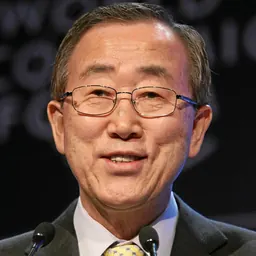
Koirala died at his daughter's home on 20 March 2010 at the age of 85, having suffered from asthma and pulmonary disease. His funeral was held at Pashupatinath Temple in Kathmandu on 21 March. while Ban Ki-moon, Secretary-General of the United Nations said "Koirala fought fearlessly and at considerable personal sacrifice for justice and democratic rights in his country" and senior Maoist politician Baburam Bhattarai said "Koirala will be very much missed, especially now that the country is nearing the end of the peace process that he facilitated". Bangladesh : Bangladesh Liberation War Honour
Don’t just read it —
keep it.
Full-length biographies made to live with: read them, listen on the way to work, watch them tonight.
- E-book
- Audio
- Video
Instant download · yours to keep · every purchase keeps this site free
Important facts
Family & relationships
People in Girija Prasad Koirala's life
Named in this biography and alive at the same time





Related people
Same field, nearest in time




Contemporaries
People whose lives overlapped Girija Prasad Koirala's


Frequently asked questions
Who was Girija Prasad Koirala?
Nepalese politician (1924 - 2010)
When was Girija Prasad Koirala born?
Girija Prasad Koirala was born on 4 July 1924 in Saharsa.
When did Girija Prasad Koirala die?
Girija Prasad Koirala died on 20 March 2010 in Kathmandu.
What was Girija Prasad Koirala's occupation?
Girija Prasad Koirala was a politician.
What nationality was Girija Prasad Koirala?
Girija Prasad Koirala was Nepali.
Sources & further reading
· Wikipedia: Girija Prasad Koirala
· DBpedia: Girija Prasad Koirala
Cite this page
APA: Biography.guide. (2026). Girija Prasad Koirala. https://biography.guide/girija-prasad-koirala/
MLA: "Girija Prasad Koirala." Biography.guide, https://biography.guide/girija-prasad-koirala/.
Chicago: "Girija Prasad Koirala." Biography.guide. https://biography.guide/girija-prasad-koirala/.
Data last updated: 2026-09-26 · Spot an error? Report a correction.
Page generated 2026-09-27 05:15 UTC