
About Giovanni Pietro Magni
Lived 1655 – 1723 (aged 67–68). Giovanni Pietro Magni was a Swiss plasterer and architect.
Giovanni Pietro Magni, aka Pietro Magno (2 May 1655 – 1722/1724) was a German stuccoist born in Switzerland. He decorated many buildings across central Germany in the late 1600s and early 1700s, particularly under the patronage of the Prince-Bishop of Würzburg.
Biography Giovanni Pietro Magni was born on 2 May 1655 in Bruzella, a settlement on the eastern outskirts of Mendrisio in Switzerland’s Italian-speaking Ticino canton, to Giovanni Pietro Magni and Marta Parravicini. His family was connected with various other artistic families in the valley of the Muggio, including the Pozzis, Bernasconis and Salterios. He married Ursula, the daughter of the architect Carlo Salterio and his wife Angelica, with whom he had at least four children.
Magni studied under the sculptor Agostino Silva in Morbio Inferiore, and completed his education in Rome where he worked alongside other Ticinese sculptors such as Antonio Raggi and Ercole Ferrata.
By 1686, Magni had arrived in Franconia, where he was associated with the architect Antonio Petrini. By 1700, he became court stuccoist to Prince-Bishop of Würzburg, Johan Philipp von Greifenclau zu Vollraths, for whom he carried out much of his best work, including the elaborate and large-scale baroque stucco interior of the Kiliansdom (Würzburg Cathedral, mostly collapsed due to bomb damage in 1946 and subsequently restored). Magni's work here has been described as "the most important example of the Italian stucco baroque in Franconia".
He returned to his homeland, probably on the death of his patron Bishop Johan Philipp in 1719, and died in either 1722 or 1724 in Castel San Pietro.
Works
The hall of Elisabethenburg Palace in Meiningen (1686). Collegiate Church of the Cistercian Abbey in Waldsassen (1688). Cistercian Abbey in Ebrach (1694). Convent of Michelsberg, Bamberg (1697-1699). Cathedral of Saint Kilian (the Kiliansdom) in Würzburg (1701-1706). Juliusspital Prince's Room (Fürstenzimmer), hospital and garden pavilion, Würzburg (1707-8). Various sites between Würzburg and Bamberg (1700s - 1720s) Church of Saint John the Baptist in Mendrisio (1722-1723).
Don’t just read it —
keep it.
Full-length biographies made to live with: read them, listen on the way to work, watch them tonight.
- E-book
- Audio
- Video
Instant download · yours to keep · every purchase keeps this site free
Important facts
People in Giovanni Pietro Magni's life
Named in this biography and alive at the same time

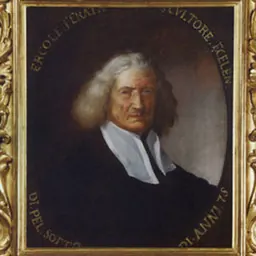
Related people
Same field, nearest in time



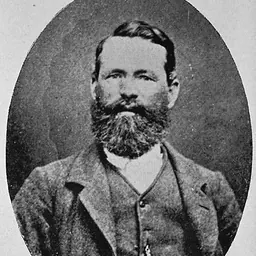
Contemporaries
People whose lives overlapped Giovanni Pietro Magni's




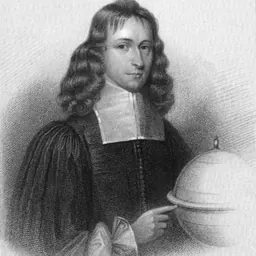
Frequently asked questions
Who was Giovanni Pietro Magni?
German artist
When was Giovanni Pietro Magni born?
Giovanni Pietro Magni was born in 1655 in Bruzella.
When did Giovanni Pietro Magni die?
Giovanni Pietro Magni died on 15 December 1723 in Castel San Pietro.
What was Giovanni Pietro Magni's occupation?
Giovanni Pietro Magni was a plasterer and architect.
What nationality was Giovanni Pietro Magni?
Giovanni Pietro Magni was Swiss.
Sources & further reading
· Wikipedia: Giovanni Pietro Magni
· DBpedia: Giovanni Pietro Magni
Cite this page
APA: Biography.guide. (2026). Giovanni Pietro Magni. https://biography.guide/giovanni-pietro-magni/
MLA: "Giovanni Pietro Magni." Biography.guide, https://biography.guide/giovanni-pietro-magni/.
Chicago: "Giovanni Pietro Magni." Biography.guide. https://biography.guide/giovanni-pietro-magni/.
Data last updated: 2026-09-20 · Spot an error? Report a correction.
Page generated 2026-09-27 05:19 UTC