
About Giovanni Galati
Lived 1897 – 1971 (aged 74). Giovanni Galati was an Italian military personnel.
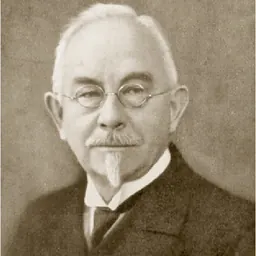
Giovanni Galati (19 September 1897 – 15 October 1971) was an Italian admiral during World War II. During the war, he commanded the and participated in the Battle of Calabria. He became Chief of Staff of the Naval High Command Libya and was then, again, given command of the 14th Destroyer Squadron and then the Light Cruisers Group. He refused to surrender his ship when the armistice was agreed and was brought up on charges but eventually released and reinstated to active duty. He finished his service as Vice Admiral in 1947 and was awarded the Knight's Cross of the Military Order of Italy.
Biography
Early life and career
Galati was born in Naples on 19 September 1897, the son of Roberto Galati and Clotilde Ciollaro; after attending the Italian Naval Academy from 1912 to 1916, he graduated with the rank of ensign on 27 April 1916. He participated in the Italo-Turkish War as a cadet aboard the training ships Flavio Gioia and Amerigo Vespucci. He took part in World War I, first embarked on battleships including Duilio and then on the land front, in command of the self-propelled armed pontoon Carso, operating with the 3rd Army. In June 1918 he distinguished himself in an action near Caposile (on the Piave river), receiving a Silver Medal of Military Valor. For a year and a half, from June 1940 to December 1941, Galati carried out dozens of missions as escort leader of supply convoys sailing between Italy and North Africa, gaining a reputation for "never losing a ship". This was credited to the fact that he often disregarded orders coming from Supermarina, instead basing his decisions on his own assessment and experience; like other officers at the time, he was convinced that traitors hiding in the high ranks were informing the Allies about the convoys sailing for Africa, and that disregarding the instructions would reduce the risk of being intercepted (actually, the interception of many convoys was not caused by traitors, but instead by Ultra intercepts, whose existence was unknown to the Axis).
He left command of Vivaldi on 7 January 1942, when he became Chief of Staff of the Naval High Command Libya; on 24 June 1942 he became commander of the Tobruk naval base, immediately after the city was recaptured by Axis forces in the Battle of Gazala. and declared that he would never hand over his ship to British in Malta, declaring that he would rather sail to the North, or look for one last battle, or to scuttle his ships.
He was sent to Brindisi and brought before the Minister of the Navy, Admiral Raffaele de Courten; on orders from King Victor Emanuel III, Galati was released and reinstated to active duty, with no consequences for his career. Shortly thereafter, he learned of the struggle by the 33rd Infantry Division "Acqui" against the Germans on the island of Kefalonia; with the tacit approval of De Courten, Galati took the initiative to load ammunitions, medicines and other supplies on the torpedo boats and and sailed towards Kefalonia to supply the Italian garrison, taking direct command of the expedition. When the Allied command learned of the unauthorized departure, however, fearing that the ships would escape to a neutral port or defect to the Germans, they ordered them to abort the mission and go back to port. No further attempts were made to help the "Acqui" Division; a few days later the Kefalonia garrison was forced to surrender and massacred by the Germans.
Galati was later assigned to Naval Command Naples for a short time and then transferred to the Ministry of the Navy, where he held special assignments. A staunch monarchist, he left active duty on 16 June 1946 following the proclamation of the Republic. He was promoted vice admiral in 1947 and awarded the Knight's Cross of the Military Order of Italy, finally being discharged on 8 August 1955.
Death He died in Rome on 15 October 1971.
Don’t just read it —
keep it.
Full-length biographies made to live with: read them, listen on the way to work, watch them tonight.
- E-book
- Audio
- Video
Instant download · yours to keep · every purchase keeps this site free
Important facts
People in Giovanni Galati's life
Named in this biography and alive at the same time
Related people
Same field, nearest in time





Contemporaries
People whose lives overlapped Giovanni Galati's


Frequently asked questions
Who was Giovanni Galati?
Italian admiral (1897–1971)
When was Giovanni Galati born?
Giovanni Galati was born on 19 September 1897 in Naples.
When did Giovanni Galati die?
Giovanni Galati died on 15 October 1971 in Rome.
What was Giovanni Galati's occupation?
Giovanni Galati was a military personnel.
What nationality was Giovanni Galati?
Giovanni Galati was Italian.
Sources & further reading
Cite this page
APA: Biography.guide. (2026). Giovanni Galati. https://biography.guide/giovanni-galati/
MLA: "Giovanni Galati." Biography.guide, https://biography.guide/giovanni-galati/.
Chicago: "Giovanni Galati." Biography.guide. https://biography.guide/giovanni-galati/.
Data last updated: 2026-09-20 · Spot an error? Report a correction.
Page generated 2026-09-27 05:29 UTC