
About Giovanni Filippo Apolloni
Lived 1635 – 1688 (aged 52–53). Giovanni Filippo Apolloni was a librettist and poet.
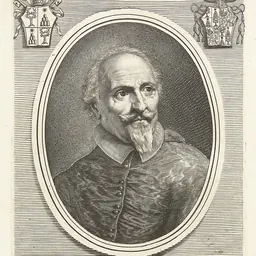
Giovanni Filippo Apolloni (1620 – 15 May 1688) was an Italian poet and librettist. He served as the court poet to Ferdinand Charles, Archduke of Austria at Innsbruck form 1653 until 1659. On his return to Italy he entered the service of Cardinal Volumnio Bandinelli. After Bandinelli's death in 1667 Appolloni was in the service of the Chigi family in Rome and Siena for the rest of his life. He wrote the librettos for a number of operas, the most well-known of which were Antonio Cesti's L'Argia and La Dori, as well as several oratorios and the texts for cantatas by both Cesti and Alessandro Stradella.
Biography The Piazza dei Santi Apostoli in Rome in 1665. The large building on the right is the Palazzo Chigi where Apolloni was a member of the household from 1668 until his death in 1688 Apolloni was born in Arezzo to a family prominent in the city's history. Little is known about his early life, but according to Carolyn Gianturco in her biography of Alessandro Stradella, Apolloni had been a mercenary before turning to poetry. In the 1640s he was a member of Accademia dei Percossi in Florence. Founded by Salvator Rosa, its members were composed of the intellectual and artistic elite of the city and included Giacinto Andrea Cicognini, Antonio Cesti, Antonio Abati, and Lorenzo Lippi. In 1653, on the recommendation of Rosa's patron Cardinal Giancarlo de' Medici, Apolloni was appointed court poet to Ferdinand Charles, Archduke of Austria at Innsbruck. There he produced the libretti for three works by Antonio Cesti: the operas L'Argia (1655) and La Dori (1657) and the courtly entertainment Mars und Adonis (1655). Both L'Argia and Mars und Adonis were performed during the week-long celebrations in November 1655 welcoming Queen Christina of Sweden on her journey to Rome. In 1672 Flavio and Agostino Chigi formed the Accademia degli Sfaccendati (Academy of the Idlers). Its members were their close associates and all shared an interest in the theatre. They included Apolloni, Queen Christina (patron of the Teatro Tordinona in Rome), Filippo Acciaiuoli (the Tordinona's impresario), Giuliano Capranica whose family ran the Teatro Capranica, and Alessandro Capizucchi. The express purpose of the Sfaccendati was to produce operas to be performed at the Chigi palazzo in Ariccia on the outskirts of Rome. Apolloni and Acciaiuoli co-authored the librettos for two operas which were performed there, Il Tirinto and L'Adalinda. However the high cost of producing operas so far from the center of Rome made L'Adalinda the last of these "country house operas". The last opera for which Apolloni wrote the libretto was La forza d'amore composed by Bernardo Pasquini. A slight pastoral work with only three characters, it was performed in Florence at the Villa di Pratolino in 1679. La Dori has been revived several times in the 20th century, including productions in 1983 at the Spitalfields Festival in London, 1990 at the Mannes College of Music in New York, and 1999 at the Cittadella Musicale in Arezzo.
Works Operas and other stage works L'Argia (opera in a prologue and 3 acts), set by Antonio Cesti, Innsbruck, 1655 La Dori (opera in a prologue and 3 acts), set by Antonio Cesti, Innsbruck, 1657; also set by Alessandro Scarlatti, Naples, 1689 Circe (serenata in three parts), set by Alessandro Stradella, performed at the Villa Aldobrandini in honour of Cardinal Leopoldo de' Medici, Frascati, 1668 L'empio punito (opera in 3 acts), co-authored with Filippo Acciaiuoli, set by Alessandro Melani, Rome, 1669 Su, su si stampino in bel lavoro and Amanti, che credete? (intermezzi), set by Alessandro Scarlatti and interpolated in the revival of Cavalli's Scipione affricano, Rome, 1671 L'Alcasta (opera in 3 acts), set by Bernardo Pasquini, Rome, 1673 Il Tirinto (opera in 3 acts), co-authored with Filippo Acciaiuoli, set by Bernardo Pasquini, Ariccia, 1672 Il sacrificio d'Abramo (The Sacrifice of Abraham), set by Antonio Masini in 1675 Era l'alba vicina Rimbombava d'intorno Il Nerone or Sovra un'eccelsa torre (also set by Alessandro Stradella) Era la notte e muto Ferma Lachesi ohimé Set by Alessandro Stradella Il piu' tenero affetto Solcava incauto legno Chi non sa che la costanza Sprezzata mi credei Io che lasciato fui Il Nerone or Sovra un'eccelsa torre (also set by Antonio Cesti)
Don’t just read it —
keep it.
Full-length biographies made to live with: read them, listen on the way to work, watch them tonight.
- E-book
- Audio
- Video
Instant download · yours to keep · every purchase keeps this site free
Important facts
People in Giovanni Filippo Apolloni's life
Named in this biography and alive at the same time

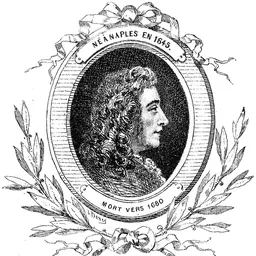
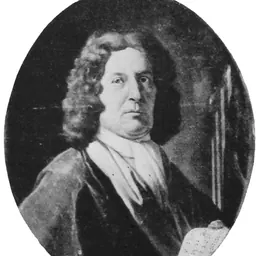

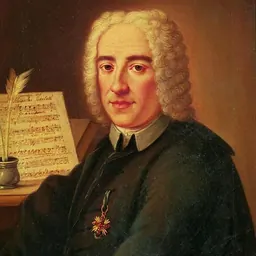

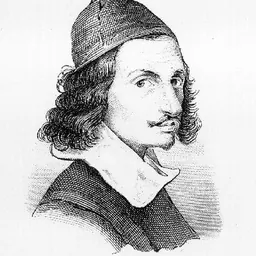
Related people
Same field, nearest in time


Contemporaries
People whose lives overlapped Giovanni Filippo Apolloni's





Frequently asked questions
Who was Giovanni Filippo Apolloni?
Italian librettist and poet
When was Giovanni Filippo Apolloni born?
Giovanni Filippo Apolloni was born in 1635 in Arezzo.
When did Giovanni Filippo Apolloni die?
Giovanni Filippo Apolloni died on 15 May 1688 in Arezzo.
What was Giovanni Filippo Apolloni's occupation?
Giovanni Filippo Apolloni was a librettist and poet.
Sources & further reading
· Wikipedia: Giovanni Filippo Apolloni
· DBpedia: Giovanni Filippo Apolloni
Cite this page
APA: Biography.guide. (2026). Giovanni Filippo Apolloni. https://biography.guide/giovanni-filippo-apolloni/
MLA: "Giovanni Filippo Apolloni." Biography.guide, https://biography.guide/giovanni-filippo-apolloni/.
Chicago: "Giovanni Filippo Apolloni." Biography.guide. https://biography.guide/giovanni-filippo-apolloni/.
Data last updated: 2026-09-22 · Spot an error? Report a correction.
Page generated 2026-09-27 05:03 UTC