
About Giovanni Ferretti
Lived 1540 – 1609 (aged 68–69). Giovanni Ferretti was an Italian composer.
Giovanni Ferretti (c. 1540 – after 1609) was an Italian composer of the Renaissance, best known for his secular music. He was important in the development of the lighter kind of madrigal current in the 1570s related to the villanella, and was influential as far away as England.
Life
His place of origin is uncertain, and both Venice and Ancona have been claimed as cities of his birth. The earliest documents of his career show him already to be employed as the maestro di cappella, the choirmaster, at the cathedral of Ancona in 1575. The next two decades have gaps, but some dates of employment are known. Between 1580 and 1582 he was at Loreto; from 1586 to 1588 at Gemona; in 1589 at Cividale del Friuli; and in 1596 he is recorded as being at Loreto again, this time as maestro di cappella at Santa Casa, a position he held until 1603. A reference to him in 1609 indicates he was still alive then, possibly living in Rome, and various other bits of evidence – such as his music appearing in Roman collections, and his acquaintanceship with Roman musicians – suggests that he may have spent part of his career there. When he died is not known, but it was likely after 1609.
Works and influence
Ferretti's music epitomizes the lightness of texture and subject matter which was one of the several diverging trends in secular vocal music composition in Italy in the last half of the 16th century. While few of his compositions were titled "madrigal", they may be seen as part of the broad continuum of secular music of which madrigals were a part. Most of his works were canzoni alla napolitana, canzonas in the Neapolitan style, a light form of villanella (with a rhyme scheme of , but with the individual lines elaborated in the manner of the madrigal). While composers had been writing villanelle for a long time, Ferretti was the first to bring madrigalian characteristics to the form.
The complete published output of Ferretti consists of books of canzoni alla napolitana. He published two books for six voices, in 1573 and 1575, and a total of five books for five voices, in 1567, 1569, 1570, 1571, and 1585; all works appeared in Venice. To say they sold well and established his fame is an understatement; reprints and new editions appeared throughout Europe, in places as distant as Nuremberg, Antwerp, and London (in 1588). Ferretti's canzoni, along with the works of Orazio Vecchi, are considered to be the most important musical influence on the English madrigal style of Thomas Morley, which commenced in 1588 with the publication in England of Musica transalpina, a wildly popular collection of Italian madrigals fitted with English words.
Don’t just read it —
keep it.
Full-length biographies made to live with: read them, listen on the way to work, watch them tonight.
- E-book
- Audio
- Video
Instant download · yours to keep · every purchase keeps this site free
Important facts
People in Giovanni Ferretti's life
Named in this biography and alive at the same time
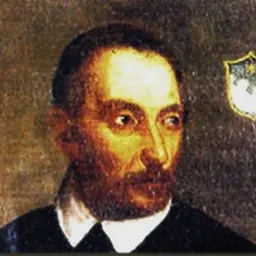

Related people
Same field, nearest in time
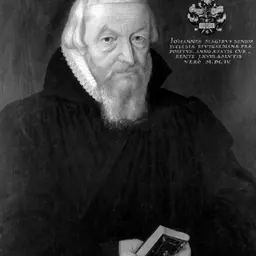



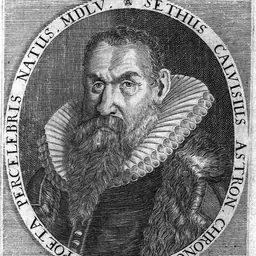
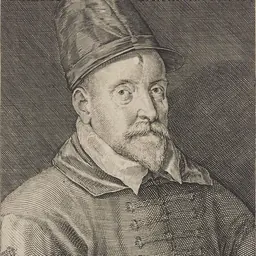
Contemporaries
People whose lives overlapped Giovanni Ferretti's

Frequently asked questions
Who was Giovanni Ferretti?
Italian composer
When was Giovanni Ferretti born?
Giovanni Ferretti was born in 1540 in Venice.
When did Giovanni Ferretti die?
Giovanni Ferretti died in 1609.
What was Giovanni Ferretti's occupation?
Giovanni Ferretti was a composer.
What nationality was Giovanni Ferretti?
Giovanni Ferretti was Italian.
Sources & further reading
· Wikipedia: Giovanni Ferretti
Cite this page
APA: Biography.guide. (2026). Giovanni Ferretti. https://biography.guide/giovanni-ferretti-composer/
MLA: "Giovanni Ferretti." Biography.guide, https://biography.guide/giovanni-ferretti-composer/.
Chicago: "Giovanni Ferretti." Biography.guide. https://biography.guide/giovanni-ferretti-composer/.
Data last updated: 2026-09-20 · Spot an error? Report a correction.
Page generated 2026-09-27 05:18 UTC