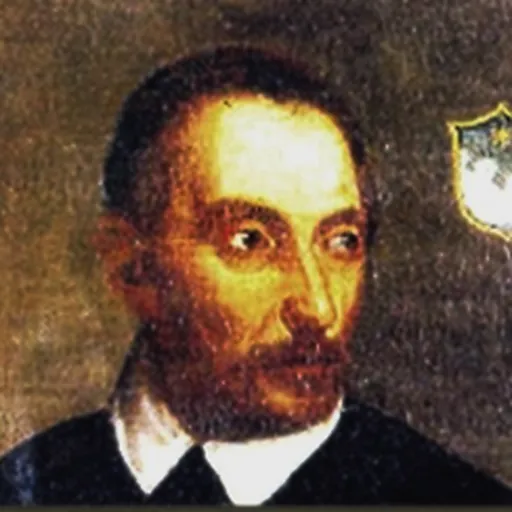
About Orazio Vecchi
Lived 1550 – 1605 (aged 54). Orazio Vecchi was a composer.
Orazio Vecchi (6 December 1550 (baptized) in Modena – 19 February 1605) was an Italian composer of the late Renaissance. He is most famous for his madrigal comedies, particularly L'Amfiparnaso.
Life
He was born in Modena, and studied with Salvatore Essenga, a Servite friar there. In addition he prepared for holy orders with early education at the Benedictine monastery, and took holy orders sometime before 1577.
By the end of the 1570s he was well-connected with the composers of the Venetian school (for example Claudio Merulo and Giovanni Gabrieli) since he collaborated with them in writing a sestina for a ducal marriage. During this period he accompanied Count Baldassare Rangoni on his travels, going to Bergamo and Brescia.
He was maestro di cappella (director of music) at the Salò cathedral between 1581 and 1584. Following this, he was the choirmaster at the cathedral of Reggio Emilia, until 1586. In that year he moved to Correggio where he was appointed canon of the cathedral there; he composed copiously during his time there, though he felt isolated from the major musical centers of Italy such as Rome, Venice, Florence and Ferrara. Eventually he attempted to correct this by moving back to Modena, where he attained the rank of mansionario (a priest who also had charge of the choir). He seems to have had considerable financial difficulties during this time, which he alluded to in his letters, and occasionally in his compositions.
Title page of the madrigal comedy L'Amfiparnaso by Orazio Vecchi. In 1594 his madrigal comedy, L'Amfiparnaso, premiered in Modena and was published in 1597 in a lavishly illustrated edition. That same year he visited Venice, where he published a collection of canzonette. In addition he published a huge amount of other music that same year, evidently his complete production of the last 16 years in Correggio and the other towns. One of the pieces he published was L'Amfiparnaso, which is his best-known composition.
Duke Cesare d'Este hired Vecchi in 1598 to be his maestro di corte, i.e. the master of music at his court, and Vecchi accompanied him to Rome and Florence in 1600; while in Florence he heard Jacopo Peri's opera Euridice. Afterwards he returned to Modena where he continued to serve in the cathedral until his death in 1605.
Music and influence
Vecchi was renowned for his madrigals, especially his grouping of them together in a new form called the "madrigal comedy." This was a light, popular, and dramatic entertainment form of the late 16th century, sometimes regarded as one of the precursors to opera.
In addition, Vecchi published books of canzonette, a lighter alternative to the madrigal, midway in complexity and seriousness between it and the villanella. He also composed serious madrigals, though not in the quantity of composers like Marenzio, as well as some sacred music. The sacred music in particular shows the influence of the Venetian school, with polychoral writing as well as contrasting duple- versus triple-time sections.
Compositions published in Venice Secular music Canzonette a 3 voci di Horatio Vecchi et di G. Capilupi (1597; ristampa 1606) Canzonette Libro I a 4 voci (1580) Canzonette Libro II 4 voci (1580) Canzonette Libro III 4 voci (1585) Canzonette Libro IV a 4 voci (1590) Canzonette Libro I a 6 voci (1587) Madrigali a 6 voci Libro I (1583) Madrigali a 5 voci Libro I (1589) Selva di varia ricreatione nella quale si contengono varii soggetti a 3-10 voci, cioè madrigali, capricci, balli, arie, iustiniane, canzonette, fantasie, serenate, dialoghi, un lotto amoroso, con una battaglia a 10 nel fine e accomodatovi la intavolatura di Liuto alle arie, ai balli e alle canzonette (1590) L'amfiparnaso, comedia Harmonica a 5 voci (1597) Convito musicale nel quale si contengono vari soggetti et capricci a 3-8 voci, cioè madrigali, canzonette, villotte, iustiniane et dialoghi (1597) Le veglie di Siena overo i vari umori della musica moderna a 3-6 voci, composte e divise in due piacevole e grave (1604)
Sacred music Lamentationes cum 4 paribus vox (1587) Motecta 4-6 et 8 voci Libro I (1590) Sacrarum cantionum 5-8 voci Libro II (1597) Hymni qui per totum annum in Ecclesia Romana concinuntur, partim brevi stilo super plano cantu, partim proprio marte... elaborati cum 4 vox (1604) Missarum 6 et 8 vox Libro I. Per Paulum Bravusium mutinensem ejus discipulum amatissimum primum in lucem editus (1607)
Manuscripts Missa Julia duobus choris cum 8 voci Magnificat a 5 voci
Don’t just read it —
keep it.
Full-length biographies made to live with: read them, listen on the way to work, watch them tonight.
- E-book
- Audio
- Video
Instant download · yours to keep · every purchase keeps this site free
Important facts
People in Orazio Vecchi's life
Named in this biography and alive at the same time



Related people
Same field, nearest in time

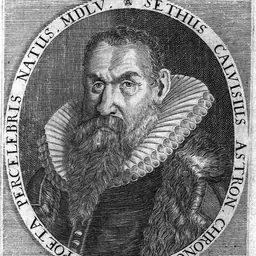
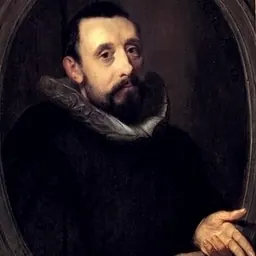
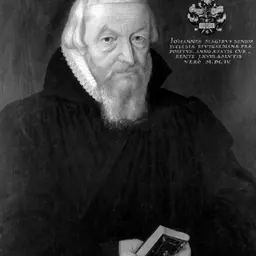
Contemporaries
People whose lives overlapped Orazio Vecchi's




Frequently asked questions
Who was Orazio Vecchi?
Italian composer
When was Orazio Vecchi born?
Orazio Vecchi was born on 6 December 1550 in Modena.
When did Orazio Vecchi die?
Orazio Vecchi died on 19 February 1605 in Modena.
What was Orazio Vecchi's occupation?
Orazio Vecchi was a composer.
Sources & further reading
Cite this page
APA: Biography.guide. (2026). Orazio Vecchi. https://biography.guide/orazio-vecchi/
MLA: "Orazio Vecchi." Biography.guide, https://biography.guide/orazio-vecchi/.
Chicago: "Orazio Vecchi." Biography.guide. https://biography.guide/orazio-vecchi/.
Data last updated: 2026-09-24 · Spot an error? Report a correction.
Portrait: Wikimedia Commons · author & licence
Page generated 2026-09-27 05:08 UTC